










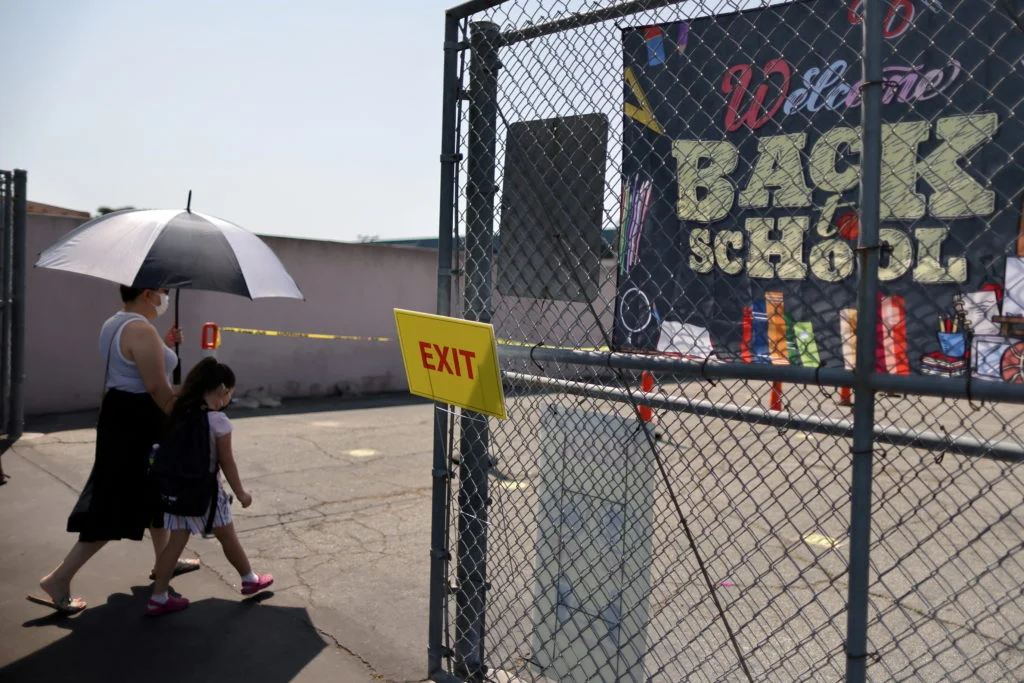
NEW YORK — The foundations of American pediatric public health are facing an unprecedented challenge. Federal data released this week confirms a troubling downward trend in childhood immunization, with national kindergarten vaccination rates experiencing a persistent decline while the number of children receiving nonmedical exemptions has surged to an all-time high.
According to the latest report from the Centers for Disease Control and Prevention (CDC), the fraction of kindergarten-aged children exempted from state-mandated vaccine requirements has climbed to 4.2%, up from 3.6% the previous year. This represents an estimated 155,000 children across the United States who entered the 2025-2026 school year without the full slate of standard immunizations.
This marks the fourth consecutive year that national exemption rates have reached record-breaking levels, a trend experts describe as a direct reflection of the growing "chaos and confusion" surrounding federal health guidance.
The Chronology of a Public Health Shift
To understand the current crisis, one must look at the rapid transformation of federal health policy over the last 18 months. The trajectory of vaccination compliance has shifted noticeably since the transition of power in Washington.
- Pre-2025 Stability: For years, immunization coverage remained relatively stable, hovering around the 95% threshold for the measles-mumps-rubella (MMR) vaccine. This percentage is widely considered by epidemiologists to be the "herd immunity" gold standard, sufficient to prevent large-scale disease clusters.
- The 2025 Policy Pivot: Following the inauguration of the current administration, Robert F. Kennedy Jr. was appointed to lead the Department of Health and Human Services (HHS). Known for his long-standing skepticism regarding established vaccine schedules, Kennedy’s leadership marked a departure from the traditional, science-first messaging of the CDC.
- Administrative Intervention: Throughout 2025, the administration began actively questioning and attempting to revise long-standing childhood vaccination recommendations. Notably, President Donald Trump issued public calls for a "revamp" of pediatric guidelines, advocating for the decoupling of combination vaccines into separate, individual medical visits—a theory that has been repeatedly debunked by medical consensus as being both logistically impossible and clinically unnecessary.
- The Current Reality: The 2025-2026 school year data reflects the cumulative impact of this rhetoric. With 41 states and the District of Columbia reporting an increase in exemptions, the trend has become a nationwide phenomenon rather than a regional anomaly.
Supporting Data: A Decline Across the Spectrum
The erosion of immunization coverage is not limited to a single illness; it spans the primary battery of childhood diseases. The CDC report paints a stark picture of declining protection:
MMR and Essential Childhood Vaccines
The coverage for the required MMR vaccine has dipped to 92.4%. While this may seem like a marginal decline, in the context of infectious disease prevention, every percentage point represents thousands of children who are left vulnerable. The impact is compounded by similar drops in coverage for polio, diphtheria, tetanus, and pertussis (whooping cough), as well as the first dose of the varicella (chickenpox) vaccine.
The Geography of Vulnerability
The data reveals that the risk is not distributed equally. In some states, such as Idaho, the rate of exemptions has reached as high as 17.5%, while in states like Connecticut, the figure remains below 0.5%. This geographic disparity explains why the U.S. is currently witnessing its most severe year for measles since 1991. The virus, which is highly contagious, exploits these pockets of low vaccination coverage to establish footholds that can quickly turn into regional outbreaks.
The "Stable" Anomaly
Interestingly, vaccination rates for Hepatitis B have remained steady. However, Dr. James Campbell, a researcher at the University of Maryland and chair of the American Academy of Pediatrics (AAP) infectious diseases committee, notes that this is likely a lagging indicator. Because the Hepatitis B vaccine is administered shortly after birth, the full impact of recent federal efforts to disrupt infant vaccination schedules may not be visible in kindergarten-aged cohorts for several years.
Official Responses and the Changing Tone of the CDC
Perhaps the most significant change in the public health landscape is the shift in how the CDC reports its own findings. Historically, the agency utilized its flagship publication, the Morbidity and Mortality Weekly Report (MMWR), to provide detailed analysis, express concern, and advocate for public health safety.
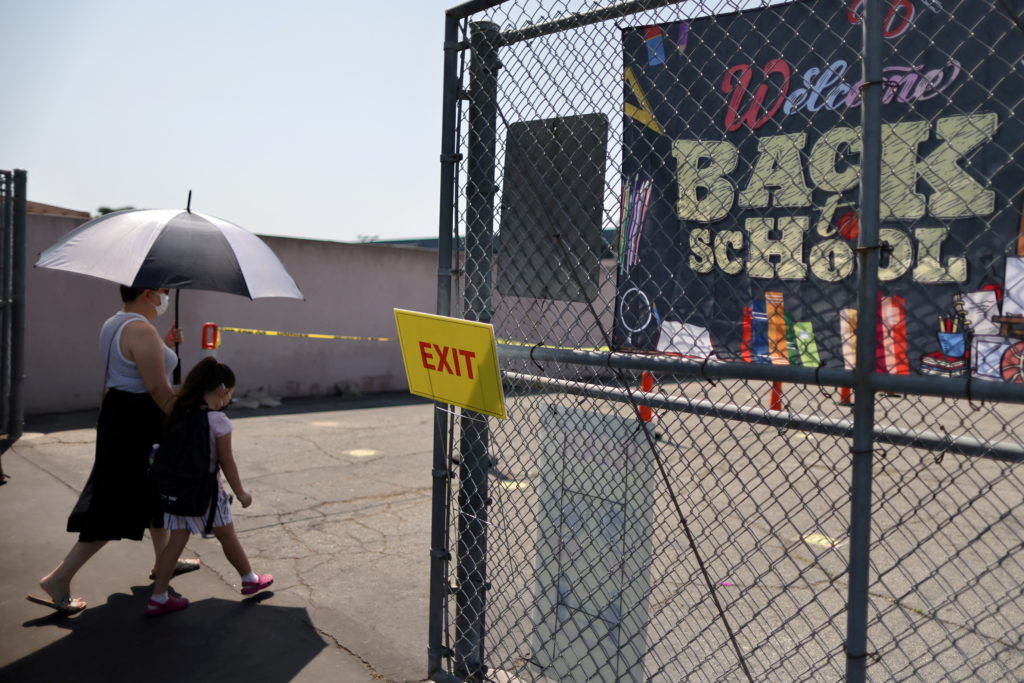
In the current administration, the delivery of this critical data has been muted. Instead of the traditional, comprehensive analysis accompanied by a call to action, the agency merely posted the numbers online with a sparse, three-sentence statement. The statement read, in part: "CDC continues to encourage parents to discuss vaccination options with their doctors."
This minimalist approach stands in stark contrast to the urgency felt by medical professionals on the ground. State-level health officials, however, continue to attempt to fill the void. North Carolina Health and Human Services Secretary Dev Sangvai recently issued a public statement reminding parents that, "Back-to-school season is an important reminder that protecting our children’s health is both a shared responsibility and a shared goal. Vaccines help keep our children and teens healthy and in the classroom."
The silence from the federal level has left many in the medical community feeling unsupported. Dr. Campbell summarized the sentiment: "The root cause of this is primarily because there’s so much chaos and confusion in vaccination recommendation systems in the last year or so."
Implications: The High Cost of Hesitancy
The implications of these declining rates are profound, affecting not just individual health but the stability of the education system and the economy.
Schools as Vectors
Kindergarten classrooms are notorious "cauldrons for germs." By design, they bring together large groups of children in close quarters. High vaccination rates were historically the firewall that prevented schools from becoming epicenters for community-wide outbreaks. When that firewall is breached, the result is not just sick children; it is the forced closure of classrooms, the disruption of parental employment, and the potential for long-term health complications for vulnerable students—including those who are immunocompromised and cannot be vaccinated for medical reasons.
The Rise of Nonmedical Exemptions
While medical exemptions (for children with specific health conditions) have remained steady at approximately 0.2% over the last decade, the surge in nonmedical exemptions is entirely driven by parental choice. This shift highlights a fundamental breakdown in trust between the public and federal health institutions. When political rhetoric outweighs clinical evidence, parents are often left to navigate an information ecosystem cluttered with misinformation.
The Long-Term Outlook
The current trajectory suggests that unless there is a significant realignment of federal policy and a return to consensus-driven public health messaging, the U.S. may see a return of diseases that were once considered effectively eliminated within American borders.
For the more than a quarter of a million children entering the school system who are currently susceptible to measles, the stakes could not be higher. As the nation grapples with the worst measles year in over three decades, the data serves as a grim warning: public health is a fragile consensus, and when that consensus is dismantled by institutional doubt, the consequences are measured in the health and safety of the next generation.
As the school year progresses, health departments across the country remain in a reactive posture, struggling to communicate the benefits of immunization in an environment where the national authority on health has become the primary source of skepticism. The battle for the classroom is no longer just about attendance; it is a battle for the scientific literacy and the physical protection of the nation’s children.