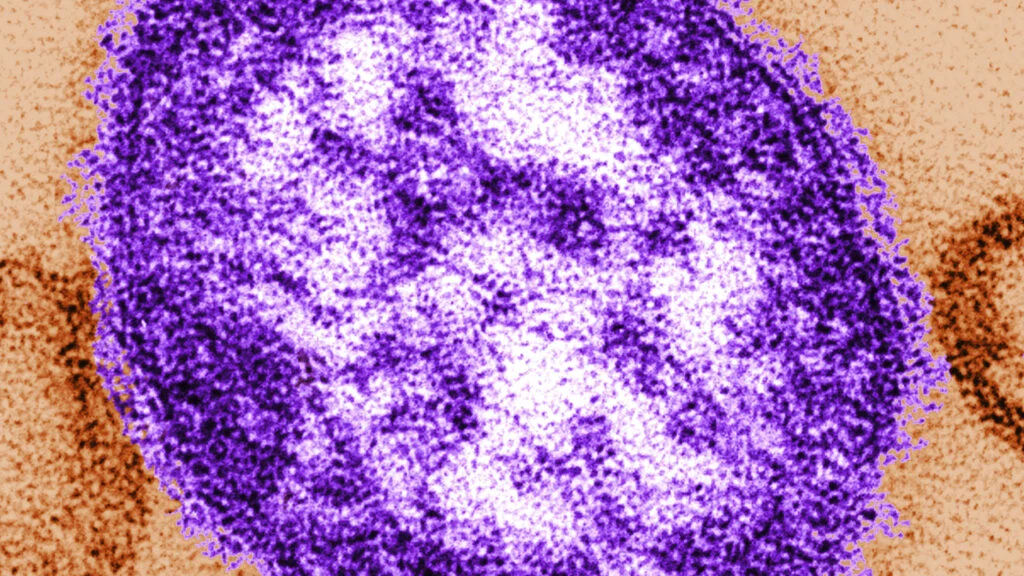
JEFFERSON COUNTY, Pa. — A somber cloud hangs over rural Pennsylvania this week following the death of a 40-year-old woman, a tragedy that local authorities have officially classified as "measles-related." This marks the third death in the Commonwealth linked to the highly contagious virus this year, intensifying a growing debate over public health policy, vaccination protocols, and the accuracy of national reporting metrics.
The Jefferson County Coroner, Greg Furlong, confirmed the passing of the unidentified woman in a statement released via social media on Saturday. While the coroner’s office has remained tight-lipped regarding the specific clinical details of the case, the classification of the death as measles-related serves as a stark, sobering reminder of the disease’s potential severity in an era where measles is often mistakenly viewed by the public as a "benign" childhood illness.
The Tragic Toll: A Chronology of Loss
The death of the 40-year-old woman in Jefferson County—a rural expanse located roughly 50 miles northeast of Pittsburgh—is the latest in a string of fatalities that have rattled the state. To understand the gravity of the current situation, one must examine the progression of the outbreak throughout 2026.
The August Precedents
Prior to this weekend’s announcement, Pennsylvania had already recorded two measles-related deaths in August, both involving infants. These cases, which occurred in Lancaster County, drew significant media attention due to the underlying health complexities of the victims.
- The Case of the Male Infant: In early August, a newborn boy died shortly after birth due to a ruptured spleen. While the coroner, Dr. Stephen Diamantoni, clarified that the measles infection did not cause the rupture, the presence of the virus was deemed a "significant condition" at the time of death.
- The Case of the Female Infant: Later in the same month, a 6-week-old girl succumbed to the virus. Dr. Diamantoni confirmed that this death was directly attributed to measles. The infant suffered from a rare genetic condition known as Amish lethal microcephaly, which results in severe neurological underdevelopment and, typically, a life expectancy of less than six months. Because the standard MMR (measles, mumps, and rubella) vaccine is not administered until a child reaches their first birthday, both infants were entirely unprotected by immunization, making them exceptionally vulnerable to the surging virus.
The Current Situation
The death of the 40-year-old woman represents a shift in the demographic profile of the outbreak. Unlike the previous pediatric cases, this death involves an adult, raising questions about immunity levels, waning vaccine efficacy, or potential underlying comorbidities that may have complicated the progression of the disease. Coroner Furlong’s statement—"This is a heartbreaking loss for the family and an unfortunate reminder that measles can be a serious and potentially life-threatening disease"—echoes the frustration of public health officials who are currently struggling to contain the transmission of the virus across the state.
Supporting Data: The Scope of the Outbreak
The Pennsylvania Department of Health (DOH) has been tracking the spread of the virus with increasing alarm. As of Friday, the Commonwealth had recorded 676 confirmed cases of measles spanning 37 of the state’s 67 counties. The breadth of this geographic spread indicates a widespread, community-level transmission that has defied early containment efforts.
Clinical and Demographic Trends
The data provided by the DOH paints a picture of a strained healthcare system:
- Hospitalization Rates: Of the 676 cases, 124 individuals have required hospitalization. This roughly 18% hospitalization rate underscores the clinical severity of the current strain, which is resulting in complications such as pneumonia, encephalitis, and severe dehydration.
- Vaccination Status: While the vast majority of those infected are unvaccinated, the state has noted that four individuals who had previously received the measles vaccine have also contracted the virus. While breakthrough cases are rare, they are not unheard of, particularly in immunocompromised individuals or in environments with exceptionally high viral loads.
- The Vaccination Gap: The primary driver of the current crisis remains the significant number of unvaccinated individuals. Public health experts continue to emphasize that the measles vaccine is one of the most effective medical interventions in history, providing roughly 97% protection after two doses.
Official Responses and Bureaucratic Clashes
Perhaps the most contentious aspect of the current crisis is the discrepancy between state-level reporting and the data maintained by the U.S. Centers for Disease Control and Prevention (CDC). As of Sunday, the CDC’s official website stated that the National Center for Health Statistics (NCHS) had not recorded any death records for 2026 where measles was listed as the "underlying cause."
The Data Disconnect
The lack of alignment between Pennsylvania’s coroner-reported deaths and federal CDC statistics has created a vacuum of confusion. From a bureaucratic standpoint, this disagreement often stems from the difference between a "contributing factor" and an "underlying cause of death" on a death certificate. While a coroner may see measles as a critical, life-ending catalyst, federal standards may categorize the death under the chronic condition that made the patient vulnerable in the first place.
Political Friction
The crisis has not been immune to the polarized political climate. Pennsylvania’s Democratic Governor, Josh Shapiro, and the administration of Republican President Donald Trump have publicly clashed over the handling and reporting of the previous infant deaths. The friction highlights a broader issue: the politicization of public health data. Critics argue that when state and federal agencies fail to synchronize their reporting, it undermines public trust in the institutions responsible for managing the outbreak.
Implications for Public Health Policy
The current outbreak in Pennsylvania serves as a critical case study in the fragility of public health infrastructure. The following implications are likely to shape state and national discourse in the coming months:
1. Re-evaluating Immunization Mandates
The widespread nature of the outbreak—reaching over half of Pennsylvania’s counties—will likely force a legislative debate on school immunization requirements and exemptions. Lawmakers are under pressure to determine whether current exemption policies for non-medical reasons are contributing to the viral spread.
2. Addressing "Measles Amnesia"
For decades, measles was considered an eliminated disease in the United States. This success led to what experts call "measles amnesia"—a societal forgetting of how dangerous the virus truly is. The tragic deaths of two infants and a 40-year-old adult may serve to remind the public that the virus is not merely a "childhood rash," but a systemic threat that can lead to permanent disability or death.
3. The Need for Unified Reporting
The disconnect between the CDC and the Pennsylvania DOH is more than a technicality; it is a communication failure. For the public to trust the government’s response to a health crisis, there must be a transparent, unified narrative. Future policy must prioritize the standardization of how communicable disease deaths are classified to prevent the confusion that has plagued this current response.
4. Protecting the Vulnerable
As seen in the case of the 6-week-old infant with Amish lethal microcephaly, there will always be segments of the population—the very young and the immunocompromised—who cannot be protected by vaccines. The only defense for these individuals is "herd immunity," which is achieved only when the vast majority of the population is vaccinated. The current failure to maintain that threshold in parts of Pennsylvania has direct, fatal consequences for the most defenseless members of society.
Conclusion
As the Jefferson County Coroner’s office moves forward with its investigation, the citizens of Pennsylvania are left to grapple with a grim reality. The death of a 40-year-old resident is a poignant reminder that while science has provided the tools to eradicate measles, the implementation of those tools remains a human endeavor, susceptible to hesitation, disagreement, and tragic oversight.
Moving forward, the focus must shift from political posturing to the rigorous application of public health strategies. With 676 cases and counting, the state is in a race against time to halt the transmission, ensure the protection of the vulnerable, and restore clarity to the data that guides our collective survival. The loss of life in Pennsylvania this year serves as a call to action—a reminder that in the fight against infectious disease, the margin for error is measured in human lives.