











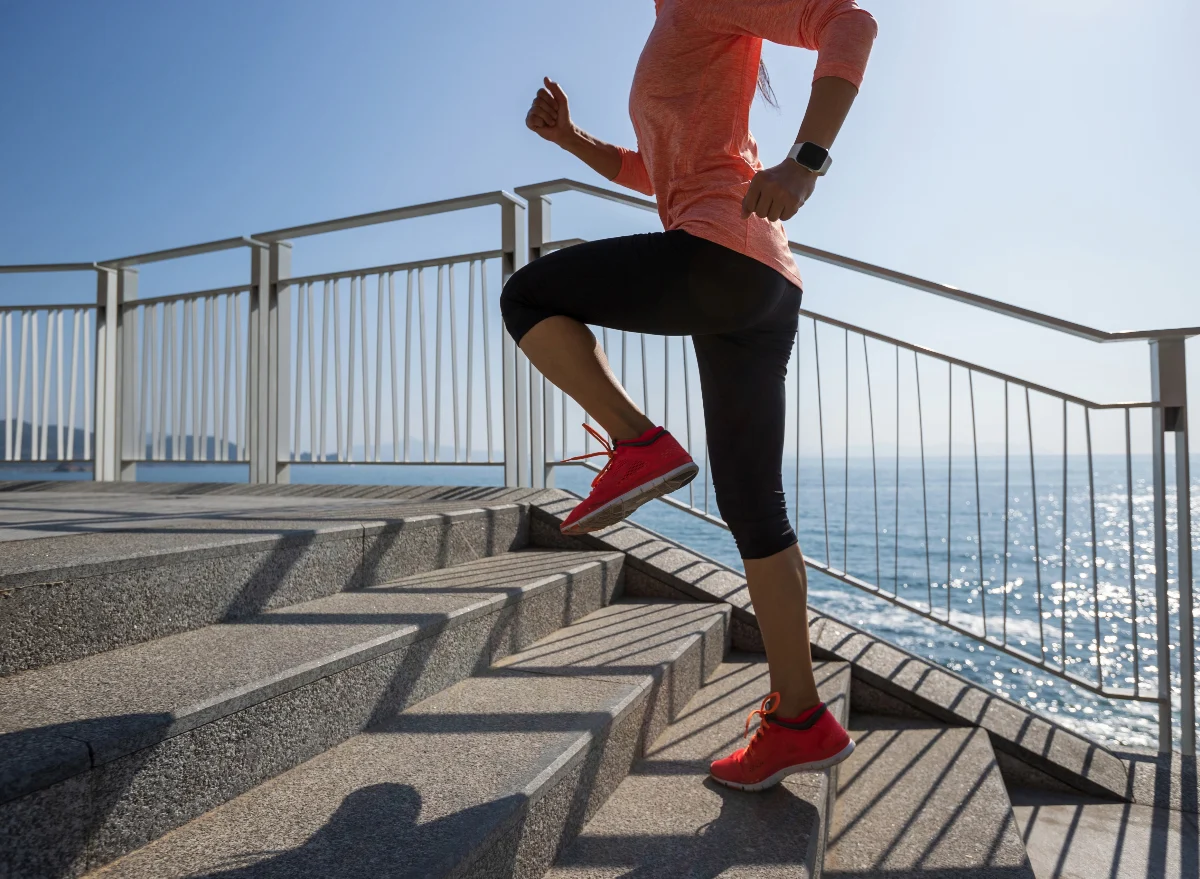
For many, the simple act of climbing a flight of stairs serves as a daily "litmus test" for physical vitality. It is a movement that demands a precise symphony of lower-body strength, joint stability, and core coordination. However, as we cross the threshold of age 60, these daily transitions can become a source of frustration or fatigue. The good news is that mobility isn’t a finite resource—it is a physiological trait that can be rebuilt, refined, and maintained through targeted, upright training.
By focusing on "no-floor" exercises—movements that keep you on your feet—you can simulate the demands of stair climbing while minimizing joint strain. This article explores the mechanics of why stairs become challenging with age and provides a structured, expert-backed protocol to regain your independence, one step at a time.
The Physiology of the Staircase: Why It Gets Harder
Stair climbing is fundamentally a unilateral exercise. Unlike walking on a flat surface, where your center of gravity remains relatively stable, climbing requires you to shift your entire body weight onto a single leg, drive upward, and stabilize the pelvis to prevent the knee from buckling.
Research published in various journals, including the National Center for Biotechnology Information (NCBI), consistently highlights that lower-body strength—specifically in the quadriceps, glutes, and hips—is the primary predictor of physical autonomy in older adults. As we age, a process known as sarcopenia (the natural loss of muscle mass) can affect the fast-twitch fibers responsible for the "push" required to propel ourselves up a step. Furthermore, if the hip stabilizers are weak, the knee must compensate, often leading to the discomfort or hesitation many feel when facing a steep staircase.
By training while standing, you align your workout with the specific biomechanics of the real world. This approach builds functional strength that translates directly into confidence, whether you are navigating a subway station, a public building, or simply the stairs in your own home.
Chronology of Progress: A Strategic Training Plan
Rebuilding strength is not about jumping into high-intensity movements; it is about establishing a foundation of control. To see meaningful improvements, consistency is more important than intensity.
Phase 1: Stability (Weeks 1–2)
Focus on the Mini-Band Lateral Walk. Before you can effectively push upward, you must be able to keep your lower body aligned. This phase targets the gluteus medius, which prevents the "hip drop" that often causes knee pain during stair climbing.
Phase 2: The Vertical Drive (Weeks 3–4)
Introduce Box Step-Ups. This is the closest simulation to actual stair climbing. Begin with a very low platform—a height that allows you to step up without feeling off-balance. The goal here is to master the "drive" from the heel rather than pushing off the toes.
Phase 3: Sustained Endurance (Weeks 5–6)
Integrate the Split Squat ISO Hold. By holding the bottom position, you train your muscles to handle the "eccentric" load—the same force your legs absorb when you are walking down stairs. This is crucial for preventing falls and maintaining control during descent.
Phase 4: Full Functional Power (Week 7+)
Incorporate Goblet Box Squats. This ties everything together, teaching your body to move from a seated position to standing while keeping your chest tall—a motion essential for both stairs and rising from a chair.
Supporting Data: The Mechanics of Strength
The effectiveness of these movements is supported by the biomechanical principle of "specific adaptation to imposed demands" (SAID). Because these exercises are performed standing, they engage the proprioceptive system—the body’s ability to sense its position in space.
According to studies on geriatric physical therapy, unilateral (single-leg) training is superior to traditional bilateral exercises (like standard leg presses) for older adults. When you step up onto a box, your core must engage to keep you upright. This recruitment of the transverse abdominis and obliques acts as a stabilizer, preventing the leaning and wobbling often associated with a lack of confidence on stairs.

Expert Insights: The "No-Floor" Philosophy
Jarrod Nobbe, a certified Strength and Conditioning Specialist (CSCS), emphasizes that floor work—while valuable—is often unnecessary for those whose primary goal is better stair mobility.
"Stair climbing happens on your feet," Nobbe notes. "You are standing, shifting weight, stepping up, and lowering down with control. A routine that keeps you upright makes the training feel closer to the movement you’re trying to improve."
The following four movements are designed to be performed in a gym or at home with minimal equipment.
1. Mini-Band Lateral Walk
This movement targets the outer hips, which are the "shock absorbers" of your movement. When your outer glutes are strong, your knees stay in perfect alignment with your feet, reducing wear and tear on the joint.
- The Move: Place a mini-band above your knees. Assume a partial squat position. Take small, controlled steps to the side.
- Why it works: It forces the glutes to fire in a way that prevents the knees from collapsing inward during the climbing motion.
2. Box Step-Up
The gold standard for stair training.
- The Move: Place your entire foot on a sturdy box or step. Drive through your heel to stand tall. Focus on the control of the "lowering" phase—don’t let yourself drop back down; control the descent.
- Pro Tip: If your balance is shaky, hold onto a railing or a wall. As you get stronger, reduce your reliance on the handrail.
3. Split Squat ISO Hold
This is the secret to building rock-solid knees.
- The Move: Step into a lunge position, then lower halfway down. Hold that position for 15–30 seconds.
- Why it works: It creates "time under tension" for the quadriceps, which is essential for the pushing power needed to ascend a flight of stairs.
4. Goblet Box Squat
The ultimate tool for hip health.
- The Move: Hold a weight (like a small dumbbell or a water bottle) at your chest. Stand in front of a chair or box. Sit back until your glutes lightly touch the seat, then immediately drive back up.
- Why it works: The weight at the chest acts as a counterbalance, forcing your core to stay upright, which protects the lower back and encourages better hip hinge mechanics.
Implications for Daily Living
The goal of this training is not to turn you into an athlete; it is to ensure that your home remains your sanctuary. When you improve your stair-climbing capacity, you reduce the "fear of falling," which is one of the most common barriers to active aging.
When you can navigate stairs with ease, your world expands. You are more likely to participate in social events, travel, and engage in daily errands without the looming anxiety of physical limitation. Furthermore, these exercises have a "carry-over effect." The same glute strength that helps you climb stairs also improves your balance while walking on uneven surfaces and makes it easier to get out of a car or a deep sofa.
Conclusion: Starting Your Routine
To begin, aim to perform this routine two to four days per week. It is essential to listen to your body—on days when your legs feel fatigued, prioritize recovery. If you find lunges uncomfortable, these four moves serve as the perfect, lower-impact alternative that builds the same, if not better, structural integrity.
As you progress, the frequency with which you can tackle a flight of stairs without feeling breathless or shaky will be your most important metric of success. Remember, strength is a lifelong project. By investing just a few minutes of your day in these movements, you are securing your mobility for years to come.
Summary Checklist for Success
- Consistency: Train 2–4 times per week.
- Progression: Start with low heights and focus on form before adding weight.
- Safety: Always have a stable surface or railing nearby when performing single-leg movements.
- Mindset: View every step as a training opportunity. When your legs feel fresh, take the stairs instead of the elevator to practice your new, stronger technique.
Disclaimer: Before starting any new exercise program, especially if you have pre-existing health conditions or joint issues, consult with your physician or a qualified physical therapist to ensure these movements are appropriate for your specific needs.