






For many individuals over the age of 60, the simple act of standing up from a sofa, climbing a flight of stairs, or enjoying a long walk can begin to feel like a formidable challenge. As we age, a natural decline in muscle mass—clinically known as sarcopenia—often leads to "weak legs," which can snowball into a loss of confidence and reduced independence. However, the solution does not necessarily require a costly gym membership or heavy iron plates.
According to fitness experts and longevity researchers, a common, sturdy household chair can serve as the ultimate strength-training station. By utilizing chair-based exercises, seniors can effectively rebuild quadriceps, glutes, and hamstrings, ultimately reclaiming the leg control necessary to navigate daily life with ease.
The Science of Strength After 60
The human body is remarkably adaptive, regardless of age. While the biological processes of aging can contribute to muscle atrophy, the "use it or lose it" principle remains a cornerstone of geriatric physiology. Research published in reputable journals, such as the National Center for Biotechnology Information (NCBI), consistently highlights that resistance training is the most effective intervention for maintaining muscle quality and bone density in older adults.
The primary advantage of a chair-based routine is its accessibility. By removing the barrier of gym travel and complex machinery, individuals are more likely to maintain consistency—the most critical variable in any exercise program. Furthermore, the chair provides a built-in safety net, offering a stable reference point for depth and balance, which allows the exerciser to focus on proper form rather than fighting to stay upright.
A Chronology of Movement: Building Your Routine
To effectively build strength, one must transition from simple movement to intentional resistance. This progression can be broken down into four distinct phases of movement, each designed to progressively overload the lower body muscles.
1. The Sit-to-Stand (The Foundation)
This is the "gold standard" for functional movement. It mimics the motion of getting out of a chair or a car.
- The Mechanism: By sitting down and standing back up under control, you force your quads and glutes to manage your body weight throughout the entire range of motion.
- The Execution: Sit at the edge of a sturdy chair. Drive through your heels, engaging your core, and stand fully upright. Lower yourself back down slowly, taking at least three seconds to hit the seat.
- Frequency: 3 sets of 10 to 15 repetitions.
2. The Chair Hover Squat (Adding Tension)
Once you have mastered the sit-to-stand, you can increase the intensity by eliminating the rest period at the bottom.
- The Mechanism: By hovering just an inch above the seat, your muscles remain under constant tension. This prevents the "reset" that occurs when you sit fully, forcing your quads to work harder.
- The Execution: Begin to stand, but stop just before your glutes touch the seat. Hold for one second, then push back up.
- Frequency: 3 sets of 8 to 12 repetitions.
3. The Chair-Supported Split Squat (Unilateral Development)
Many people have imbalances where one leg is stronger than the other. Split squats isolate each leg, ensuring both sides develop evenly.
- The Mechanism: Placing one foot back on the chair (or simply using the chair for balance) allows for a deeper stretch and more intense activation of the glutes.
- The Execution: Stand in front of the chair, placing one foot back on the seat. Lower your hips until your front thigh is nearly parallel to the floor. Use the chair to keep your balance.
- Frequency: 3 sets of 8 to 10 repetitions per side.
4. The Seated Leg Extension Hold (Isolation)
This exercise targets the teardrop-shaped muscle above the knee (the vastus medialis), which is vital for knee stability.
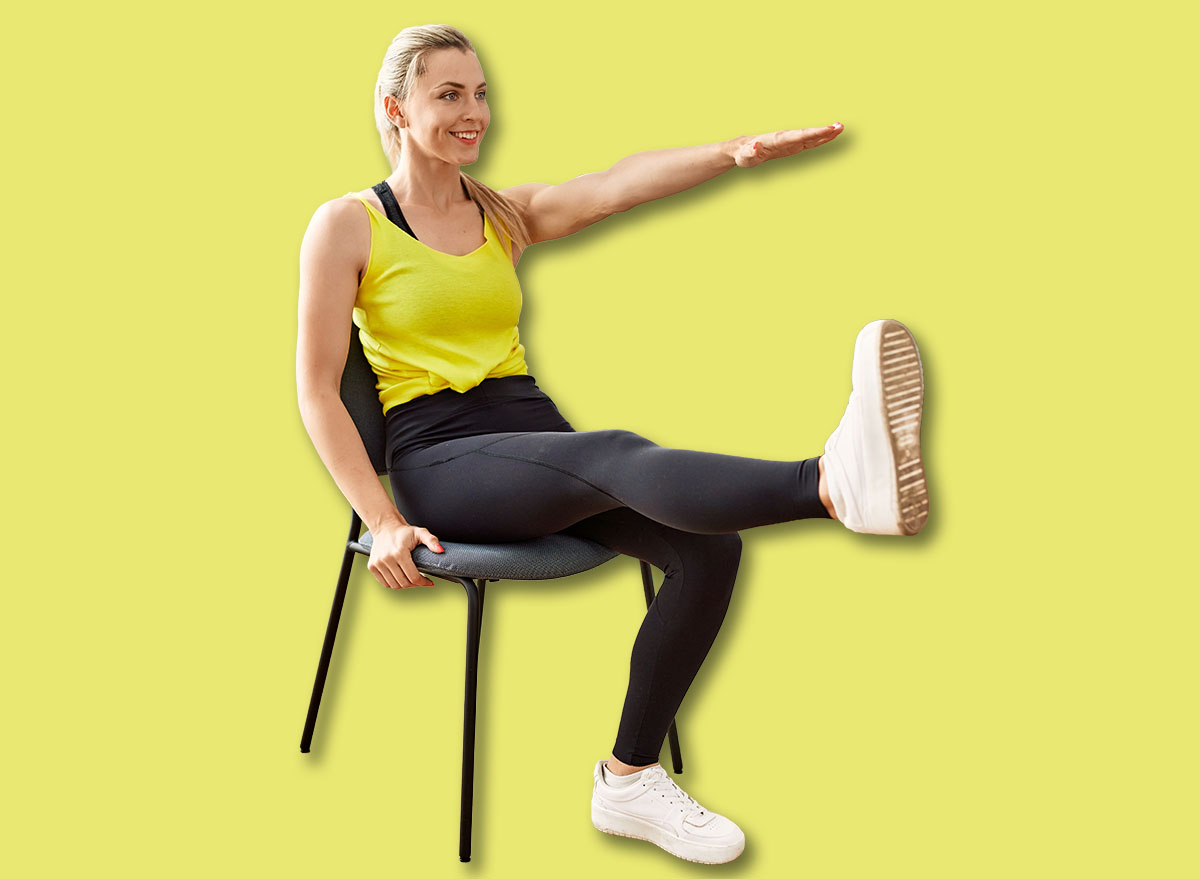
- The Mechanism: The isometric hold forces the quadriceps to stay contracted without the need for balance, making it an excellent "finisher" for a workout.
- The Execution: While seated, extend one leg until it is perfectly straight. Squeeze your thigh muscle hard for three seconds before lowering.
- Frequency: 3 sets of 8 to 12 reps per leg.
Supporting Data: Why This Works
The effectiveness of these exercises is backed by the physiological principle of mechanical tension. When you move slowly and deliberately, you recruit more muscle fibers. For the over-60 demographic, this is essential.
Studies indicate that sedentary behavior significantly increases the risk of falls—a major health concern for the elderly. By strengthening the lower body, you improve your "proprioception" (your body’s ability to sense its position in space) and your "postural sway," both of which are key to preventing accidental trips and falls. Furthermore, increased leg strength has been linked to improved metabolic health, as the quads and glutes are the largest muscle groups in the body; they are essentially "glucose sinks" that help regulate blood sugar levels.
Expert Perspectives and Official Guidelines
According to professional strength coaches, the secret to success after 60 is not the intensity of the weight, but the quality of the movement. Coaches emphasize that "approachable" does not mean "easy."
"When you perform these exercises," notes fitness expert Jarrod Nobbe, "the goal is to reach a point where the last two repetitions of every set feel like real work." This is the threshold where the muscle fibers actually undergo the micro-tears necessary to rebuild stronger and more resilient tissue.
Health organizations, including the American College of Sports Medicine (ACSM), recommend that older adults engage in at least two days of strength training per week. The beauty of the chair-based method is that it satisfies these medical guidelines while remaining low-impact on the joints, making it a sustainable practice for years to come.
Implications for Daily Life
The true measure of any fitness program is its "carry-over" to the real world. By integrating these four chair movements into your routine, the implications for your quality of life are profound:
- Increased Independence: The ability to move from a chair to a standing position without assistance is a key indicator of long-term independence.
- Stairway Confidence: Stronger quads and hamstrings make climbing stairs feel like a rhythmic task rather than a strenuous workout.
- Reduced Pain: Often, chronic knee or lower back pain is a result of weak supporting muscles. By strengthening the legs, you offload the pressure from your joints.
- Enhanced Metabolic Profile: Improved muscle mass helps maintain a healthy weight and supports better cardiovascular outcomes.
Conclusion: Starting Your Journey
You do not need to overhaul your lifestyle to see significant results. Start small. Perhaps commit to two rounds of sit-to-stands while waiting for your morning coffee to brew. Once that becomes easy, introduce the hover squat.
Remember, consistency is the key to longevity. By treating your daily environment as your training ground, you are not just exercising; you are investing in your future mobility. Your legs carry you through the world—give them the strength they deserve to keep you moving with confidence, grace, and power well into your later years.
Pro Tip: Always consult with your primary care physician before beginning a new exercise regimen, especially if you have pre-existing joint conditions or cardiovascular concerns. Once cleared, listen to your body, stay hydrated, and enjoy the process of becoming stronger.