For many people over the age of 65, the simple act of standing up from a chair is more than just a movement—it is a barometer of independence. Whether it is rising from a dining room chair, exiting a car, or standing up from a sofa after a long evening, the ability to transition from seated to standing is fundamental to daily living. Yet, as we age, this motion often becomes a source of anxiety, pain, or reliance on external support.
Michael Betts, a veteran personal trainer with nearly 40 years of experience and co-founder of the UK’s leading fitness education company, TRAINFITNESS, argues that this decline is not an inevitable consequence of aging, but rather a functional loss that can be reversed. "I have spent decades helping older clients regain the strength that allows them to live independently," says Betts. "The fear of losing that mobility is valid, but the solution is much simpler than most people believe."
The Physiology of Decline: Why Strength Fades
To understand why we lose the ability to stand with ease, we must first look at how the body adapts to our habits. The most significant culprit is disuse. As people age, they often begin to subconsciously modify their environment to avoid the exertion of standing. They may choose chairs with armrests to haul themselves up, or lean heavily on tables for leverage.
"The leg muscles simply stop being asked to do the work," explains Betts. When the quadriceps, glutes, and calves are rarely engaged in the full range of motion required to rise, they undergo atrophy. This cycle is often compounded by a psychological barrier. Once an individual experiences a "wobble" or a minor fall, they naturally tense up. This tension is counterproductive; it leads to poor biomechanics, such as leaning too far forward or rushing the movement, which increases the risk of instability.
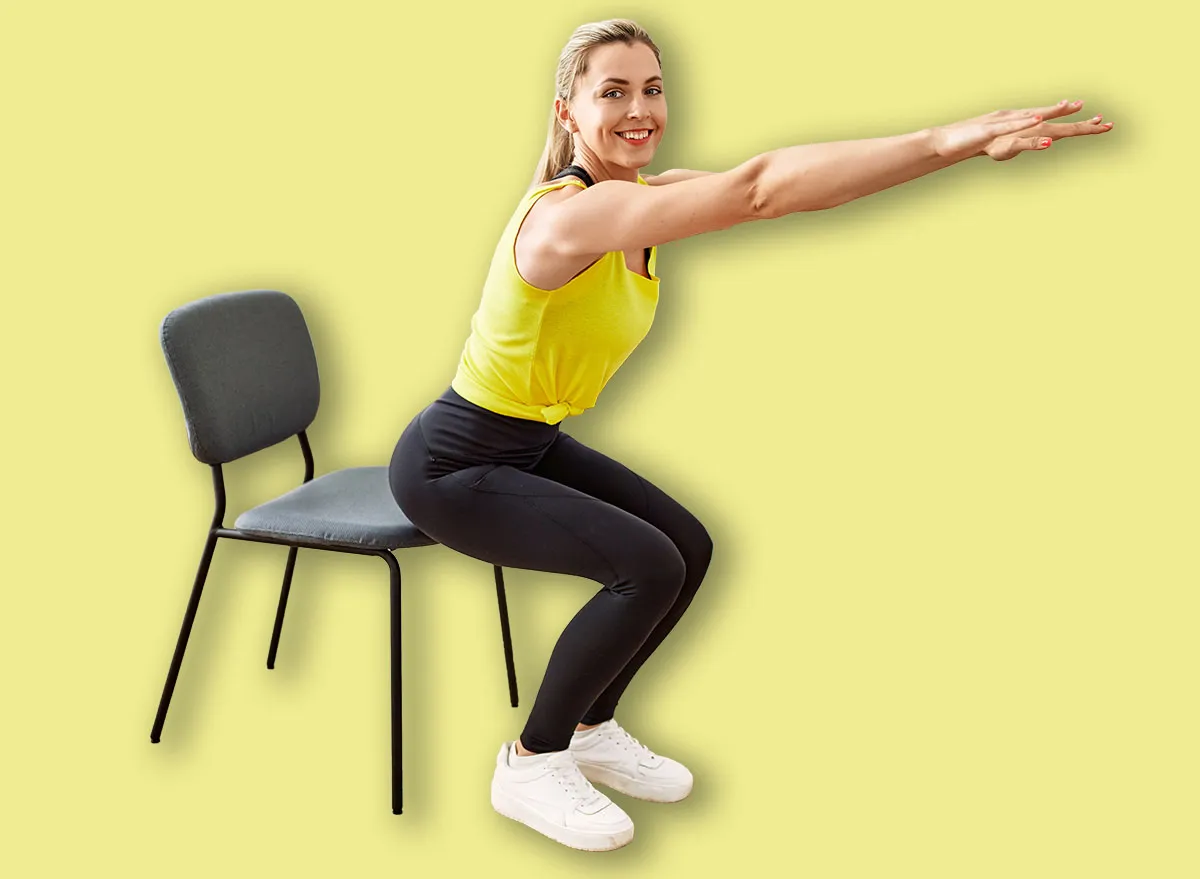
Furthermore, many older adults struggle with the "eccentric" phase of movement—the controlled descent into a chair. When someone "drops" into a seat rather than lowering themselves, it is a clear indicator that their muscles have lost the eccentric strength required to manage their own body weight against gravity.
The Advantage of Chair-Specific Training
There is a common misconception that to build strength, one must head to the gym for heavy, loaded squats. While squats are an excellent exercise, they can be intimidating—and potentially dangerous—for someone who already struggles with basic mobility.
"Chair exercises work because they are highly specific," says Betts. "They rehearse the exact movement pattern you are trying to restore. You are leaning forward, pushing through your heels, and straightening your legs in a controlled, safe environment."
By using a chair as a "safety net," individuals can push their limits without the paralyzing fear of falling. This approach allows for a greater volume of practice, which is essential for neuromuscular adaptation. When you practice the movement in the same environment where you actually live, you are effectively training your body for the real world.

The Core Four: A Proven Protocol
To reverse the trend of mobility loss, Betts recommends a simple, four-move circuit that requires no heavy equipment. These exercises should be performed three to four times per week, with at least one day of rest between sessions to allow for muscle repair.
1. The Sit-to-Stand
This is the foundational movement. It targets the quadriceps and glutes in the exact range of motion needed for daily life.
- The Technique: Sit on the edge of a sturdy, non-sliding chair. Keep your feet hip-width apart. Lean your torso slightly forward, engage your core, and drive through your heels to stand fully upright. Pause, then slowly reverse the motion to sit back down.
- Pro Tip: Avoid using your hands to push off the seat. If you must use them, use them only for balance until your leg strength improves.
2. Chair-Supported Mini-Squat
This exercise focuses on the "depth" of the movement, training your muscles to handle the weight of your body as you approach the seat.
- The Technique: Stand in front of your chair, facing away from it. Slowly lower your hips toward the seat. Stop just before your weight fully touches the chair, then stand back up.
- The Goal: This builds the crucial control needed to avoid "plopping" into a seat, significantly improving your overall balance and joint stability.
3. Seated Knee Extension
This movement isolates the quadriceps, the primary "lifter" muscles of the leg.
- The Technique: Sit tall in your chair. Extend one leg straight out until it is parallel to the floor. Hold this position for two seconds, then lower it slowly. Repeat for the other leg.
- The Focus: The two-second hold is essential. It eliminates the use of momentum, forcing the quadriceps to do the heavy lifting.
4. Standing Calf Raise
Balance is as important as raw power. Strong calves and ankles provide the stability needed to prevent wobbling when you first stand up.
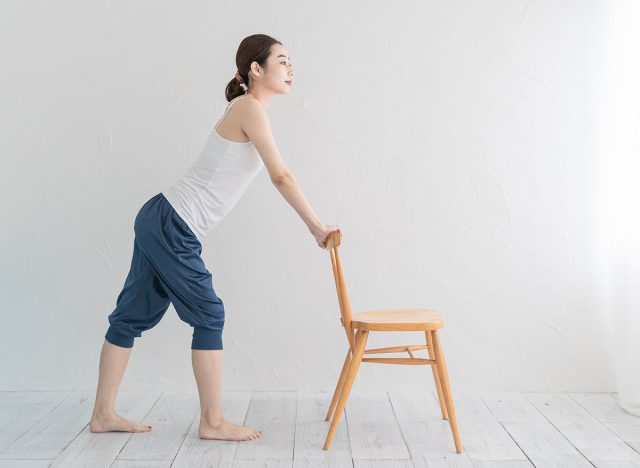
- The Technique: Hold the back of a sturdy chair for support. Rise onto your tiptoes, pause at the peak, and slowly lower your heels to the floor.
- The Benefit: This strengthens the lower leg, which acts as the foundation for every step you take.
Chronology of Progress: What to Expect
If you commit to this 15-minute routine, progress is generally observable within a predictable timeframe.
- Weeks 1–3 (Neuromuscular Adaptation): You will likely feel "steadier." This is not necessarily because your muscles have grown larger, but because your nervous system is becoming more efficient at recruiting the muscle fibers you already have. You will notice you are "hauling" yourself up less.
- Weeks 6–8 (Structural Strengthening): By this point, actual muscle hypertrophy (growth) begins to occur. You will find that you can stand from lower sofas or deep car seats with significantly less effort and a newfound sense of confidence.
- Ongoing Maintenance: The reality of physiology is that strength is a "use it or lose it" commodity. Consistency is the primary factor. As Betts notes, "Strength fades if you stop practicing. Make it a part of your weekly routine, and it will hold."
Supporting Data and Implications
Clinical studies on geriatric health consistently support the efficacy of resistance training in aging populations. Research published in the Journal of Aging and Physical Activity indicates that even low-intensity, body-weight-based resistance training can improve chair-rise performance by up to 25% in sedentary adults over 65.
The implications of this are far-reaching. Beyond the physical ability to stand, this type of training reduces the fear of falling—a psychological barrier that often causes older adults to become more sedentary, leading to a cascade of further health issues, including cardiovascular decline and bone density loss.

Official Guidance and Safety
Before beginning any new exercise regimen, particularly if you have pre-existing joint pain, cardiac issues, or neurological conditions, it is imperative to consult with a healthcare professional or a qualified physical therapist.
"Pick times when you are feeling steady," advises Betts. "Ensure your chair is solid—a kitchen chair is usually better than a plush, low-slung sofa for these exercises. If you feel pain that goes beyond the ‘normal’ sensation of working a muscle, stop immediately."
By prioritizing these simple, targeted movements, individuals over 65 can take direct control over their physical autonomy, ensuring that they remain mobile, active, and independent for years to come. The path to strength does not require a gym membership; it requires a chair, 15 minutes, and the willingness to move.