Establishing a morning routine is more than just a productivity hack; it is a fundamental pillar of long-term health. For those navigating the lifestyle shifts that come with age, the morning hours offer a unique window of opportunity to prime the body for the day ahead. Specifically, focusing on core strength—the body’s "internal corset"—can significantly improve balance, posture, and overall quality of life.
We sat down with Jacob Siwicki, a renowned fitness expert and founder of Siwicki Fitness, to discuss the critical importance of deep core engagement for adults over 55. A former top 1% globally ranked instructor at Equinox, Siwicki brings a wealth of experience in training clients ranging from their 20s to their 70s. According to Siwicki, the secret to functional movement as we age isn’t found in the weight room, but rather in deliberate, low-impact exercises that target the deep musculature of the abdomen.
The Core Problem: Why Traditional Gyms Often Miss the Mark
When we think of "core workouts," many envision heavy crunches on machines or intense abdominal isolation equipment. However, Siwicki argues that these traditional methods often fail to address the specific needs of older adults.
"Restoring core strength after 55 means working on your deep core and continuing to strengthen your core," Siwicki explains. "Gym machines might fall short when it comes to building functional core strength because there are not a lot that focus on the deep core, which is what older adults need, especially if they need to repair it because it’s so weak."
The "deep core" refers primarily to the transverse abdominis—a corset-like muscle that wraps around the spine and provides essential stability. Weakness in this area is a leading contributor to lower back pain, poor balance, and a decrease in daily mobility. By utilizing bodyweight exercises, older adults can build functional stability that translates directly into everyday activities, such as carrying groceries, standing for long periods, or maintaining balance on uneven terrain.
The Science of Morning Movement
The physiological benefits of morning exercise are well-documented. During sleep, our muscles and joints can become stiff due to lack of movement. Engaging in a gentle, focused exercise routine upon waking increases blood flow to the muscles, lubricates the joints, and jumpstarts the metabolism.
Furthermore, behavioral science suggests that "habit stacking"—linking a new behavior to an existing one—is the most effective way to ensure consistency. By performing these five exercises immediately after drinking a glass of water, you set a positive "fitness-first" tone for the remainder of your day.
The 5 Essential Moves for Post-55 Core Restoration
Siwicki emphasizes that these movements should be performed with control rather than speed. Quality of movement is far more important than the number of repetitions when it comes to deep core recruitment.
1. Dead Bugs: The Foundation of Spinal Stability
The Dead Bug is perhaps the most effective exercise for isolating the core without putting undue strain on the neck or lower back.
- The Technique: Lie flat on your back with arms extended toward the ceiling and knees bent at 90 degrees (tabletop position). Slowly lower your right arm behind your head while simultaneously extending your left leg straight out. Keep your lower back pressed firmly into the floor throughout the movement.
- Why it works: It forces the core to maintain stability while the limbs move, which is the exact function of the abdominal wall in daily life.
2. Planks: The Ultimate Isometric Hold
While the plank is a classic, many perform it incorrectly. When done with proper alignment, it is unparalleled for building endurance in the deep core.
- The Technique: Start in a forearm position, elbows directly under the shoulders. Engage your glutes and draw your navel toward your spine. Ensure your body forms a straight line from head to heels. Avoid sagging the hips or lifting them too high.
- Why it works: It creates total-body tension, teaching the core to act as a bridge between the upper and lower body.
3. Bicycle Kicks: Rotational Strength
Functional core strength requires the ability to rotate the torso safely. Bicycle kicks target the obliques, which are crucial for spinal rotation and stability.
- The Technique: Lie on your back, hands behind your head. Bring your right elbow toward your left knee while extending your right leg. Switch sides in a slow, pedaling motion.
- Why it works: This movement challenges the obliques and rectus abdominis, helping to improve functional mobility for turning and reaching.
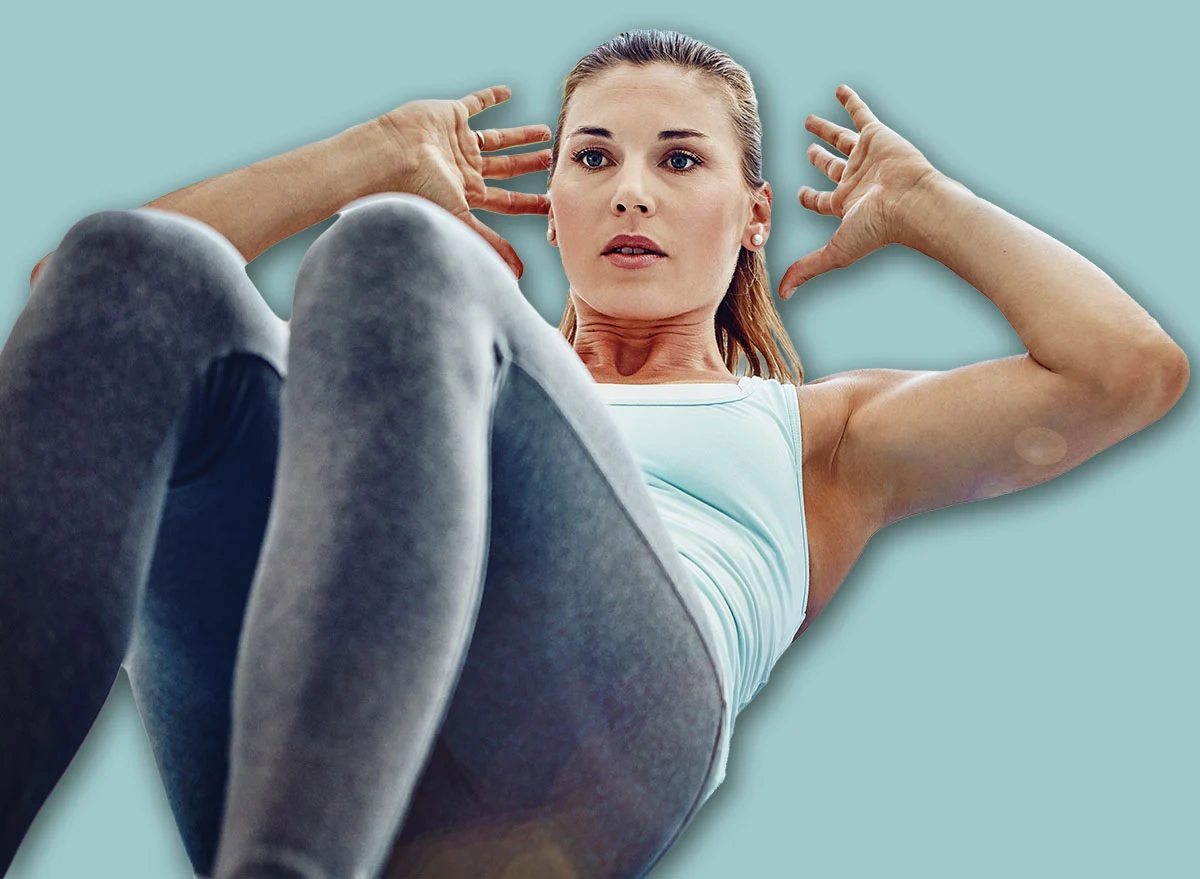
4. Crunches: Focused Isolation
While often maligned as "old school," the controlled crunch remains a highly effective tool when executed with a focus on the contraction rather than the momentum.
- The Technique: Keep your feet flat on the floor, knees bent. Support your head lightly with your hands, but do not pull on your neck. Use your abdominal muscles to lift your shoulder blades just a few inches off the mat.
- Why it works: It builds endurance in the upper abdominal wall, which is essential for tasks like sitting up from a lying position.
5. Penguins: Targeting the Obliques
This final exercise is excellent for those who find standard twists uncomfortable, as it allows for a smaller range of motion while providing high engagement.
- The Technique: Lie on your back with knees bent and feet flat. Lift your shoulder blades slightly. Keeping your arms by your sides, reach your right hand toward your right heel, then your left hand toward your left heel, side to side.
- Why it works: It creates a lateral contraction of the obliques, helping to tighten the waistline and improve side-to-side stability.
Supporting Data and Clinical Perspectives
Recent studies in geriatric physical therapy have consistently shown that core-specific interventions can reduce the risk of falls in adults over 60 by up to 25%. A study published in the Journal of Aging and Physical Activity highlighted that "core stability training is more effective than conventional resistance training for improving functional balance and gait in older adults."
The reasoning is simple: the core acts as the "anchor" for the limbs. If the anchor is weak, the limbs cannot perform their tasks efficiently, leading to compensatory movements that often result in joint pain and injury. Siwicki’s emphasis on "deep core" rather than "six-pack muscles" aligns perfectly with these findings, focusing on the muscles that actually hold the skeleton together.
Implications for Longevity and Independence
The implications of incorporating these five exercises into a daily routine extend far beyond vanity or "flattening the belly." For the over-55 demographic, this is about maintaining autonomy.
- Reduced Back Pain: By strengthening the transverse abdominis, you relieve the lumbar spine of excess pressure, which is the primary cause of chronic back pain.
- Improved Balance: A strong core provides a stable center of gravity, which is essential for preventing the stumbles and falls that can lead to long-term health complications.
- Enhanced Posture: Gravity naturally pulls us forward as we age. A strong core acts as a structural counter-balance, helping you stand taller and move with more confidence.
- Metabolic Health: Consistent morning movement keeps the metabolism active, assisting in weight management and blood sugar regulation throughout the day.
A Final Word on Consistency
"The best exercise is the one you actually do," Siwicki notes. He recommends starting with just five minutes every morning. If you are new to these exercises, start with a 15-second plank and five repetitions of each movement. Over time, as your deep core strength improves, you can gradually increase the duration and the number of repetitions.
Remember, the goal is not to train like an athlete, but to live like one. By prioritizing your core health today, you are making a direct investment in your ability to live a vibrant, active, and independent life for years to come. Whether you are 55, 65, or 75, it is never too late to start building the foundation of your future self.
For more information on customized fitness programs, you can visit Siwicki Fitness to explore professional guidance tailored to your specific mobility needs.