As we age, the gradual slowing of our walking pace is often dismissed as an inevitable consequence of time—a sedentary reality that seniors are told to simply accept. However, leading experts in exercise physiology and physical therapy are challenging this narrative. New research and clinical practice suggest that the decline in walking speed isn’t necessarily a result of "getting old," but rather a symptom of declining leg power and neuromuscular efficiency.
For those over the age of 65, the ability to walk at a brisk pace is more than just a convenience; it is a primary indicator of longevity, cardiovascular health, and functional independence. This article explores why your gait slows down, the physiological mechanisms behind power loss, and a proven, targeted protocol to help you regain the speed and confidence of your younger years.
The Physiological Reality: Why We Slow Down
The human body functions as a complex kinetic chain. Walking is a high-level coordination task that requires the seamless integration of ankle stability, hip extension, and core strength. As we move past our mid-60s, a process known as sarcopenia—the age-related loss of muscle mass—begins to take hold, specifically targeting fast-twitch muscle fibers.
The Power-Endurance Misconception
Many seniors believe that to walk faster, they simply need to walk longer. While longer walks improve cardiovascular endurance, they do little to improve the "force production" required for a faster stride. To regain your pace, you do not need more stamina; you need more power.
Power is defined as force multiplied by velocity. In the context of walking, this means the ability to push off the ground with the ankle and drive the leg forward with the hip quickly. Without this rapid force production, stride length naturally shortens, forcing the body into a shuffling gait.
Chronology of Decline: The Mechanics of a Step
To understand how to restore speed, we must break down the anatomy of a single step. Each stride is a cycle of tension, propulsion, and stabilization:
- The Propulsion Phase (Ankle Drive): At the end of every step, the ankle acts as a lever, pushing the body forward. If the calf and ankle lack strength, this "push" becomes weak, resulting in a truncated stride.
- The Swing Phase (Hip Flexion): The hip must quickly drive the leg forward to prepare for the next contact. Weak hip flexors result in a dragging or shuffling motion.
- The Stability Phase (Single-Leg Stance): Walking is essentially a series of controlled falls. As one leg swings, the standing leg must hold the entire body weight. If stability is compromised, the brain instinctively slows down the movement to prevent a fall.
Supporting Data: Why Speed Matters
Clinical studies consistently highlight that walking speed is a vital sign. Research published in journals such as the Journal of the American Medical Association (JAMA) has linked slower walking speeds in older adults to a higher risk of cognitive decline, frailty, and increased mortality. Conversely, individuals who maintain a brisk pace—roughly 3 miles per hour—demonstrate better brain health and lower systemic inflammation.
By training for power, you aren’t just trying to "walk faster"; you are investing in a more robust physiological system that protects against the most common risks associated with aging.
The 5-Move Power Protocol
The following exercises are designed to target the specific muscles mentioned above. These movements emphasize explosive, controlled motions. For optimal results, aim to perform these 3 to 4 times per week, completing 2 to 4 sets of each.
1. Fast Chair Stand
The chair stand is the "gold standard" for functional leg strength. It engages the quadriceps, glutes, hamstrings, and calves—the exact muscles required to initiate movement from a standstill.
- The Technique: Sit on a sturdy chair with your feet shoulder-width apart. Lean forward slightly and explode upward to a standing position using your leg muscles. Once standing, lower yourself back down slowly (a 3-second descent).
- Why it works: The rapid ascent trains your fast-twitch fibers, while the slow descent builds eccentric control, which is vital for preventing falls.
2. Dumbbell Romanian Deadlift (RDL)
The RDL targets the posterior chain, specifically the hamstrings and glutes. These muscles act as the "brakes" and "engines" of your gait.
- The Technique: Hold a pair of light dumbbells in front of your thighs. With a slight bend in your knees, hinge at the hips, pushing your glutes backward as if trying to touch a wall behind you. Keep your back flat and your core engaged. Return to a standing position by driving your hips forward.
- Why it works: Strengthening the hamstrings allows you to decelerate safely, which gives your brain the confidence to walk at higher speeds without the fear of losing control.
3. High-Knee March
This movement is designed to improve hip flexion range of motion, which directly influences how far you can step.
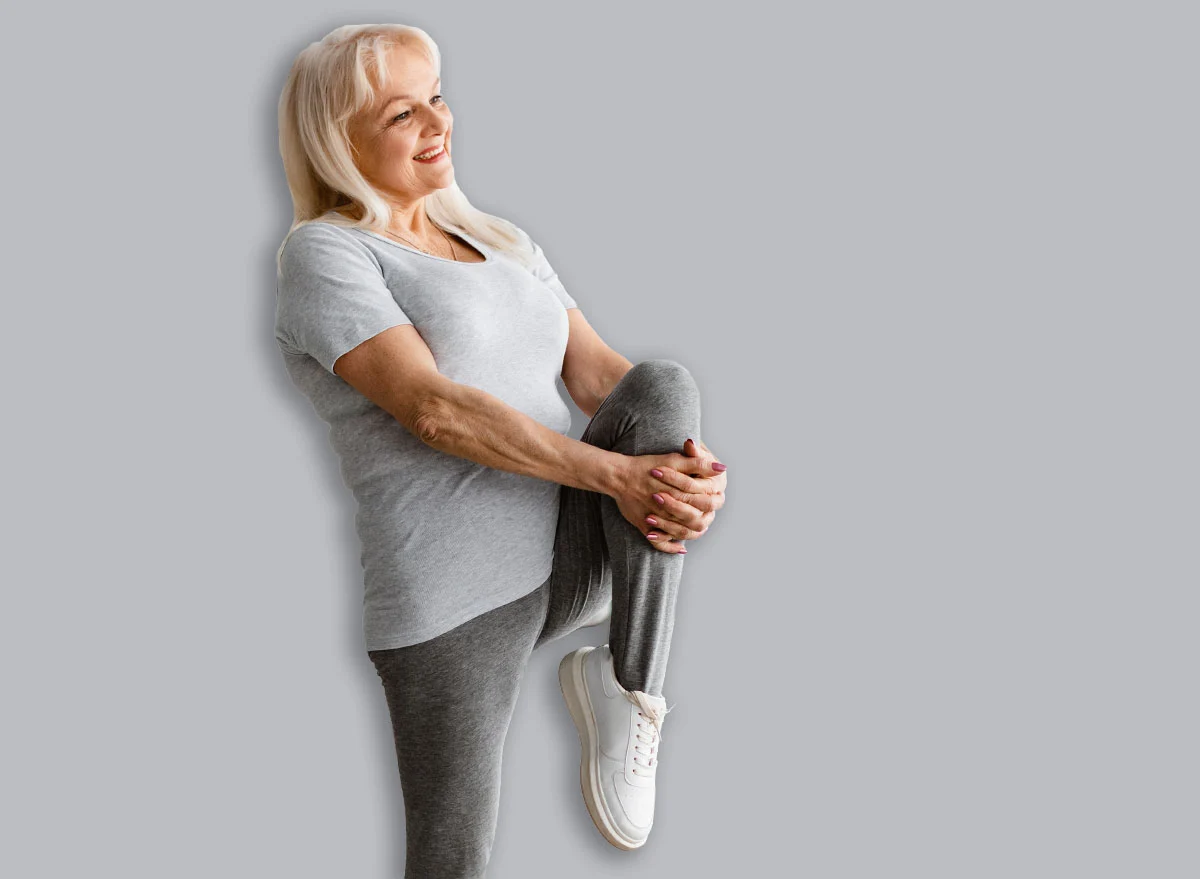
- The Technique: Stand tall and lift one knee toward your chest until it reaches hip height. Quickly lower it and immediately switch to the other leg. Maintain a brisk, rhythmic tempo.
- Why it works: The rapid, high-knee movement forces the hip flexors to work against gravity, increasing your ability to clear the ground during your walking stride.
4. Single-Leg Stand
Balance is the primary limiting factor for most seniors. If you are unsteady on one leg, your walking speed will naturally throttle down as a protective mechanism.
- The Technique: Find a stable object to hold for safety. Lift one foot off the ground and maintain a balanced, upright posture. Hold for 30 seconds before switching legs. As your balance improves, gradually reduce your reliance on the support object until you can perform it independently.
- Why it works: This trains the stabilizing muscles of the ankle and the proprioceptive nerves, allowing for a more confident and aggressive stride.
5. Standing Calf Raise with Quick Drive
The calf is the final point of contact in every step. If it lacks explosive power, your stride will be short and inefficient.
- The Technique: Stand at the edge of a step or on flat ground. Drive through the balls of your feet to raise your heels as high as possible in a quick, explosive motion. Pause for a split second, then lower your heels slowly.
- Why it works: This exercise directly mimics the "push-off" phase of walking. By training this movement explosively, you restore the "spring" in your step.
Expert Perspective: The Role of Progressive Overload
Tyler Read, a veteran personal trainer with over 15 years of experience, emphasizes that consistency and progression are non-negotiable. "You cannot expect to regain speed if you are doing the same low-intensity movements you’ve done for years," says Read. "The key is to apply ‘power’—moving quickly through the concentric portion of the lift—while maintaining absolute control during the lowering phase."
Read notes that many of his clients over 65 report not only an improvement in their walking speed but also a significant increase in their daily energy levels. "When your legs become powerful, everyday tasks—climbing stairs, carrying groceries, or walking to the car—become effortless. That is the true benefit of this training."
Implications for Longevity and Independence
The implications of this protocol extend far beyond the sidewalk. By restoring your walking speed, you are actively reversing the symptoms of physical decline.
Long-Term Health Implications:
- Fall Prevention: Faster walkers have better neuromuscular reaction times, meaning they can recover their balance more effectively if they trip.
- Cardiovascular Health: Increasing your intensity during walks helps lower blood pressure and improves metabolic health.
- Cognitive Preservation: The act of walking requires complex motor planning. By walking faster, you increase the demands on your brain, which supports neuroplasticity and cognitive function.
A Call to Action
If you have noticed that your pace has slowed, do not accept it as a terminal state. The human body is remarkably adaptable at any age. By incorporating these five power-based movements into your weekly routine, you are not merely "working out"—you are reclaiming your mobility and ensuring that your future years are defined by movement, not limitations.
Consult with your primary care physician before beginning any new exercise regimen, especially if you have pre-existing cardiovascular or orthopedic conditions. Once cleared, start slow, focus on form, and prepare to pick up the pace. Your stride is waiting to be restored.