










By Medical News Desk
For millions of Americans, the simple act of taking a walk, grocery shopping, or standing to cook a meal can become an agonizing ordeal. Spinal stenosis, a condition characterized by the narrowing of the spaces within the spine, exerts debilitating pressure on the nerves, often leading to chronic pain, numbness, and restricted mobility. In Southwest Florida, a region with a high concentration of retirees and baby boomers, this condition has long been a barrier to quality of life. However, a minimally invasive procedure known as the Superion Indirect Decompression System is offering newfound hope to patients, allowing them to regain their independence without the need for traditional, high-risk spinal surgery.
The Burden of Spinal Stenosis: Understanding the Crisis
Spinal stenosis is a silent epidemic that disproportionately affects the aging population. According to data from the American Academy of Orthopedic Surgeons, approximately 30 million Americans suffer from the condition. As the spinal canal narrows, it compresses the spinal cord and the nerves that branch out to the extremities.
For patients like Bernard Uhlmann and Karen Nagel, the symptoms are far more than just "back pain." For Uhlmann, the condition manifested as "really severe pain in my legs," which severely limited his ability to walk—a fundamental requirement for maintaining an active lifestyle. Nagel, another Southwest Florida resident, described the sheer exhaustion of living with the condition: "It’s really hard to drag yourself around when you can’t do anything."
As the baby boomer generation continues to age, the demand for effective, low-risk treatments for spinal stenosis has reached an all-time high. The traditional approach often involved invasive laminectomies or spinal fusions—surgeries that require long recovery times, general anesthesia, and significant physical rehabilitation. For many seniors, the risks associated with these major surgeries were often too high, leaving them to suffer in silence.
Chronology of a Medical Breakthrough
The landscape of spinal treatment shifted significantly in 2015 when the U.S. Food and Drug Administration (FDA) granted approval to the Superion Indirect Decompression System, manufactured by Vertiflex. This small, titanium implant was designed to act as a spacer, creating a "cushion" between the vertebrae to alleviate pressure on the nerves without requiring the removal of bone or tissue.
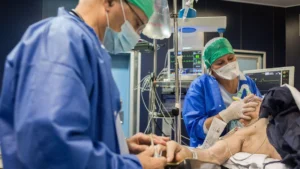
In Southwest Florida, the introduction of this technology began in 2016, spearheaded by Dr. Robert Ball in Port Charlotte. Since then, the procedure has quietly become a beacon of relief for local residents. Unlike traditional surgery, the Superion procedure is categorized as minimally invasive. It involves a small incision through which the device is inserted under image guidance. Once in place, the device spreads the vertebrae just enough to create space for the pinched nerves, effectively decompressing the spine.
The procedure typically lasts about one hour, and in a marked departure from traditional surgical norms, most patients are able to walk out of the office on the very same day. This rapid recovery time has been a game-changer for patients who cannot afford the weeks or months of downtime associated with major spinal operations.
Supporting Data and Clinical Efficacy
The clinical success of the Superion system is supported by its design philosophy: simplicity and reversibility. Dr. Robert Ball emphasizes that one of the most critical aspects of the procedure is its flexibility. "The procedure is completely reversible," Dr. Ball notes, which provides a level of comfort for patients who may be hesitant about permanent alterations to their spinal anatomy.
Insurance coverage remains a vital component of the procedure’s accessibility. Dr. Ball confirmed that the treatment is currently covered by most private insurance carriers as well as Medicare. This is a significant factor for the patient demographic in Southwest Florida, where many retirees rely on federal health coverage for their medical needs.
The efficacy of the procedure is best reflected in patient outcomes. While clinical trials have provided the data, personal testimonials bring the numbers to life. Nagel, who required a swift return to her daily activities to care for her ailing husband, found that the procedure allowed her to resume her caregiving duties almost immediately. "My husband is very sick, and I have to take care of him, so I had to get right back in the swing of things," she explained.
Similarly, Uhlmann, when asked if he would choose the procedure again, was unequivocal: "I would do it again in a quick minute, because the results are very good."
Official Perspectives and Risk Assessment
While the procedure has yielded high success rates, medical professionals maintain a transparent approach regarding potential risks. Dr. Ball is careful to educate patients on the inherent realities of any medical intervention. "Any time there is an incision or injection made, there’s the risk of infection or bleeding," he says. This grounded perspective ensures that patients enter the procedure with realistic expectations, understanding that while the procedure is minimally invasive, it is still a surgical intervention.
Furthermore, Vertiflex has highlighted the specialized nature of the implementation. Currently, Port Charlotte serves as the primary hub for this procedure in Southwest Florida, a designation that underscores the specialized training required for physicians to perform the implantation correctly. This regional concentration of care allows for a higher standard of procedural consistency and patient follow-up.
Implications for the Future of Spinal Care
The success of the Superion system points to a broader trend in orthopedic medicine: the shift toward minimally invasive, "day-surgery" models. As the population continues to age, the healthcare industry is under increasing pressure to provide treatments that maximize patient longevity and mobility while minimizing the physiological trauma of surgery.
1. Reducing the Healthcare Burden
By shifting from inpatient spinal fusions to outpatient decompression procedures, the healthcare system can significantly reduce costs. Lower surgical complexity translates to fewer days in the hospital, reduced reliance on post-operative pain medication (such as opioids), and a shorter path to physical therapy.
2. Improving Quality of Life for Seniors
For the baby boomer demographic, the "quality" of life is often tied to mobility. The ability to move without chronic pain is not merely a convenience; it is a clinical necessity for preventing secondary health issues like cardiovascular disease, muscle atrophy, and depression. By addressing spinal stenosis early and effectively, practitioners can help seniors maintain their independence for years longer than they otherwise might.
3. Setting a Precedent for Future Innovation
The success of this technique encourages further investment in medical device technology that favors "interstitial" solutions—those that work within the existing anatomy rather than attempting to reconstruct it. As Dr. Ball and his colleagues in Port Charlotte continue to refine their approach, the medical community is watching closely to see how these outcomes translate over long-term longitudinal studies.
Conclusion: A New Standard of Care
The case of spinal stenosis treatment in Southwest Florida serves as a microcosm for the evolution of modern medicine. By combining advanced, FDA-approved technology with specialized surgical expertise, patients who were once resigned to a life of limited mobility are reclaiming their ability to participate in the world.
For residents of Port Charlotte and the surrounding areas, the Superion procedure represents a shift away from the "wait and see" approach that has plagued spinal care for decades. As awareness of this minimally invasive option grows, it is likely that more patients will seek out these specialized procedures, further solidifying the role of outpatient orthopedics in the future of healthcare.
While no medical procedure is without risk, the balance of evidence—provided by both clinical data and the lived experiences of patients like Bernard Uhlmann and Karen Nagel—suggests that for those suffering from the constraints of spinal stenosis, a path to recovery is finally within reach. With Medicare and private insurance coverage backing the procedure, the barrier to entry is lower than ever, signaling a promising future for those striving to live pain-free.