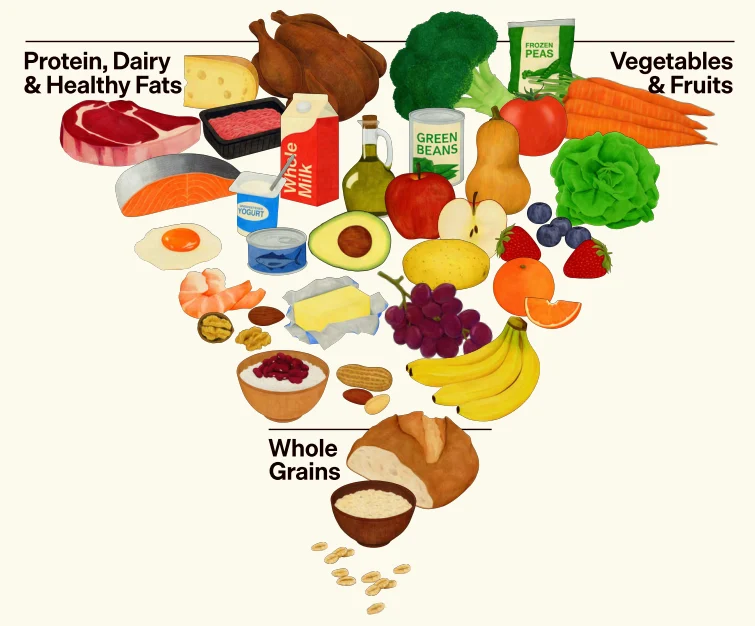
The global discourse on human nutrition has long been dominated by the World Health Organization (WHO), an agency whose dietary blueprints often dictate national health policies and school lunch programs worldwide. However, a significant rift has emerged between the WHO’s latest recommendations on macronutrients and the current consensus held by leading researchers at the Harvard T.H. Chan School of Public Health.
At the heart of the controversy is the WHO’s recent update to its dietary guidelines, which seeks to limit total fat intake to 30% or less of an individual’s total daily caloric intake. While Harvard experts largely applaud the WHO’s focus on reducing trans fats and saturated fats, they have issued a rare, public rebuke of the "total fat" cap, arguing that it is based on outdated, flawed methodology that ignores decades of robust clinical evidence.
The Main Facts: What the WHO Proposed
In mid-July 2023, the WHO released updated guidelines defining a "healthy diet." The document provides granular advice on carbohydrates, total fat, and specific types of fats. The core of the WHO’s stance is that to prevent non-communicable diseases—such as obesity, cardiovascular disease, and type 2 diabetes—individuals over the age of two should restrict their total fat intake to no more than 30% of their total energy intake.
While the organization emphasizes the quality of fat, suggesting that unsaturated fats (found in plant oils, nuts, and fish) should replace saturated and trans fats, the blanket 30% cap remains a foundational pillar of their guidance. For Harvard researchers, this arbitrary ceiling is not just scientifically questionable; they argue it is potentially harmful, as it may inadvertently encourage a population-wide shift toward high-carbohydrate diets, particularly those rich in refined sugars and processed grains.
Chronology of the Debate
To understand why this friction exists, one must look at the evolution of dietary science over the last half-century.
- The 1970s–1990s: The "Low-Fat Era." Following the rise of cardiovascular disease, global health authorities pushed for low-fat diets, inadvertently sparking the boom of "low-fat" processed foods that were often packed with added sugars to compensate for the lack of flavor.
- The Early 2000s: The emergence of the Mediterranean diet. Landmark studies, most notably the PREDIMED trial in Spain, began to demonstrate that diets higher in healthy, unsaturated fats—such as olive oil and nuts—were superior in preventing heart disease and diabetes compared to low-fat interventions.
- 2023: The WHO releases its comprehensive updated guidelines. Despite the accumulation of data favoring high-quality fats, the WHO maintains the 30% total fat limit.
- Post-July 2023: Harvard’s Department of Nutrition publishes a formal critique, asserting that the WHO’s reliance on specific meta-analyses of weight gain is flawed and ignores the broader body of clinical evidence.
Supporting Data: Why Harvard Experts Disagree
The primary concern among Harvard nutrition scientists is that the WHO’s recommendation relies on a narrow selection of meta-analyses regarding weight gain. Dr. Walter Willett, Professor of Epidemiology and Nutrition at Harvard, notes that these meta-analyses are riddled with systemic errors.
The Problem with Meta-Analysis Selection
According to Dr. Willett, the WHO’s supporting documents failed to perform a comprehensive assembly of randomized controlled trials (RCTs). Instead, they relied on selective studies where weight loss was not the primary outcome, or where the participants were already managing chronic conditions like cancer or cardiovascular disease. By including populations that were not metabolically "healthy" at the start of the study, the data becomes skewed and inapplicable to the general public.
The "Intervention Bias"
Harvard researchers also pointed out a critical design flaw in many of the studies cited by the WHO. In many cases, the "low-fat" groups in these studies received intensive, frequent counseling and monitoring by health professionals, while the control groups—those eating a higher-fat diet—received no such attention. "Close dietary guidance and monitoring itself results in small reductions in weight," the Harvard report explains. This creates a false correlation between low-fat diets and weight loss, when the true driver was the behavioral support provided to the subjects.
The PREDIMED Evidence
Perhaps the strongest rebuttal to the WHO comes from the PREDIMED trials. These trials randomly assigned participants to a Mediterranean-style diet, which is characterized by a high fat intake (39% to 42% of total calories, largely from monounsaturated fats). The results were clear: the higher-fat Mediterranean group showed a significantly lower risk of cardiovascular disease and type 2 diabetes compared to those on a low-fat diet. For Harvard, this is the gold standard of evidence that the WHO has effectively overlooked.
Implications: The Risks of the "Low-Fat" Default
The implications of the WHO’s advice are far-reaching. By setting a low cap on total fat, the guidelines may push individuals toward high-carbohydrate alternatives. The Harvard nutrition team warns that if people replace healthy fats with refined carbohydrates and added sugars, they risk spikes in triglycerides and blood pressure, potentially exacerbating the very conditions the WHO seeks to prevent.
"The new WHO recommendation… is narrowly based on one deeply flawed meta-analysis of weight gain," Dr. Willett stated. He emphasized that the "difference between the low- and high-total fat groups [in the cited study] was only about two pounds (0.9 kg)… hardly sufficient to be setting global dietary recommendations."
Furthermore, the Harvard team emphasizes that the type of fat is far more important than the total amount. The push to move away from trans fats and minimize saturated fats is universally supported by the medical community. However, by lumping healthy unsaturated fats—such as those found in avocados, olive oil, and fatty fish—into a total "fat" restriction, the guidelines may inadvertently steer the public away from some of the most nutrient-dense, health-protective foods available.
Official Responses and the Path Forward
As of now, the WHO has stood by its guidelines, maintaining that the current evidence remains the best available for broad, global health policy. However, the dissenting voice from Harvard serves as a vital check on international health policy.
The disagreement highlights a fundamental shift in nutrition science: we have moved away from the era of "one-size-fits-all" macronutrient counting. Instead, current research emphasizes dietary patterns—such as the Mediterranean or DASH diets—that focus on whole, unprocessed foods.
The Harvard researchers conclude that while the WHO’s recommendations on added sugars, sodium, and sweeteners are well-supported and necessary, the restriction on total fat is "best ignored." They advocate for a more nuanced approach, one that encourages the consumption of healthy, unsaturated fats as part of a balanced lifestyle, rather than viewing fat as a monolithic enemy to be restricted.
Conclusion: A Call for Scientific Nuance
The friction between the WHO and Harvard serves as a reminder that science is an evolving dialogue, not a static set of rules. While global organizations face the daunting task of creating guidelines for diverse populations across the globe, the Harvard critique underscores that such guidelines must be built upon the most comprehensive and well-designed evidence available.
As consumers navigate an endless stream of health advice, the takeaway from this debate is clear: the quality of the food we eat—the specific type of fat, the type of carbohydrate, and the degree of processing—matters far more than an arbitrary percentage on a nutrition label. For the average person, focusing on whole foods, healthy plant-based fats, and fiber-rich vegetables remains the most evidence-based path to long-term health, regardless of what the latest total-fat caps may suggest.