In the ongoing war against cancer, the clinical standard has long been defined by a reactive posture: administer a potent therapy, monitor for tumor regression, and wait for signs of relapse before pivoting to a second-line treatment. However, a groundbreaking study published in the journal Genetics suggests that this conventional wisdom may be inadvertently providing cancer cells the very window of opportunity they need to survive.
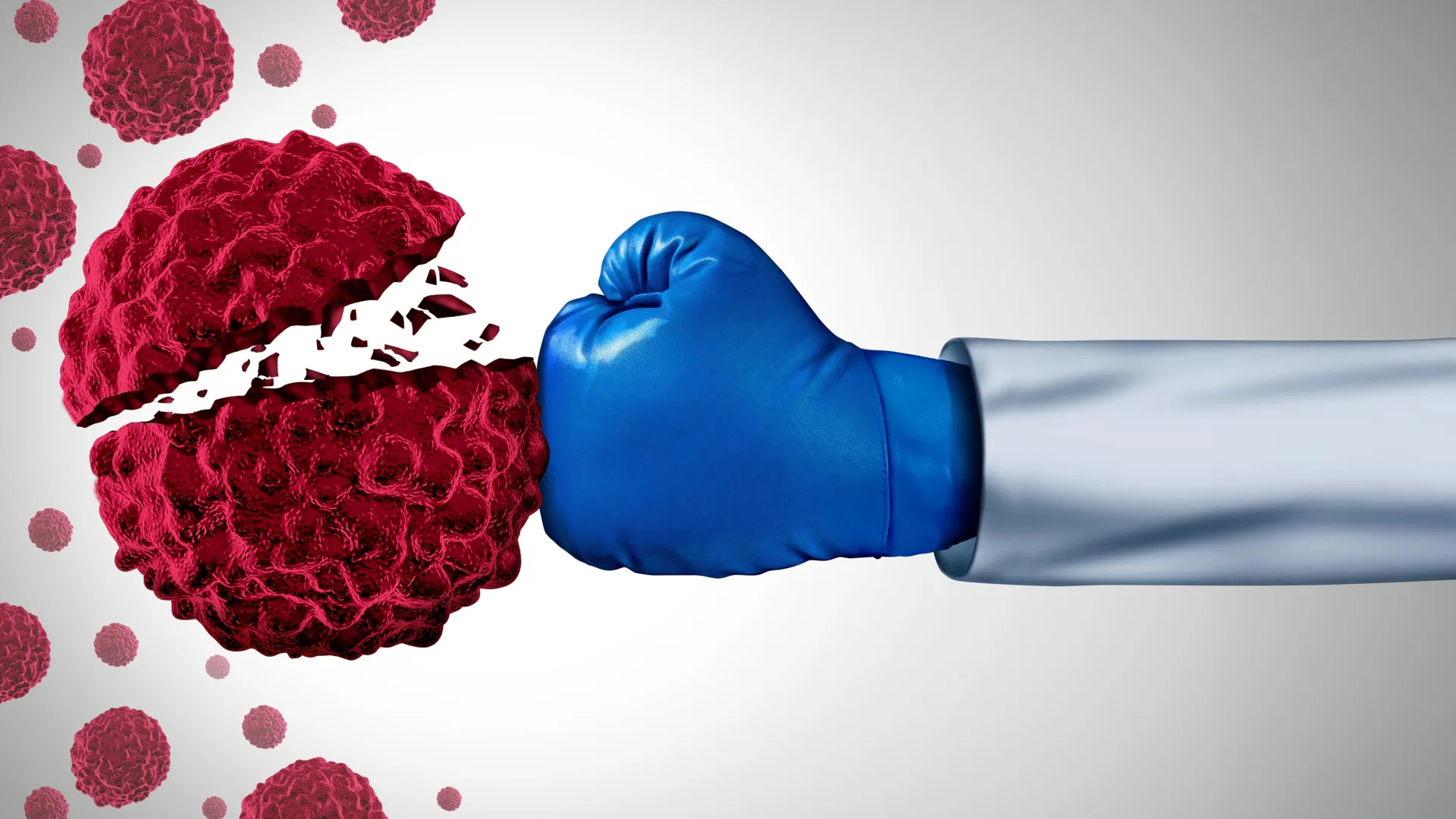
Led by Dr. Robert Noble of City, St George’s, University of London, an international team of mathematical biologists proposes a paradigm shift. Instead of waiting for a tumor to rebuild its strength, they advocate for a "kick it while it’s down" strategy—switching therapies while the tumor is still in the midst of shrinking. By leveraging evolutionary biology and predictive mathematical modeling, researchers believe they can stay one step ahead of the tumor’s ability to mutate and resist medication.
The Evolutionary Arms Race: Why Cancer Returns
To understand why this shift in strategy is necessary, one must first view cancer not merely as a mass of cells, but as an evolving population. As Dr. Noble explains, the tragedy of relapse is rooted in the fundamental mechanisms of genetic variation.
"Although tumors may at first shrink under therapy," Noble notes, "in many cases they eventually regrow. These relapses stem from a small number of cancer cells that have gained mutations making the cells resistant to the treatment."
These mutations are not intentional on the part of the cancer; they are stochastic events that occur as cells divide. When a patient undergoes chemotherapy or targeted therapy, the drug acts as a severe environmental filter. It kills the vulnerable, non-resistant cells, leaving behind a "cleared" landscape where only the mutant, resistant cells remain. Because these cells no longer have to compete for resources with their non-resistant counterparts, they proliferate rapidly, effectively rebuilding the tumor.
The current clinical standard—waiting for evidence of clinical progression—is, in evolutionary terms, a mistake. It grants these resistant sub-populations the time to multiply and, crucially, to acquire additional mutations. By the time a second treatment is introduced, the tumor has often evolved into a "multi-drug resistant" entity, leaving physicians with fewer options.
Chronology of a New Strategy
The development of this research represents a convergence of disciplines, moving from theoretical biology to potential clinical application over several years of rigorous inquiry.
- The Conceptual Foundation: The project began with the academic work of Srishti Patil, a master’s student at the Indian Institute of Science Education and Research (IISER) in Pune, India. During a research residency at City, St George’s, University of London, under the mentorship of Dr. Noble, Patil explored the intersections of tumor dynamics and evolutionary pressure.
- Mathematical Modeling: To formalize the theory, Dr. Noble collaborated with Dr. Yannick Viossat of Université Paris Dauphine-PSL and Johns Hopkins University undergraduate Armaan Ahmed. They utilized mathematical tools originally designed to track how wildlife populations adapt to environmental shifts, such as climate change.
- The "Preemptive" Model: The team mapped the tumor’s life cycle against varying treatment schedules. The results consistently indicated that switching therapies before the tumor reaches a nadir (its lowest point of regression) could fundamentally alter the trajectory of the disease.
- Current Validation: Following the publication of their models, the medical community has begun translating these findings into reality. Three distinct clinical trials are currently underway, focusing on soft-tissue, prostate, and breast cancers, marking the transition from computer simulation to bedside observation.
Supporting Data: Lessons from Antibiotics and Viruses
The efficacy of an evolutionary approach is not without precedent. Scientists have spent decades refining similar strategies to manage infectious diseases, where the threat of resistance is immediate and lethal.
In the case of antibiotic resistance, bacteria evolve in response to drugs in the exact same manner as cancer cells. Medical protocols for tuberculosis and HIV, for example, have long utilized "combination therapy" or "sequenced therapy" to ensure that the pathogen cannot evolve resistance to a single drug before another takes effect.
Similarly, the influenza virus changes its genetic profile every year. Epidemiologists track these shifts to determine which strains are likely to dominate the upcoming season, allowing for the preemptive design of vaccines. Dr. Noble argues that oncology should mirror this proactive, data-driven methodology. By treating a tumor as an ecosystem that is constantly adapting to "environmental" pressures—in this case, chemotherapy or targeted drugs—clinicians can predict the tumor’s next move and counter it.
Official Responses and Scientific Implications
The study has sent ripples through the mathematical biology community, prompting a re-evaluation of how we interpret "treatment failure."
Dr. Noble, in a recent interview regarding the research, highlighted the potential scalability of this approach. "Evolutionary approaches have been very successful in other contexts, such as combating antibiotic resistance," he stated. "There is every reason to suppose that similar approaches should work in tumors."
However, the team is careful to temper enthusiasm with caution. The models indicate that while a two-drug sequence is an improvement over the status quo, it may be insufficient for large, established tumors. Their data suggests that a "multi-therapy sequence"—rotating through three or more distinct drugs—could be the key to achieving a lasting cure. By constantly changing the "environmental pressure," the tumor is forced to deal with a moving target, significantly reducing the probability that any single cell line will acquire the necessary mutations to survive every successive treatment.
Implications for Future Oncology
The implications for clinical practice are profound. If this strategy is validated in the ongoing clinical trials, it could necessitate a complete overhaul of how cancer trials are designed and how oncology departments approach patient care.
1. The Move Toward Adaptive Therapy
Current protocols are rigid, often dictating a specific dose and duration. The "kick it while it’s down" approach requires a more fluid, adaptive model. Doctors would need to utilize real-time imaging and liquid biopsies (blood tests that track tumor DNA) to monitor the "evolutionary pulse" of the tumor. This allows for precision timing in switching therapies.
2. Personalization and Complexity
The researchers emphasize that this is not a "one-size-fits-all" solution. The success of this approach depends heavily on the tumor type, its initial size, the availability of a secondary line of therapy that works through a different mechanism, and the patient’s overall physiological resilience. It requires a high level of coordination between oncologists, geneticists, and mathematical modelers to calculate the optimal timing for each switch.
3. Overcoming the "Resistance Wall"
Perhaps the most significant implication is the potential to turn previously incurable cancers into manageable, or even curable, conditions. By preventing the emergence of a fully resistant tumor, the strategy keeps the disease in a vulnerable state.
4. Future Research Avenues
While the current trials are a major step forward, the researchers acknowledge that we are only in the early stages of understanding the "evolutionary landscape" of human cancer. Future research will likely focus on:
- Predictive Diagnostics: Can we identify which patients are most at risk of rapid mutation before they even start their first round of treatment?
- Drug Sequencing: Determining the optimal order of therapies to maximize the tumor’s confusion and minimize toxicity to the patient.
- Toxicity Management: Since this approach involves multiple therapies, managing the cumulative side effects on the patient’s healthy organs will remain a critical challenge.
Conclusion: A Shift in Perspective
The work of Dr. Noble and his international collaborators serves as a reminder that cancer is a biological process governed by the same laws of evolution that dictate life on Earth. For too long, the medical field has viewed cancer as a static target. By embracing the complexity of tumor evolution—and by acting with the foresight that this evolution demands—oncology may be entering an era where we no longer just treat cancer, but actively outmaneuver it.
As clinical trials progress, the scientific community will be watching closely. If the models hold up in the complexity of the human body, the "kick it while it’s down" strategy could represent one of the most significant advancements in cancer therapy in the 21st century. It is a shift from the reactive, defensive tactics of the past to a proactive, strategic offensive that aims to stop the cancer before it learns how to survive.