









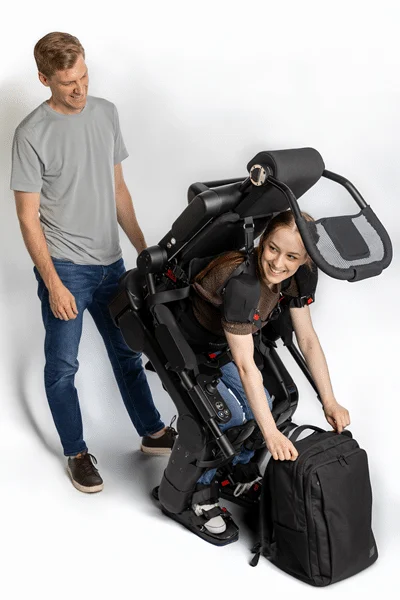
NEW YORK, NY – [Insert Current Date] – In a landmark advancement poised to redefine personal mobility for individuals with spinal cord injuries (SCI), Wandercraft has officially announced the U.S. commercial launch of Eve, the world’s first FDA-cleared self-balancing personal exoskeleton. This groundbreaking device is now available to eligible adults living with spinal cord injuries at any neurological level, offering an unprecedented opportunity for hands-free upright mobility. The launch marks a pivotal moment, transforming years of robotic innovation into a tangible reality for those seeking greater independence and connection with their environment.
Main Facts
Wandercraft’s Eve represents a monumental leap forward in assistive technology. Unlike conventional exoskeletons that necessitate the use of crutches or walkers for balance, Eve integrates sophisticated self-balancing technology, powered by advanced Physical AI. This innovative design allows users to stand, walk, and navigate their surroundings with their hands completely free, enabling them to engage in a multitude of daily activities that were previously challenging or impossible while upright. From reaching for objects on a shelf and carrying items, to preparing meals, opening doors, and participating more fully in social interactions, Eve is engineered to seamlessly integrate into the user’s life, complementing rather than replacing their wheelchair.
A critical differentiator for Eve is its expansive eligibility criteria. It stands as the first FDA-cleared device in its category without restrictions based on the neurological level of spinal cord injury. This means that adults with SCI at any level, provided they can safely operate the device’s controller and have no contraindications listed in the User Manual, can now pursue the path to acquiring an Eve. This inclusivity significantly broadens the potential user population, underscoring the depth and breadth of safety data, clinical evidence, and usability testing that Wandercraft meticulously developed for its FDA submission.
The journey to obtaining an Eve is comprehensive and personalized. Eligible individuals begin with a thorough clinical evaluation and a trial period to assess suitability and comfort. Following a successful trial and a physician’s order, each Eve unit is custom-fitted and manufactured to the individual’s specifications. The process culminates in a personalized training program delivered by the Wandercraft team, ensuring users are proficient and confident in operating their new device, with robust ongoing support provided thereafter. This holistic approach emphasizes user safety, efficacy, and long-term satisfaction.
Chronology
The journey to Eve’s commercial launch in the U.S. is a testament to Wandercraft’s enduring commitment to pioneering robotics and human-centered design.
The Development Journey: Years of Robotic Innovation
Wandercraft, a French robotics company, has dedicated years to the intricate research and development of bipedal robotics. Their foundational work centered on creating highly stable and agile walking robots, pushing the boundaries of what was technologically feasible. This extensive background in complex robotics and AI-driven locomotion laid the groundwork for their medical exoskeletons. Prior to Eve, Wandercraft gained recognition for its rehabilitation exoskeleton, Atalante X, which provided intensive gait training in clinical settings. The insights and technological advancements from Atalante X were instrumental in refining the self-balancing algorithms and user interface that would become core to Eve. The vision was always to transition these sophisticated capabilities from clinical rehabilitation to personal, everyday use.
Rigorous FDA Clearance: A Milestone Achieved
The pivotal moment preceding the U.S. commercial launch was the attainment of FDA clearance for Eve. This rigorous regulatory approval process required Wandercraft to submit extensive data demonstrating the device’s safety and efficacy. The clearance, notably granted without restrictions on the neurological level of spinal cord injury, was a significant validation of Eve’s design and performance. It reflected years of clinical trials, usability testing, and a deep understanding of the diverse needs of individuals with SCI. The FDA’s endorsement signaled that Eve was not just a technological marvel, but a clinically validated tool ready to empower users.
The Commercial Launch Announcement: Making It a Reality
The official U.S. commercial launch of Eve, announced on [Insert Current Date – e.g., October 26, 2023], represented the culmination of this extensive development and regulatory journey. Matthieu Masselin, co-founder and CEO of Wandercraft, underscored the significance of this transition: "FDA clearance showed that Eve was ready to move forward. Today is about making it a reality for the people we built it for. We have spent years developing the robotics, but our breakthroughs only matter when we’re able to better connect people to the world around them. That’s why we built an infrastructure that supports people every step of the way, from evaluation and fitting to reimbursement, training, and ongoing service." This statement encapsulated the company’s commitment to not only delivering cutting-edge technology but also ensuring comprehensive user support.
User Onboarding Process: A Personalized Pathway to Independence
Wandercraft has meticulously designed a multi-step process for individuals to acquire and master their Eve exoskeleton. This journey begins with a clinical evaluation to determine medical eligibility and suitability. Prospective users then participate in a trial period, allowing them to experience Eve firsthand and assess its benefits in a controlled environment. Upon a successful trial and receiving a physician’s order, each Eve is individually fitted and manufactured, ensuring optimal comfort and performance. A crucial component of this process is the personalized training program, conducted by Wandercraft’s expert team, which equips users with the necessary skills and confidence to operate their device safely and effectively in their daily lives. This is further bolstered by ongoing support, ensuring users continue to derive maximum benefit from their exoskeleton.
Strategic Partnerships for Widespread Access
To ensure broad and equitable access across the United States, Wandercraft strategically forged alliances with key players in the healthcare and assistive technology sectors. These partnerships were formed concurrently with or immediately following the FDA clearance, forming the backbone of the "infrastructure" CEO Masselin referenced.
- National Seating & Mobility (NSM): NSM, a leading provider of Complex Rehabilitation Technology (CRT), became Wandercraft’s exclusive distribution partner for Eve. This collaboration leverages NSM’s extensive network of over 180 locations, ensuring that evaluation, education, access, and delivery are managed by experienced professionals who understand the nuances of complex mobility care.
- Good Shepherd Rehabilitation: Recognized for its deep expertise, particularly with Wandercraft’s Atalante X, Good Shepherd Rehabilitation was designated a Wandercraft Center of Excellence. This partnership expands access to Eve in Pennsylvania’s Lehigh Valley, providing specialized support and serving as an exclusive regional partner where users can learn about and experience the technology.
- USVetServ: To serve the veteran community, a Service-Disabled Veteran-Owned Small Business, USVetServ, was authorized as an independent distributor for Eve and Atalante X for the U.S. Department of Veterans Affairs (VA) and its facilities nationwide. This ensures that veterans, who often face unique mobility challenges, have dedicated access to this transformative technology.
These chronological milestones, from conceptualization and development to regulatory approval and strategic market entry, underscore the methodical and user-centric approach Wandercraft has taken to bring Eve to the U.S. market.
Supporting Data
The commercial viability and clinical impact of Eve are underpinned by robust technological innovation and compelling clinical evidence.
Technological Innovation: The Power of Physical AI
At the heart of Eve’s revolutionary capabilities lies its proprietary self-balancing technology, powered by what Wandercraft refers to as "Physical AI." This sophisticated system differentiates Eve significantly from earlier generations of exoskeletons. Traditional exoskeletons often act as rigid frames that require external support – typically crutches or a walker – for the user to maintain balance. This limitation means users’ hands are occupied, restricting their ability to perform functional tasks and engage with their environment.
Eve’s Physical AI continuously analyzes the user’s movements, posture, and the surrounding terrain, making real-time micro-adjustments to ensure stability. This intelligent system mimics the complex balancing mechanisms of human locomotion, allowing the exoskeleton to dynamically adapt and support the user without external aids. The freedom this provides is profound: users can stand up, walk, turn, and sit down while their hands remain free to interact with their world. This translates into practical benefits such as reaching for items, carrying groceries, opening doors, preparing food, and participating in hobbies or professional tasks that require manual dexterity. The AI learns and adapts, enhancing the user experience over time and contributing to a natural, fluid movement pattern. This represents not just an incremental improvement but a paradigm shift in how assistive exoskeletons function.
Clinical Evidence: Validating Safety and Efficacy
The expanded eligibility for Eve, particularly for individuals with SCI at any neurological level, is a direct result of comprehensive clinical research and safety data. Two recent peer-reviewed studies provide crucial support for Eve’s transition to personal use.
-
The Journal of Visualized Experiments (JoVE) Study: This research, conducted at Kessler Foundation and the James J. Peters VA Medical Center, focused on the feasibility of training individuals with tetraplegia and high paraplegia to use a self-balancing exoskeleton for personal use, alongside their companions. The study design aimed to determine if participants could not only operate the device but also perform functional tasks relevant to daily life.
- Key Findings: Among the first 16 participants who completed the protocol, all successfully achieved the study’s performance goals for standardized mobility assessments, including the Timed Up and Go (TUG) test and the 6-Minute Walk Test. Crucially, 15 of 16 participants achieved the donning goal (putting on the exoskeleton) after just four training sessions, and all achieved the doffing goal (taking it off). The study reported no serious adverse events among the participants, underscoring the device’s safety even for individuals with higher-level spinal cord injuries. This study provided compelling evidence that complex self-balancing exoskeletons could be safely and effectively integrated into personal use after appropriate training.
-
ASCIP Annual Meeting Presentation: Further bolstering Eve’s clinical validation, findings from Wandercraft’s pivotal study were presented at the Academy of Spinal Cord Injury Professionals (ASCIP) Annual Meeting. This research, also involving participants from the James J. Peters VA Medical Center and Kessler Foundation, focused on the device’s broader functional impact.
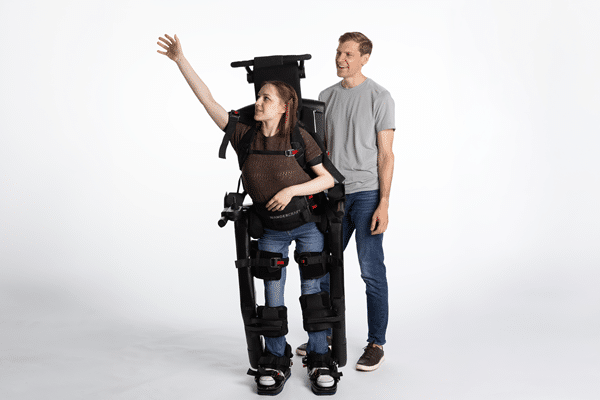
- Key Findings: The results demonstrated that Eve facilitated safe, hands-free assisted walking for people with spinal cord injury, maintaining a low adverse-event rate. Beyond basic ambulation, participants successfully performed key mobility tasks and various activities of daily living with high perceived safety, user satisfaction, and ease of training. These outcomes are critical because they highlight that Eve offers more than just the ability to stand or walk; it provides a pathway to greater functional independence and improved quality of life, which are paramount considerations for personal use devices.
Gail Forrest, PhD, director of the Tim and Caroline Reynolds Center for Spinal Stimulation at Kessler Foundation, emphasized the significance of this research: "What is important about this work is that we evaluated more than whether someone could stand or walk in an exoskeleton. We examined whether people with high-level spinal cord injuries and their companions could learn to use a self-balancing exoskeleton and perform functional tasks relevant to personal use. Commercial availability is an important next step toward translating that clinical work into carefully supported use in everyday life." Her statement underscores the translational impact of the research – moving from laboratory findings to practical, real-world applications.
User Experience Insights: The Lived Reality of Freedom
Beyond clinical metrics, the qualitative experience of users like Caroline Laubach, a Wandercraft test pilot, provides invaluable insight into Eve’s transformative potential. Laubach eloquently articulated the personal impact of the device: "With Eve, being upright isn’t just about standing. It’s about having the freedom to use my hands, move through my home, and connect with people in a new way. Those everyday moments bring me so much joy. What makes this milestone especially meaningful is knowing that more people will now have the chance to experience Eve for themselves and find that same joy in their own way." Her testimony highlights that the benefits extend far beyond physical mobility, touching upon emotional well-being, social interaction, and the profound joy derived from reclaiming seemingly simple, everyday activities. This human-centered perspective reinforces the profound implications of Eve’s self-balancing, hands-free capabilities.
Official Responses
The commercial launch of Wandercraft’s Eve has been met with enthusiastic responses from the company’s leadership, clinical experts, and most importantly, the individuals who have experienced its transformative potential firsthand.
Wandercraft Leadership: A Vision Realized
Matthieu Masselin, co-founder and CEO of Wandercraft, articulated the company’s long-term vision finally coming to fruition. His comments underscored the dual focus on technological excellence and user-centric support. "FDA clearance showed that Eve was ready to move forward. Today is about making it a reality for the people we built it for," Masselin stated, emphasizing the transition from regulatory achievement to practical application. He further elaborated on the core philosophy driving Wandercraft: "We have spent years developing the robotics, but our breakthroughs only matter when we’re able to better connect people to the world around them. That’s why we built an infrastructure that supports people every step of the way, from evaluation and fitting to reimbursement, training, and ongoing service." This commitment highlights Wandercraft’s understanding that revolutionary technology must be accompanied by comprehensive support to truly make a difference in users’ lives. The company’s focus is not just on selling a device, but on enabling a new lifestyle.
Clinical Experts: Bridging Research and Reality
Dr. Gail Forrest, PhD, Director of the Tim and Caroline Reynolds Center for Spinal Stimulation at Kessler Foundation, provided an invaluable clinical perspective on Eve’s significance. Her insights highlighted the depth of the research validating Eve’s use. "What is important about this work is that we evaluated more than whether someone could stand or walk in an exoskeleton," Dr. Forrest explained. "We examined whether people with high-level spinal cord injuries and their companions could learn to use a self-balancing exoskeleton and perform functional tasks relevant to personal use. Commercial availability is an important next step toward translating that clinical work into carefully supported use in everyday life." Dr. Forrest’s statement confirms that Eve’s clinical validation goes beyond basic mobility, addressing the practicalities of real-world functionality and the importance of user and caregiver training for successful integration into daily routines.
User Testimonials: The Voice of Experience
Caroline Laubach, a dedicated Wandercraft test pilot, offered a deeply personal and poignant account of Eve’s impact. Her words resonated with the emotional and practical liberation the device offers. "With Eve, being upright isn’t just about standing. It’s about having the freedom to use my hands, move through my home, and connect with people in a new way," Laubach shared. She continued, "Those everyday moments bring me so much joy. What makes this milestone especially meaningful is knowing that more people will now have the chance to experience Eve for themselves and find that same joy in their own way." Laubach’s testimony powerfully illustrates that Eve is not merely a piece of equipment but a catalyst for enhanced quality of life, fostering independence, social engagement, and personal fulfillment.
Partner Statements: Facilitating Access and Support
While not explicitly quoted in the original article, the strategic partners integral to Eve’s U.S. launch would undoubtedly echo the excitement and commitment of Wandercraft and its users.
A spokesperson from National Seating & Mobility (NSM) might comment: "As Wandercraft’s exclusive CRT distribution partner for Eve, NSM is incredibly proud to bring this transformative technology to our clients. Our network of Assistive Technology Professionals and clinicians is uniquely positioned to guide individuals through the evaluation, fitting, and ongoing support needed for such a sophisticated device. Eve represents a new frontier in personal mobility, and we are committed to ensuring seamless access for eligible adults across the country."
Similarly, a representative from Good Shepherd Rehabilitation, a Wandercraft Center of Excellence, could state: "Our experience as a Wandercraft Center of Excellence with Atalante X has allowed us to develop deep expertise in exoskeleton training and patient support. We are thrilled to expand our partnership to include Eve, offering unparalleled access and specialized care to individuals in the Lehigh Valley. This device offers a level of hands-free independence that will truly change lives, and we are dedicated to maximizing its potential for our patients."
Finally, a leader from USVetServ might add: "For our nation’s veterans, who have often sacrificed so much, access to cutting-edge mobility solutions like Eve and Atalante X is paramount. As a Service-Disabled Veteran-Owned Small Business, USVetServ is honored to partner with Wandercraft to ensure that VA medical centers and facilities nationwide can provide this incredible technology to those who have served. This partnership will significantly enhance the quality of life and independence for many veterans with spinal cord injuries."
These official responses collectively paint a picture of a well-orchestrated launch, driven by technological innovation, rigorous clinical validation, profound user impact, and a robust support network designed to ensure widespread and equitable access to this groundbreaking device.
Implications
The commercial launch of Wandercraft’s Eve in the U.S. carries far-reaching implications, promising to reshape the landscape of personal mobility, healthcare, and societal inclusion for individuals with spinal cord injuries.
Impact on Users: Unlocking Unprecedented Independence and Quality of Life
The most immediate and profound impact of Eve will be felt by its users. The ability to achieve hands-free upright mobility represents a paradigm shift from previous exoskeleton technologies. This freedom allows users to:
- Enhance Daily Living: Perform everyday tasks with greater ease and independence, such as reaching items on high shelves, carrying objects, preparing meals, and opening doors without needing external balance aids. This reduces reliance on caregivers for specific tasks, fostering a greater sense of autonomy.
- Improve Social Interaction: Engage more directly in conversations at eye level, participate in group activities, and interact with children or pets without physical barriers. This can significantly reduce feelings of isolation and improve mental well-being.
- Increase Physical Health Benefits: While primarily a mobility device, standing and walking in an exoskeleton can offer secondary health benefits, including improved circulation, bone density, bowel and bladder function, and reduced spasticity and pressure sores, all of which contribute to overall health.
- Boost Psychological Well-being: The newfound independence and ability to participate more fully in life can significantly enhance self-esteem, confidence, and overall quality of life, leading to a more positive outlook and greater engagement in personal and professional pursuits.
- Expanded Accessibility: The eligibility for adults with SCI at any neurological level is revolutionary. Previously, many individuals with higher-level injuries were excluded from personal exoskeleton use due to the requirement for upper body strength to manage crutches or walkers. Eve’s self-balancing technology opens this door to a much broader population, ensuring that more people can benefit from upright mobility.
Healthcare and Rehabilitation Landscape: A New Era of Care
Eve’s introduction will undoubtedly influence rehabilitation practices and long-term care strategies for SCI.
- Paradigm Shift in Rehabilitation: Rehabilitation programs can now incorporate training for hands-free upright mobility, focusing on functional tasks rather than just basic ambulation. This could lead to more holistic and goal-oriented rehabilitation plans.
- Reimbursement and Accessibility: The fact that Medicare covers qualifying personal exoskeletons as custom-fitted orthoses under HCPCS billing code K1007 is a critical development. This establishes a pathway for financial accessibility, making Eve attainable for many more individuals. Wandercraft’s dedicated access team, assisting with benefits, documentation, and coordination with payers, further streamlines this process. This financial support is crucial for widespread adoption of such high-value medical devices.
- Role of Complex Rehabilitation Technology (CRT) Providers: Partners like National Seating & Mobility (NSM) will play an indispensable role. CRT providers connect users with a multidisciplinary team including clinicians, Assistive Technology Professionals (ATPs), and payers, ensuring that a sophisticated device like Eve is properly prescribed, fitted, and integrated into the user’s life with ongoing support. This emphasizes the importance of specialized expertise in delivering complex mobility solutions.
- Centers of Excellence and Specialized Training: The establishment of Wandercraft Centers of Excellence, such as Good Shepherd Rehabilitation, ensures that users receive expert training and ongoing support. These centers become hubs for advanced care, research, and community education, fostering a network of highly skilled professionals.
- Veteran Care: The partnership with USVetServ ensures that U.S. veterans, a population often disproportionately affected by spinal cord injuries, have direct and supported access to Eve through VA medical centers. This is a vital step in providing the best possible care for those who have served.
Future of Exoskeletons and Assistive Technology: Accelerating Innovation
Eve’s success will likely serve as a powerful catalyst for future innovation in assistive robotics.
- Advancements in AI and Robotics: The sophisticated Physical AI driving Eve will inspire further research and development in autonomous balancing systems for various assistive devices. This could lead to more intelligent, adaptive, and user-friendly technologies across the spectrum of mobility aids.
- Expanding the Personal Exoskeleton Market: By proving the viability and demand for hands-free personal exoskeletons, Wandercraft is paving the way for market growth and competition, which will ultimately benefit consumers through more options and continuous improvements.
- Wandercraft’s Continued Vision: This launch is likely just one step in Wandercraft’s long-term vision. Future developments could include further refinements to Eve’s capabilities, expansion into other neurological conditions, or even exploration of broader applications for their advanced bipedal robotics.
Societal Impact: Fostering Greater Inclusion and Accessibility
Beyond individual users and the healthcare system, Eve’s availability has broader societal implications.
- Enhanced Inclusion: By enabling greater independence and participation, Eve contributes to a more inclusive society where individuals with disabilities can engage more fully in community life, education, and employment.
- Reduced Stigma: Increased visibility of advanced assistive technologies can help normalize disability and reduce stigma, fostering a greater understanding and acceptance of diverse abilities.
- Economic Impact: Empowering individuals with SCI to participate more actively in the workforce can have positive economic impacts, both for the individuals themselves and for society through increased productivity and reduced long-term care costs.
The U.S. commercial launch of Wandercraft’s Eve is more than just a product release; it signifies a profound shift in what is possible for individuals living with spinal cord injuries. By offering hands-free, self-balancing upright mobility, Eve is not merely helping people walk; it is helping them reclaim their lives, engage with their world more fully, and experience the joy of everyday moments with unprecedented freedom. As the device becomes more widely adopted, its ripple effects are poised to create a more accessible, independent, and inclusive future for countless individuals.