Just as the alphabet serves as the fundamental building block for literacy, enabling us to construct sentences, share ideas, and navigate the complexities of modern society, there exists a secondary, vital set of “ABCs” that many of us never receive: the lexicon of emotional regulation. While we are taught how to read and write from a young age, we are rarely taught how to interpret our internal physiological signals—specifically, the mechanism of anxiety.
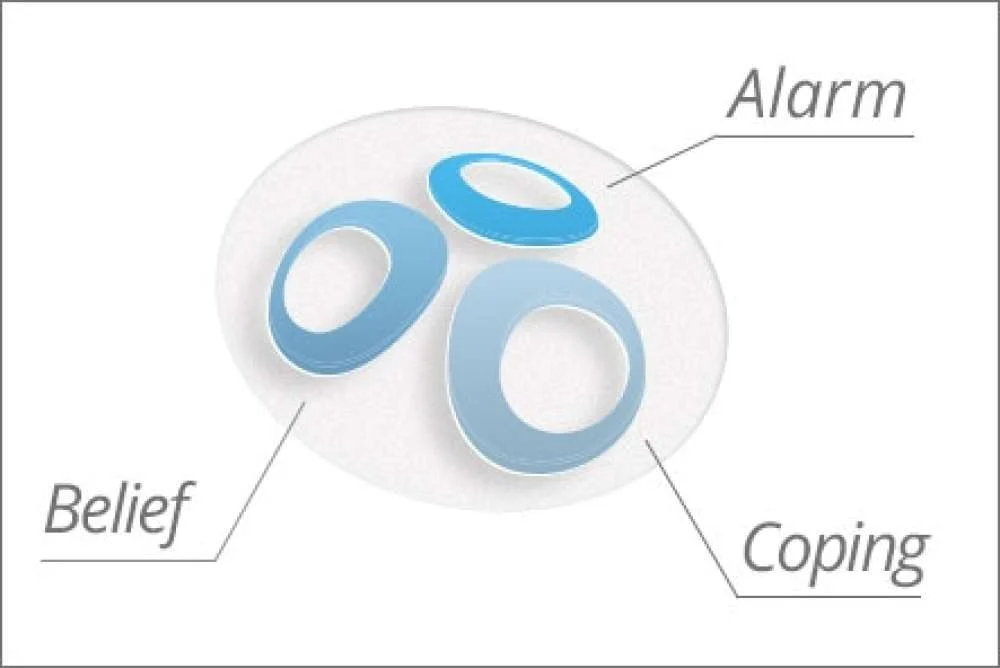
Anxiety is an evolutionary marvel, a primal survival instinct designed to alert us to danger. Yet, in the modern world, this internal alarm system often misfires. For millions, anxiety is not a protective tool but a constant, debilitating noise. To combat this, mental health professionals are increasingly turning to the ABCtracker™—a framework that demystifies the anxiety loop by breaking it down into three manageable components: Alarm, Belief, and Coping.
The Anatomy of an Anxiety Response: A Chronological Breakdown
To understand how anxiety takes hold, one must view the experience as a chronological chain reaction. It is rarely a singular, static event; rather, it is a sequence of physiological and cognitive processes that unfold in a matter of milliseconds.
Phase 1: The Alarm (The Physiological Trigger)
The process begins with the "Alarm." This is the body’s instinctive response to a perceived threat. Much like a sophisticated car alarm, our nervous system is hardwired to scan the environment for danger. In our ancestors, this mechanism was essential for survival against physical predators. However, in contemporary life, the "predator" is often a looming deadline, a social interaction, or a nebulous future worry. For those with generalized anxiety, this alarm is hypersensitive, sounding off at the slightest provocation, even when no objective threat exists.
Phase 2: The Belief (The Cognitive Interpretation)
Once the alarm rings, the brain immediately seeks to categorize the threat. This is where "Belief" comes into play. The mind attempts to assess the situation: Is this dangerous? Am I in trouble? Can I handle this? For individuals prone to anxiety, this assessment is often distorted by automatic, catastrophic thinking. The brain forms a belief—frequently an incorrect one—that reinforces the initial alarm. If you believe a minor social awkwardness is a sign of total rejection, your brain will amplify the anxiety, creating a feedback loop that feels impossible to break.
Phase 3: The Coping (The Behavioral Reaction)
Finally, the cycle concludes with "Coping." Once the belief is solidified, the body demands action to return to a state of safety. This is where we choose a mechanism to deal with the perceived threat. Some strategies are "adaptive"—meaning they help us process the emotion, calm our nervous system, and move forward. Others are "maladaptive"—behaviors like avoidance, substance use, or rumination—which may provide temporary relief but ultimately cement the anxiety in the long term.
Supporting Data: Why Modern Anxiety is a Public Health Crisis
The necessity for frameworks like the ABCtracker™ is underscored by staggering global statistics. According to the World Health Organization (WHO), anxiety disorders are among the most common mental health conditions worldwide. In the United States alone, the Anxiety and Depression Association of America (ADAA) reports that anxiety disorders affect 40 million adults—nearly 18% of the population—every year.
The data suggests a disconnect between the prevalence of these conditions and the accessibility of effective, immediate tools. Research indicates that while professional therapy is the gold standard, many individuals struggle to translate therapeutic insights into their daily, high-stress moments. The ABCtracker™ bridges this gap by providing a tangible, real-time method for self-monitoring. By documenting these three stages, users can transition from being "victims" of their biology to "managers" of their psychological states.
Expert Perspectives and Professional Implementation
Psychologists and psychiatrists who advocate for the ABCs of Anxiety emphasize that mastering these concepts is not an overnight process. It requires the same dedication as learning a new language or musical instrument.
"Every master starts as a beginner," notes Dr. Elena Vance, a clinical psychologist specializing in cognitive behavioral interventions. "The goal of the ABCtracker™ isn’t to eliminate anxiety entirely—which is impossible, as it is a normal human emotion—but to change the relationship we have with it. By recognizing the ‘Alarm’ stage, we gain a split-second of consciousness that allows us to challenge the ‘Belief’ before we react with a ‘Coping’ strategy."
The Role of the Professional
While the ABCtracker™ is a powerful self-help tool, it is designed to function in tandem with clinical guidance. Professionals use this data to identify patterns that the patient might otherwise overlook. For example, a physician might notice that a patient consistently labels "public speaking" as an "Alarm" that triggers a "Belief" of "I am incompetent," leading to a "Maladaptive Coping" strategy of avoidance. By identifying this pattern, the therapist can work to restructure the patient’s beliefs and introduce adaptive coping mechanisms, such as deep-breathing exercises or cognitive reframing.
Implications for Future Mental Health Literacy
The broader implication of the ABC approach is the democratization of mental health care. By providing the public with a simple, memorable acronym, we shift the culture from reactive treatment to proactive literacy.
Normalizing the Internal Alarm
Perhaps the most significant implication is the normalization of the alarm itself. When we recognize that anxiety is an evolutionary tool, the shame associated with "feeling anxious" begins to dissipate. We stop viewing anxiety as a personality flaw and start viewing it as a sensitive, albeit miscalibrated, internal security system. This shift in perspective is the first step toward effective management.
Moving from Maladaptive to Adaptive
The most critical implication lies in the transition from maladaptive to adaptive coping. Maladaptive strategies—such as alcohol consumption or social withdrawal—provide short-term relief but keep the individual trapped in a cycle of fear. By tracking these behaviors using the ABCtracker™, individuals gain the empirical evidence they need to see that their current strategies are not serving them. This evidence-based approach is often the catalyst required for long-term behavioral change.
Integration into Daily Life
As digital health tools continue to evolve, the ABCtracker™ framework is increasingly being integrated into wellness apps and wearable technology. Imagine a future where a smartwatch detects a spike in heart rate (the Alarm) and prompts the user to identify their current Belief and choose an Adaptive Coping strategy. This integration of biology and psychology represents the next frontier in personalized medicine.
Conclusion: Taking Control of Your ABCs
The journey to managing anxiety is not about achieving a state of perpetual calm, but about gaining the fluency to read your own internal signals. Just as we use the alphabet to communicate with the world, we must use the ABCs of Anxiety to communicate with ourselves.
By breaking down the experience into Alarm, Belief, and Coping, we strip anxiety of its mystery and its power. We learn to listen to the alarm without being consumed by the sound, we learn to question our beliefs rather than accepting them as objective truth, and we learn to choose coping strategies that foster resilience rather than dependency.
If you find yourself frequently overwhelmed by the noise of anxiety, remember: you are not broken. You are simply operating with a toolset that hasn’t been properly calibrated. By beginning to track your ABCs today—ideally with the guidance of a healthcare professional—you are taking the first, most important step toward reclaiming your agency and mastering the complex, beautiful, and sometimes chaotic landscape of the human mind. The alphabet of your emotional life is waiting to be learned; it is time to start reading.