



By Gwendolyn Wu | July 6, 2026
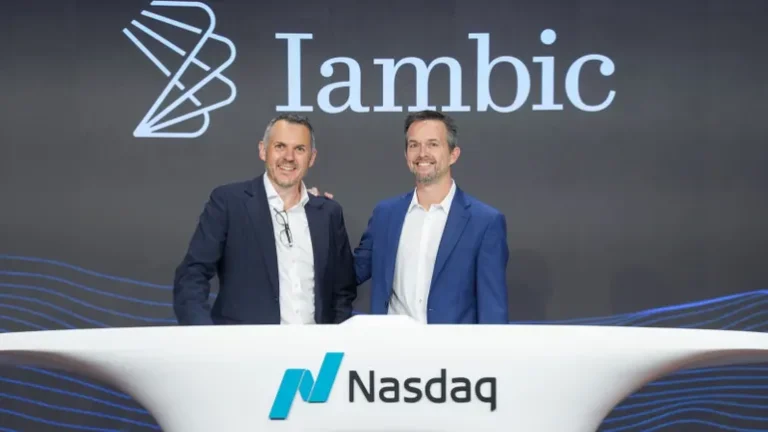
In a move that signals a renewed investor appetite for cutting-edge genetic medicine, California-based biotechnology startup Scribe Therapeutics has officially filed for an initial public offering (IPO) on the Nasdaq stock exchange. Trading under the ticker symbol “SCTX,” the company’s transition to the public markets marks a pivotal moment for the gene-editing sector, which has spent the better part of three years navigating a volatile landscape of funding droughts and clinical setbacks.
Scribe, which counts legendary CRISPR pioneer and Nobel laureate Jennifer Doudna among its co-founders, is positioning itself at the vanguard of "next-generation" gene editing. By focusing on epigenetic silencing—a method that modifies gene expression without permanently altering the underlying DNA sequence—the company is attempting to circumvent the safety and regulatory hurdles that have historically plagued more aggressive gene-editing approaches.
Main Facts: The Path to “SCTX”
Scribe’s filing arrives at a critical juncture for the biotech industry. Having secured $120 million in private funding from prestigious venture backers, including Andreessen Horowitz, Avoro Ventures, and OrbiMed, the company has spent the last six years building a robust pipeline and a collection of high-profile partnerships.
The company’s lead program, STX-1150, is a potential game-changer in the treatment of hypercholesterolemia. Unlike current standards of care, such as daily statins or quarterly PCSK9 inhibitor injections, STX-1150 is designed to be administered as a single, transformative dose. By targeting the PCSK9 protein—a key regulator of LDL cholesterol—Scribe aims to provide a "one-and-done" therapy that could fundamentally alter the management of cardiovascular disease.

The filing confirms that Scribe is not merely a research house but a clinical-stage entity, having initiated human trials for STX-1150 just last month. For investors, the IPO represents an opportunity to buy into a platform that has already been validated by some of the largest pharmaceutical companies in the world.
A Chronology of Strategic Growth
Scribe’s journey from a startup incubator to a public contender has been defined by a series of deliberate, high-value collaborations. Since its inception in 2020, the company has successfully leveraged its intellectual property to secure the capital necessary to reach the clinic.
- 2020 (Launch): Scribe Therapeutics is founded in the San Francisco Bay Area, building upon the foundational CRISPR research of Dr. Jennifer Doudna and CEO Benjamin Oakes.
- 2020 (The Biogen Deal): Shortly after launching, Scribe inks its first major partnership with Biogen to develop CRISPR-based therapies for amyotrophic lateral sclerosis (ALS). This partnership has since expanded to include a second, undisclosed gene therapy target.
- 2022 (The Sanofi Expansion): Scribe secures a $25 million upfront payment from Sanofi to utilize its gene-editing platform for natural killer (NK) cell cancer therapies. The relationship deepens in 2023 with a $40 million infusion aimed at in vivo gene therapy development.
- 2023 (Lilly Collaboration): Scribe enters a landmark agreement with Eli Lilly’s subsidiary, Prevail Therapeutics. The deal, valued at up to $1.5 billion in potential milestones, focuses on neurological disorders. To date, the program has already achieved two major technical milestones.
- 2026 (Clinical Entry & IPO Filing): STX-1150 enters the clinic, and the company files its S-1 registration statement with the SEC, signaling its intent to join the public markets as the 14th venture-backed biotech IPO of the year.
Supporting Data: The Science of "Elegant" Editing
CEO Benjamin Oakes, who served as a researcher under Doudna, has long championed the concept of "elegant" editing. In a 2023 interview with BioPharma Dive, Oakes noted that the industry is undergoing a shift: "Large pharma is recognizing that this has the potential to be the future of medicine."
The "elegance" Oakes refers to lies in Scribe’s proprietary CRISPR-based platform, which emphasizes precise, controllable gene modulation. In the case of STX-1150, the data suggests that the therapy can effectively dial down the production of the PCSK9 protein. By silencing the gene rather than "cutting" the genome, Scribe argues it can avoid the risks of off-target mutations, a primary safety concern for early-generation gene-editing technologies.
Financial backing has been bolstered by public sector support as well. Last month, the California Institute for Regenerative Medicine (CIRM) awarded Scribe more than $25 million in grant funding. This capital is specifically earmarked to accelerate clinical trials for two additional programs: one targeting atherosclerotic cardiovascular disease and another addressing acute pancreatitis in patients with triglyceride-driven conditions.

Official Responses and Market Sentiment
While the company has not yet provided specific pricing for its IPO, market analysts are closely watching the move as a litmus test for the sector. The biotech IPO market has been quiet for some time, with the last significant gene-editing debut occurring in 2024 when Metagenomi raised $94 million.
Industry observers note that the success of Scribe’s offering will likely depend on the broader market’s confidence in the cardiometabolic space. The recent $400 million IPO of competitor Kardigan in June suggests that investors are still willing to place large bets on heart disease treatments, provided the technology is perceived as a significant upgrade over existing therapies.
"The interest from players like Sanofi and Lilly is the best proxy we have for the platform’s value," says one biotech analyst. "These aren’t just vanity partnerships; they are deep, R&D-intensive collaborations that require consistent milestone achievements. Scribe has delivered on those milestones, which provides a level of de-risking that is rare for a company at this stage."
Implications: The Future of the Gene-Editing Sector
Scribe’s transition to the public markets has profound implications for the biotechnology landscape. If successful, it would validate the "platform-first" approach that has struggled to gain traction since the market peak of 2021.
1. The "One-and-Done" Paradigm
If STX-1150 succeeds in trials, it could force a radical reassessment of how chronic diseases are managed. The shift from daily medication to a single, curative-intent genetic treatment would disrupt the multi-billion dollar market for lipid-lowering drugs like Repatha and Praluent.

2. The Resilience of Strategic Partnerships
Scribe serves as a blueprint for how young biotech companies can survive and thrive in a challenging economic climate. By offloading the costs of early-stage discovery onto pharmaceutical giants like Biogen and Sanofi, Scribe has successfully maintained its independence while retaining the upside of its core gene-editing technology.
3. A Potential Turning Point for IPOs
For the broader market, a successful Scribe IPO would signal that the "biotech winter" is finally thawing. The 2026 calendar has already seen two of the largest biotech offerings in history, and the entry of a high-profile, gene-editing firm like Scribe could catalyze further activity from other private, clinical-stage companies waiting in the wings.
As Scribe prepares for its debut on the Nasdaq, the scientific community will be watching its clinical data just as closely as the financial community watches its share price. With a pipeline that spans neurology, oncology, and cardiology, the company is betting that its "elegant" approach to the human genome will prove both clinically superior and commercially viable in the long run. Whether investors agree, however, remains to be seen as the company prepares to finalize its offering in the coming months.