








WASHINGTON — In a significant legislative setback for the current administration’s health and science agenda, the Senate Committee on Health, Education, Labor, and Pensions (HELP) moved on Wednesday to effectively block the nomination of Jim O’Neill to lead the National Science Foundation (NSF).
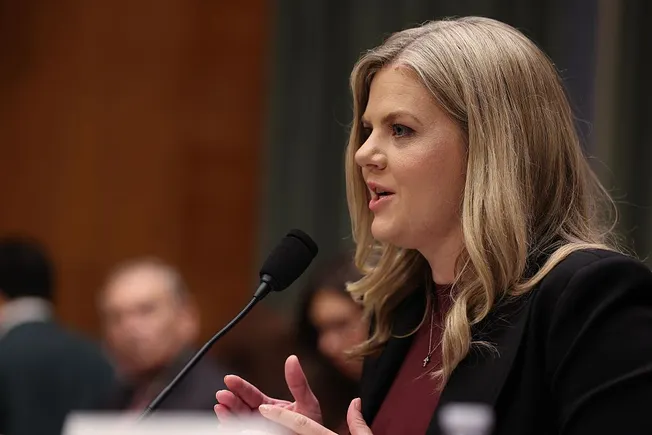
The decision, spearheaded by Committee Chair Bill Cassidy (R-La.), marks a rare public rupture between the committee’s Republican leadership and the executive branch’s appointments. O’Neill, who previously served in influential, high-ranking roles at the Department of Health and Human Services (HHS) and the Centers for Disease Control and Prevention (CDC) under Secretary Robert F. Kennedy Jr., faced intense scrutiny regarding his tenure as a subordinate to the controversial health secretary.
The Core Conflict: A Question of Scientific Stewardship
The primary driver behind the rejection was not a lack of administrative experience, but a fundamental disagreement regarding the nominee’s perceived deference to the policies and rhetoric of Robert F. Kennedy Jr.
During the confirmation process, Senator Cassidy expressed profound reservations about O’Neill’s track record. Specifically, the committee questioned whether O’Neill possessed the requisite independence to protect the NSF—an agency that prides itself on funding foundational, peer-reviewed scientific research—from political interference.
“Jim O’Neill did not do enough to stand up for science and against irresponsible decisions and statements from Secretary Kennedy during his time at HHS and the CDC,” Senator Cassidy stated during the committee meeting. “The National Science Foundation requires a leader who is unyielding in their commitment to scientific integrity, even when that commitment puts them at odds with their political superiors.”
The cancellation of the confirmation vote signals that O’Neill lacked the necessary support to move his nomination to the full Senate floor, a reality that reflects a broader anxiety within the legislative branch regarding the influence of the current administration’s health leadership on non-partisan scientific institutions.

A Chronology of the Nomination and Tenure
To understand the weight of this rejection, one must look at the arc of Jim O’Neill’s recent government career.
- Pre-Confirmation Period: O’Neill emerged as a prominent figure in the orbit of Robert F. Kennedy Jr., aligning himself with the secretary’s vision for a "reformed" public health infrastructure. His supporters argued that his private-sector background and proximity to the secretary made him uniquely positioned to implement executive mandates.
- The HHS/CDC Tenure: As a top official under Kennedy, O’Neill was a central figure in the administration’s response to various public health crises. Critics within the scientific community, however, characterized this period as one marked by the erosion of evidence-based policy.
- The Nomination Announcement: When the administration formally tapped O’Neill to lead the NSF, the move was immediately met with skepticism from advocacy groups and members of the scientific community who feared the politicization of the agency’s multi-billion-dollar grant-making process.
- The Confirmation Hearings: Throughout the hearing process, O’Neill was pressed by bipartisan members of the committee to distance himself from specific controversial statements made by Secretary Kennedy. His responses were largely viewed as evasive by the committee’s leadership.
- The Vote Cancellation: Following private deliberations, Chairman Cassidy confirmed that the committee would not proceed with the confirmation, effectively ending O’Neill’s bid to helm the NSF for the proposed six-year term.
The Role of the National Science Foundation
The National Science Foundation is the bedrock of non-medical research in the United States, providing roughly 25% of all federally supported basic research conducted by America’s colleges and universities. The agency’s reputation hinges on its "merit review" system, where proposals are vetted by independent experts.
The rejection of O’Neill highlights a growing fear in Washington that the "culture of the department" under Secretary Kennedy has begun to seep into other areas of the federal government. For the NSF, which relies heavily on the trust of the global academic community, the appointment of a leader perceived to be a "political loyalist" was seen by some as an existential threat to its credibility.
Data regarding the NSF’s recent performance shows that the agency has successfully maintained bipartisan support for years. However, recent trends in federal spending and the shifting political landscape have put the agency under increasing pressure to justify its research priorities. Critics argued that O’Neill’s tenure at the CDC—an agency that has faced intense public scrutiny—left him ill-equipped to shield the NSF from similar pressures.
Official Responses and Political Fallout
The fallout from the cancelled vote was swift. The administration has not yet released a formal statement regarding a potential alternative nominee, but the tone of the committee hearing suggests that the White House may struggle to find a candidate acceptable to both the administration’s base and the Senate’s moderate wing.
Senator Cassidy’s office emphasized that the rejection was not a personal attack but a necessary defense of institutional standards. "The Senate has a duty to advise and consent," a spokesperson for the committee said. "That duty includes ensuring that our nation’s scientific agencies are led by individuals whose primary allegiance is to the scientific method, not to the changing whims of political actors."

Conversely, allies of Secretary Kennedy have expressed frustration, arguing that the administration’s nominees are being subjected to a "double standard" by a legislative body that is increasingly hostile to the administration’s disruptive approach to public health.
Broader Implications for Federal Health Policy
The rejection of Jim O’Neill carries several profound implications for the future of U.S. health and science policy:
1. The "Kennedy Effect" on Appointments
The scrutiny placed on O’Neill suggests that any nominee associated with Robert F. Kennedy Jr.’s tenure at HHS will face an uphill battle in the Senate. The "Kennedy brand" has become a litmus test for scientific independence, making it difficult for his former lieutenants to secure high-level appointments in other agencies.
2. A Shift in Congressional Oversight
The committee’s actions demonstrate a resurgence of congressional oversight regarding scientific integrity. By rejecting O’Neill, the Senate is signaling that it intends to play a more active role in policing the ideological boundaries of the executive branch’s scientific appointments.
3. Impact on Institutional Morale
The NSF has long been a haven for career scientists who value the apolitical nature of their work. The administration’s attempt to place a political operative at the top of the agency has already led to concerns about internal morale and potential brain drain. The failure of the nomination may provide a temporary reprieve for staff, but the uncertainty surrounding future leadership remains a significant concern.
4. Future Relations between the Executive and Legislative Branches
The tension between Senator Cassidy’s committee and the administration is emblematic of a broader friction. As the administration continues to push for radical reforms within the health sector, the Senate is increasingly positioning itself as a firewall. This will likely lead to a protracted period of legislative gridlock, where the confirmation process becomes a primary venue for partisan and ideological combat.

Conclusion: A Turning Point for Scientific Governance
The rejection of Jim O’Neill is more than just a failed nomination; it is a clear message from the Senate regarding the standards required for public service in the scientific sector. As the nation grapples with complex challenges—from emerging infectious diseases to the rapid evolution of artificial intelligence—the role of the National Science Foundation remains critical.
By demanding a leader who prioritizes scientific integrity over political allegiance, the Senate has underscored a fundamental tenet of American governance: that scientific institutions must be shielded from the transient nature of political cycles. Whether the administration chooses to heed this warning or doubles down on its strategy remains to be seen, but for now, the path forward for the NSF remains uncertain.
The political calculus for future appointments is now clear: the Senate’s patience for appointees who have worked closely under the current health leadership is thin, and the demand for candidates with a track record of independent, science-first decision-making is higher than ever. As the capital turns its attention to the next potential nominee, the ghost of this confirmation battle will undoubtedly loom large over the process.