











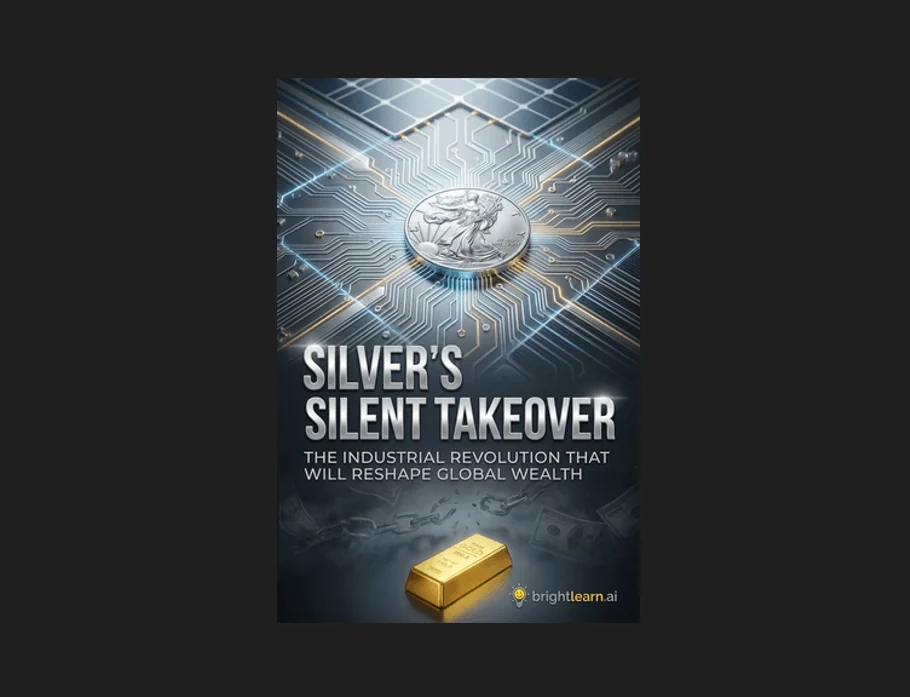
In the shadowed corridors of international finance, a quiet revolution is gaining momentum—one that is fundamentally altering the value proposition of one of history’s oldest monetary metals. The book, "Silver’s Silent Takeover: The Industrial Revolution That Will Reshape Global Wealth," serves as a provocative manifesto, challenging the prevailing narrative that fiat currencies are the bedrock of modern stability. Instead, it posits that we are witnessing the terminal phase of a debt-based monetary cycle, where the utility of physical silver is poised to collide with a systemic collapse of confidence in paper promises.
The Chronology of Currency Debasement
To understand the current urgency surrounding silver, one must first examine the historical graveyard of fiat regimes. History demonstrates that every currency system untethered from a hard asset eventually reverts to its intrinsic value: zero. From the debasement of the Roman denarius—where emperors progressively reduced the silver content to fund endless wars—to the Weimar Republic’s hyperinflationary nightmare and the more recent disintegration of the Zimbabwean dollar, the trajectory is constant.
The modern era of this phenomenon began in earnest with the establishment of the Federal Reserve in 1913. Since that year, the U.S. dollar has shed more than 97% of its purchasing power. While mainstream economic discourse often frames this as a byproduct of manageable "inflation," the author of Silver’s Silent Takeover characterizes it as a structural feature designed to erode the wealth of savers in favor of institutional elites. The pivotal shift occurred in 2008, when the Federal Reserve’s balance sheet began an unprecedented expansion, ballooning from $900 billion to nearly $9 trillion. This aggressive monetary expansion serves as a "hidden tax," diluting the value of every dollar in circulation and incentivizing those with the foresight to move into tangible, immutable assets.
The Industrial Necessity: Why Silver is Irreplaceable
Unlike gold, which functions primarily as a store of value, silver occupies a unique position in the global economy as an industrial linchpin. The "Green Revolution" and the digital transformation of the global economy are fundamentally silver-intensive.
The Solar and EV Paradox
The transition to renewable energy is the single greatest driver of new silver demand. A single solar panel requires approximately 20–30 grams of silver to facilitate conductivity, and with panels typically having a 25–30 year lifespan, this represents a massive, locked-in demand. Similarly, the electrification of the automotive sector has doubled the silver requirement per vehicle compared to internal combustion engines.
The Semiconductor and AI Surge
Beyond green energy, the semiconductor industry demands silver of 99.99% purity. As the world pivots toward AI-driven data centers, 5G infrastructure, and advanced military electronics, the demand for silver is growing exponentially. The paradox, however, lies in the supply. Global silver production has remained stagnant, while the market has faced a structural deficit of 200–300 million ounces annually for six consecutive years. As above-ground inventories are depleted to meet this insatiable industrial appetite, analysts warn that visible stockpiles could reach a point of exhaustion within the next 24 to 36 months.
Supporting Data: The COMEX Shell Game
Perhaps the most contentious aspect of the global silver market is the discrepancy between "paper silver" and physical reality. The COMEX exchange often reports total open interest in silver futures that dwarfs the actual physical supply held in its warehouses. At times, this ratio suggests that for every single ounce of physical silver, over 1,400 paper claims exist.
This structure creates a "house of cards" scenario. For decades, major institutional players, including prominent Wall Street banks, have utilized these paper derivatives to suppress the price of silver. However, Silver’s Silent Takeover highlights a seismic shift: former high-profile short sellers have recently pivoted to become net-long holders of physical bullion. This change in institutional behavior suggests that the era of artificial price suppression may be nearing its end, as the physical demand from industrial consumers begins to overwhelm the paper market’s ability to manipulate prices.
Geopolitical Implications: The BRICS De-dollarization
The weaponization of the U.S. dollar—most notably the freezing of $300 billion in Russian central bank reserves—has served as a catalyst for a global re-evaluation of reserve assets. Nations within the BRICS alliance are no longer willing to rely on a system where their assets can be unilaterally seized by the issuer of the reserve currency.
We are currently witnessing the construction of a parallel financial infrastructure. From Project mBridge to the development of gold-backed settlement systems, central banks are moving away from the dollar at a record pace. With global central bank gold and silver acquisitions exceeding 1,000 tonnes annually, it is clear that state actors are preparing for a post-dollar world. For the individual investor, the implication is stark: the global financial system is bifurcating, and the most prudent strategy involves shifting away from paper-based promises toward assets that possess inherent, intrinsic value.
Official Responses and Market Skepticism
While mainstream institutions continue to promote digital-only assets and traditional bond markets, the growing skepticism among retail investors is palpable. Official responses from central banks often reiterate the stability of the current system; however, these reassurances are increasingly viewed with suspicion by those tracking the divergence between real inflation and official consumer price index (CPI) metrics.
Critics of the "silver thesis" often point to the volatility of commodity prices and the lack of yield associated with holding precious metals. Yet, proponents of the physical silver movement argue that the "yield" is in the preservation of purchasing power against the backdrop of currency debasement. They contend that in a period of systemic reset, the objective is not to gain more fiat currency, but to ensure that one’s wealth survives the inevitable evaporation of current monetary standards.
Practical Strategies for Wealth Preservation
Silver’s Silent Takeover distinguishes itself by moving beyond theoretical economics to offer actionable advice on wealth protection.
- Legal Structures: The book introduces the concept of Unincorporated Nonprofit Associations (UNAs), a legal framework that provides an extraordinary level of privacy for the storage of physical assets, shielding them from the reach of CBDC-era surveillance.
- Wholesale Acquisition: By utilizing the "VIP Price List" strategy, individuals can bypass the retail premiums (often 20–50% above spot) that discourage many new entrants, allowing for a more efficient accumulation of physical bullion.
- Estate Planning and Security: The author provides a roadmap for the secure storage and legal transfer of assets, ensuring that one’s wealth remains protected from theft and the overreach of government entities.
Conclusion: Preparing for the Storm
The thesis of Silver’s Silent Takeover is not merely an investment recommendation; it is a warning of an unfolding reality. As industrial demand continues to climb against a backdrop of constrained supply, and as the global financial order shifts toward a commodity-backed framework, the role of silver is set to transform from a niche hedge to a primary pillar of global wealth.
For those who continue to rely on the promises of the current monetary system, the path ahead may be fraught with volatility. For those who choose to diversify into tangible, industrial-grade assets, the current "silent takeover" represents an opportunity to secure financial independence. As the book poignantly concludes: paper promises are destined to be broken, but the silver will remain.
To explore these concepts further and to access the foundational research behind this movement, readers are encouraged to visit Books.BrightLearn.AI and BrightLearn.AI for comprehensive resources on monetary history and wealth preservation. As the global reset approaches, the importance of informed, physical asset-based planning has never been more critical.