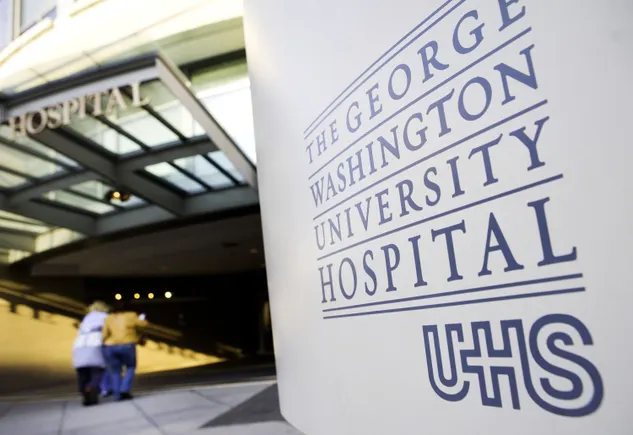
In a move that signals a significant shift in the landscape of Washington, D.C.’s healthcare delivery, George Washington University (GWU) has entered into a definitive agreement to transfer its physician practice group, the Medical Faculty Associates (MFA), to the for-profit hospital operator Universal Health Services (UHS). This strategic pivot aims to resolve years of persistent financial instability while recalibrating the university’s mission toward its core strengths: medical education and research.
The transaction, which is slated to close this summer, marks the end of an era for the university as an active operator of clinical services. By offloading the MFA—a group that has sustained over $450 million in losses since 2022—GWU seeks to stabilize its fiscal health, while UHS moves to consolidate control over its regional clinical network.
The Core Facts: A Departure from Clinical Operations
The agreement effectively decouples the university from the day-to-day management of clinical practice. Under the terms of the deal, the majority of the MFA’s physicians will transition to the "Capital Medical Group," a UHS-managed entity.
Crucially, the university will provide UHS with up to $230 million in capital to facilitate this transition and absorb outstanding legacy loans. After a five-year window, UHS will assume full financial responsibility for the physician practice. Despite this transfer of operational authority, the academic heart of the institution remains intact: clinicians moving to the new group will retain their faculty appointments at the GW School of Medicine and Health Sciences, and GW Hospital will maintain its status as a premier teaching facility.
For the university, the move is a pragmatic admission of expertise. Bruno Fernandes, GWU’s chief financial officer and treasurer, stated plainly: “This deal gets the university out of the clinical operations aspect, which we’re just not very good at. It allows us to focus more on the education part of it.”
A Chronology of Partnership and Conflict
The relationship between GWU and UHS has been long, complex, and occasionally litigious. To understand the current deal, one must examine the evolution of their shared history in the District.
- The Partnership Foundation: For years, GWU and UHS have operated as partners, with UHS managing the hospital facility and MFA providing the medical expertise and physician staffing.
- The 2019 Legal Friction: The partnership was strained significantly in 2019 when GWU filed a lawsuit against UHS, alleging that the for-profit operator had improperly siphoned $100 million in revenue from GW Hospital. This signaled a deep-seated misalignment regarding the financial management of their joint enterprise.
- The 2022 Acquisition: Despite previous friction, UHS expanded its footprint in 2022 by acquiring the remaining stake in GW Hospital from the university, effectively taking full control of the hospital’s operational destiny.
- The Recent Litigation: As the MFA’s financial losses mounted to roughly $100 million annually, the two parties found themselves entangled in further legal disputes, reflecting the structural difficulties of managing a physician group across separate corporate umbrellas.
- The 2024 Transition Agreement: After months of intense negotiation, the current deal was forged to reconcile the "structural contract issues" that had prevented the MFA from achieving financial viability.
Supporting Data: The Cost of Unsustainability
The financial data regarding the MFA provides the most compelling evidence for the necessity of this deal. Since the onset of the COVID-19 pandemic, the MFA has been trapped in a cycle of declining patient demand and rising overhead costs.
The "persistent imbalance" between revenue and expenses led to losses exceeding $450 million in just two years. For an academic institution, absorbing $100 million in annual losses is not merely a budgetary hurdle; it is a systemic threat to the university’s overall endowment and long-term research capabilities.
In contrast, UHS operates on a massive scale. With over $17 billion in annual revenue and a portfolio of 29 acute care hospitals nationwide, the organization possesses the balance sheet necessary to absorb the short-term deficits of the physician group while achieving "economies of scale" that were impossible under the university’s fragmented management structure.
Official Responses and Perspectives
The leadership on both sides of the deal frames the acquisition as a necessary evolution for the benefit of the D.C. community.
The University’s View
GWU leadership emphasizes the need to prioritize the university’s primary mission: education. CFO Bruno Fernandes expressed relief that the institution has successfully addressed the "unsustainable" losses. By exiting the clinical management space, the university hopes to shield itself from the volatility of healthcare market fluctuations.
The UHS Perspective
Jason Barrett, group vice president of the UHS D.C. region and CEO of GW Hospital, views the deal as a pathway to stability. “There’s no secret that there’s been disagreement between the three parties over the previous years,” Barrett acknowledged. However, he emphasized that this deal brings all components of the care continuum—hospital operations and physician staffing—under one roof. This alignment is expected to eliminate the "siloed" nature of previous contracts, allowing for more fluid resource allocation.
Broader Implications for D.C. Healthcare
The impact of this transition extends beyond the balance sheets of the two contracting parties. It has direct implications for the stability of healthcare access in Washington, D.C., particularly at the newly opened Cedar Hill Regional Medical Center.
Addressing the Cedar Hill Crisis
Cedar Hill, a 136-bed facility, has faced significant scrutiny since its opening. Local officials, including Wayne Turnage, the deputy mayor for the District’s Department of Health and Human Services, have expressed concerns regarding severe understaffing and the facility’s inability to manage patient surges.
Turnage noted at a recent oversight hearing that the friction between MFA and UHS had hindered the staffing of outpatient services. By consolidating the physician group under the UHS umbrella, the hope is that "network adequacy" will improve. A unified management structure should, in theory, allow for more efficient deployment of medical staff across the D.C. network, theoretically easing the burden on nurses and clinicians who have been stretched thin.
The Future of Medical Education
Despite the divestment, the university remains the anchor for the medical school’s clinical training. The commitment to retain faculty appointments for transferring physicians ensures that the "academic" side of the hospital remains robust. This hybrid model—where a for-profit entity manages operations while a university provides the academic prestige and faculty—is a growing trend in U.S. medicine. It allows universities to shed the liability of daily clinical operations while maintaining their role as the primary training ground for the next generation of physicians.
Conclusion: A New Chapter
The acquisition of the Medical Faculty Associates by UHS is a pragmatic, if long-overdue, response to a changing economic landscape. For GWU, it is an exit strategy from a sector they were not equipped to manage, providing a much-needed injection of financial stability. For UHS, it is a consolidation of power that offers the potential to rectify long-standing staffing issues and operational inefficiencies.
As the deal moves toward its final closure this summer, the eyes of the D.C. health community will remain on whether this corporate realignment translates into better care for patients. While the administrative, legal, and financial hurdles have been cleared, the ultimate measure of success for this deal will be the stability and quality of the services provided at GW Hospital and Cedar Hill in the years to come. The era of the university-managed physician group is closing; in its place, a more corporate, streamlined model of integrated care is taking hold.