






The release of the 2025–2030 Dietary Guidelines for Americans (DGAs)—the federal government’s definitive roadmap for the nation’s nutritional health—was met with immediate scrutiny this week. While the document carries the promising, consumer-friendly tagline "Eat Real Food" and takes a commendable, long-overdue stance against the proliferation of ultra-processed items, it has simultaneously ignited a firestorm of controversy.
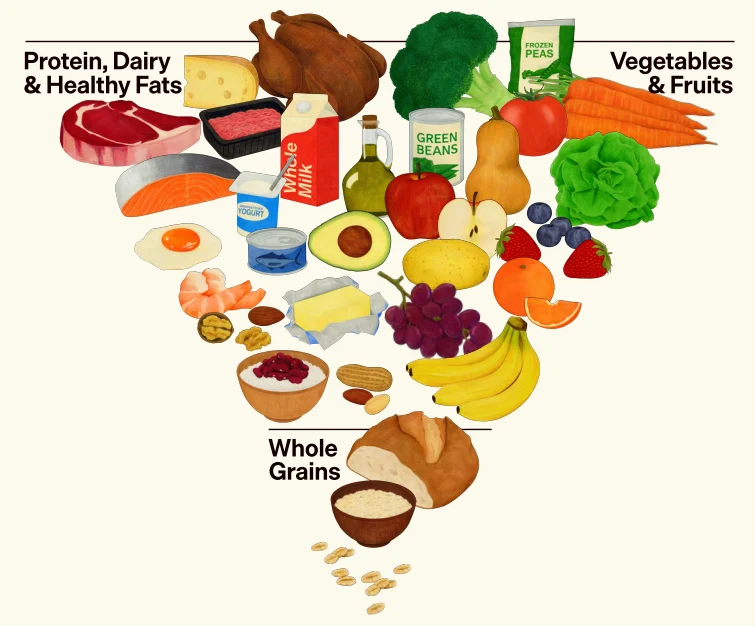
At the center of the debate is a newly introduced "food pyramid" graphic that appears to invert decades of nutritional consensus. By visually elevating steak, full-fat dairy, and butter to positions of prominence, the government has created a jarring visual dissonance that contradicts its own technical text regarding saturated fat limits. For nutrition experts and public health advocates, the concern is not merely aesthetic; it is a question of whether these mixed signals will undermine public health and exacerbate the nation’s rising rates of cardiovascular disease.
The Main Facts: A Shift in Tone, Not Necessarily in Substance
The 2025–2030 DGAs are, at their core, a policy document intended to steer federal nutrition programs, school lunches, and clinical dietary advice. The newest edition distinguishes itself by explicitly calling out "highly processed foods." For the first time, the guidelines suggest a concerted effort to limit sugar-sweetened beverages, salty snacks, and refined, white-flour carbohydrates.
However, beneath this progressive terminology lies a confusing reality. While the text maintains the established, scientifically backed limit of saturated fat to no more than 10% of total daily calories, the promotional materials—specifically the "New Food Pyramid"—tell a different story. The visual layout suggests a high-fat, animal-product-centric diet that leaves even seasoned nutritionists struggling to reconcile the illustrations with the stated health objectives.
Chronology: The Road to a Disputed Document
The creation of the DGAs is a multi-year, rigorous endeavor. Traditionally, the process begins with an independent Dietary Guidelines Advisory Committee (DGAC), composed of top-tier nutrition scientists, who synthesize current evidence to create a comprehensive report. This process is designed to be insulated from political pressure and industry lobbying.
- Evidence Gathering (2023–2024): The independent DGAC conducted a two-year review of scientific literature, livestreaming their proceedings and inviting public comment to ensure transparency.
- The Rejection (Late 2024): In a move that shocked the scientific community, the current administration opted to set aside the findings of the expert-led committee.
- The "Supplemental" Process: In place of the DGAC’s report, the government utilized a "federal contracting process" to conduct a supplemental scientific analysis.
- The Release (January 2026): The final 2025–2030 DGAs were published based on this supplemental analysis, sparking immediate backlash regarding the lack of transparency in the authorship and the potential influence of industry interests.
Supporting Data: The Saturated Fat Math
The confusion surrounding the new guidelines is best illustrated through basic nutritional arithmetic. For an average adult consuming 2,000 calories per day, the 10% limit equates to approximately 22 grams of saturated fat.
If an individual follows the DGAs’ suggested three servings of dairy per day, the "saturated fat budget" is depleted almost instantly. A single cup of whole milk contains 5 grams of saturated fat, while a serving of full-fat Greek yogurt adds 6 grams, and one ounce of cheddar cheese contributes another 6 grams. That total—17 grams—leaves only 5 grams for the rest of the day. If a consumer uses a tablespoon of butter (7 grams) or beef tallow (6 grams) for cooking—both of which are prominently featured in the new pyramid—they have already exceeded their daily limit before consuming a single piece of fruit, vegetable, or grain.
Dr. Frank Hu, chair of the Department of Nutrition at the Harvard T.H. Chan School of Public Health, warns that this guidance is mathematically and physiologically inconsistent. "The mixed messages surrounding saturated-fat-rich foods such as red meat, butter, and beef tallow may lead to confusion and potentially higher intake of saturated fat and increased LDL cholesterol and cardiovascular risk," Dr. Hu notes.
Official Responses and Internal Tensions
The discrepancy between the government’s public-facing graphics and the underlying science has drawn fire from those who served on the original advisory committee. Deirdre Tobias, an assistant professor at Harvard and a former member of the 2025–2030 DGAC, has been vocal about the lack of transparency in the final document’s creation.
"There is no transparency in the methodology and rigor that was employed, or why certain topics were selected to be relitigated," Tobias stated. The absence of a clear, replicable, and unbiased scientific process has led to widespread criticism, particularly as investigative reports have identified that several of the individuals involved in the supplemental review panel held financial ties to the beef and dairy industries. These disclosures have cast a shadow over the "New Food Pyramid," fueling perceptions that the guidelines were designed to serve commercial interests rather than public health.
Implications: A Challenge for Public Health
The consequences of these conflicting messages are significant. Research consistently shows that Americans struggle to adhere to dietary guidelines even under the best of circumstances. When the official guidance is internally contradictory, the public is left to fend for itself in a marketplace saturated with ultra-processed, high-sugar, and high-fat products.
1. The Protein Paradox
The new DGAs suggest a significant increase in protein intake (1.2 to 1.6 grams per kilogram of body weight). While protein is essential, the guidelines fail to distinguish between high-quality sources like fish, legumes, and nuts, and high-saturated-fat sources like red meat. As Dr. Hu points out, the "protein package"—the fats, fiber, and sodium that accompany protein—matters immensely for long-term heart health. By failing to emphasize plant-based proteins, the guidelines risk encouraging a diet that could increase long-term health risks.
2. The Alcohol Gap
On the topic of alcohol, the guidelines are frustratingly vague, simply stating that people should "consume less." In an era of public health crisis, the lack of a defined, evidence-based limit makes it difficult for individuals to make informed, healthier choices.
3. Sustainability and Equity
Perhaps most glaring is the omission of environmental and socioeconomic factors. The guidelines remain silent on how food production impacts the planet and how the current food system is shaped by systemic inequality. By ignoring the environmental footprint of heavy meat consumption, the DGAs miss a critical opportunity to align human health with planetary health.
Moving Forward: Navigating the Confusion
If the 2025–2030 DGAs represent a move toward a more consumer-friendly format, they have done so at the expense of clarity and scientific consistency. For the average American, the "New Food Pyramid" offers a visual shorthand that may lead to chronic disease rather than vitality.
As the scientific community continues to grapple with the implications of this document, the best approach for the public is to rely on established, independent resources. Tools such as the Harvard "Healthy Eating Plate" provide a more evidence-based alternative, emphasizing whole grains, plant-based proteins, and healthy fats, while avoiding the industry-influenced pitfalls found in the current federal guidelines.
Ultimately, nutrition is not a static subject, and it is rarely influenced by government policy alone. In the absence of clear, transparent, and scientifically sound leadership from the USDA and HHS, the responsibility to navigate the complex world of food choices falls squarely on the individual. When in doubt, experts recommend looking past the colorful pyramids and towards the fundamentals: a diet rich in whole plants, high-quality proteins, and minimal processed additives.