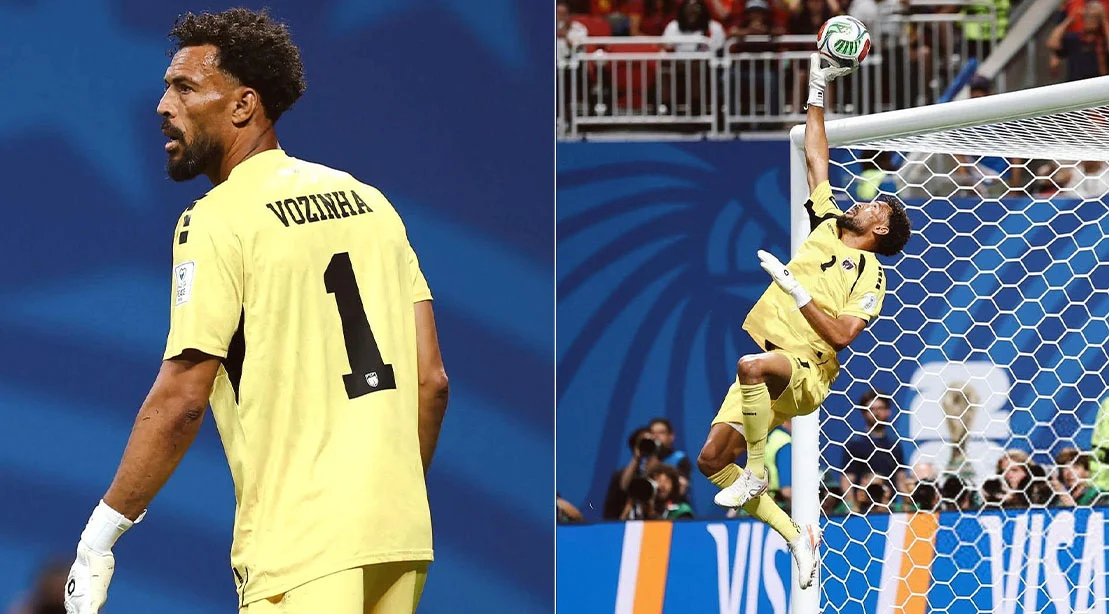
In the theatre of the FIFA World Cup, narratives are often dominated by the gilded youths of global football—the prodigies who sprint across the pitch with the raw, untethered energy of the future. Yet, every few decades, a performance emerges that shifts the paradigm, reminding the world that mastery is a craft refined by time. Enter Josimar Dias, the 40-year-old Cape Verdean goalkeeper known to the world simply as "Vozinha."
In a stunning display of defensive fortitude against tournament favorites Spain, Vozinha did more than just keep a clean sheet; he etched his name into the annals of sporting history. By thwarting seven high-velocity attempts on goal, he became the oldest player ever to record such a statistic in a World Cup match. In doing so, he transformed from a veteran journeyman into a global cultural phenomenon, with his digital footprint exploding from 50,000 followers to a staggering 11.5 million in the span of a few days.
The Main Facts: A Masterclass in Atlanta
The setting was the electric atmosphere of an Atlanta stadium, where Cape Verde—a nation with a modest population and even more modest expectations—faced the juggernaut that is the Spanish national team. While the bookmakers had written off the Cape Verdeans before the whistle blew, the match concluded in a breathless 0-0 stalemate.
The architect of this deadlock was undeniably Dias. Standing at 6-foot-2, the veteran goalkeeper displayed reflexes that defied his four decades of life. He commanded his penalty area with the poise of a seasoned general, neutralizing every Spanish strike. His seven saves were not merely routine catches; they were acrobatic, game-saving interventions that silenced a formidable attack and secured Cape Verde’s first-ever point in World Cup history. This result was not just a statistical anomaly; it was a watershed moment for Cape Verdean sports, proving that on the world’s grandest stage, heart and experience can bridge the gap between nations.
A Chronology of a Career: From Childhood Nickname to Global Stage
To understand the man behind the gloves, one must look at the path that led him to Atlanta. Born in Cape Verde, Josimar Dias’s journey through the professional ranks saw him traverse a diverse footballing landscape, with stints in Angola, Moldova, Portugal, Cyprus, and Slovakia. These years of globetrotting were not glamorous, but they were formative. They hardened him, stripping away the fragility of youth and replacing it with the steel-eyed focus of a veteran.
The name "Vozinha" is a vestige of his youth, gifted to him by his grandparents. Translated from Portuguese, it means "Little Granny." While the name suggests a gentle, perhaps diminished stature, the man himself is the embodiment of endurance. Early in his career, when faced with the prospect of being confused with another goalkeeper named Josimar, he made a conscious branding decision. Rather than adopting a generic suffix like "Josimar II," he chose to lean into his identity. "I said, ‘I am not going to put Josimar II on the shirt,’" he recalled in an interview. "If everyone knew me as Vozinha in Cape Verde, that’s what I would be."
That decision to embrace his roots has now paid off in an unprecedented way. By staying true to his origins, he has captured the hearts of millions, turning an intimate childhood nickname into a brand that now trends worldwide.
Supporting Data: The Metrics of Greatness
The statistics surrounding Vozinha’s performance are as impressive as they are rare in modern football. At 40 years old, the physical demands of being a goalkeeper—the explosive jumps, the constant dives, and the mental processing speed required to read a striker’s intent—are exponentially harder to maintain.
- Age Profile: At 40, Vozinha is among the oldest active participants in the 2026 World Cup, setting a new benchmark for goalkeeping longevity.
- The Save Ratio: A 100% save success rate against a team of Spain’s caliber is a statistical outlier that rarely occurs in top-tier competition.
- Social Media Surge: The jump from 50,000 to 11.5 million Instagram followers represents one of the fastest growth rates for a professional athlete in recent history, signaling that his performance resonated far beyond the confines of the pitch.
- International Pedigree: As the holder of the second-highest number of international appearances for the Cape Verde national team, Vozinha’s consistency has been a pillar of the team’s defense for over a decade.
This data paints a portrait of an athlete who has not only maintained his physical condition but has arguably reached his psychological peak in the twilight of his career.
Official Responses and the Player’s Perspective
The humility with which Vozinha has greeted his sudden stardom has only served to increase his appeal. Following the match, he took to Instagram to share his disbelief and pride with his millions of new followers.
"Dream come true!" he wrote. "Representing Cape Verde on the world football’s biggest stage is an indescribable honour. Speechless… just pride, gratitude, and responsibility."
His reaction mirrors his style of play: composed, grateful, and focused on the collective duty rather than individual glory. The Cape Verdean federation has echoed this sentiment, noting that the entire nation is behind him. For a country that has often fought for visibility in the international footballing community, Vozinha has become an unexpected ambassador, carrying the hopes of his compatriots into the next round of the tournament.
Implications: The Paradigm Shift in Aging Athletes
Vozinha’s emergence as a World Cup star at 40 has profound implications for the world of sports. We live in an era where sports science has extended the shelf life of the professional athlete, but mental endurance remains a variable that cannot be easily measured.
Breaking the Age Barrier
For years, the narrative in football has been that physical regression begins in the mid-30s. Vozinha challenges the conventional wisdom that suggests athletes must decline after turning 35. His performance encourages a new conversation about how longevity can be achieved through disciplined training, lifestyle management, and the accumulation of experience.
Inspiring the Next Generation
Beyond the statistics, Vozinha serves as a beacon for aspiring players in smaller, emerging footballing nations. He proves that one does not need to start in a European academy at age 10 to reach the summit of the sport. His journey—from the leagues of Moldova and Cyprus to the global stage in Atlanta—is a testament to the idea that perseverance and the ability to adapt can lead to success, regardless of the starting point.
The Marketing of "The Little Granny"
The viral nature of his story also highlights a shift in how fans engage with the World Cup. Fans are no longer just looking for the fastest or youngest players; they are looking for stories of humanity, struggle, and triumph. By retaining a nickname that tells a story of his heritage, Vozinha has provided a "human" element that corporate-managed athletes often lack. He is not just a goalkeeper; he is a story of a grandfather’s nickname meeting the world’s biggest stage.
Looking Ahead: The Road to Uruguay
The tournament does not pause for celebrations. As the dust settles on the draw against Spain, the focus shifts immediately to the next challenge: Uruguay on June 21. For Cape Verde, this is uncharted territory. Having secured their first point, the team now finds themselves in a position where they can dream of progression.
Vozinha’s role in this next match will be critical. Uruguay, a traditional powerhouse of South American football, will be looking to break down the Cape Verdean defense with intensity. If Vozinha can replicate even a fraction of the magic he produced in Atlanta, Cape Verde could become the surprise story of the entire 2026 World Cup.
Whether or not they advance, the legacy of this tournament has already been written for Josimar "Vozinha" Dias. He has proved that age is, indeed, just a number. He has reminded the world that behind every jersey, every save, and every record, there is a person—a human being who, through decades of quiet labor, has earned the right to be remembered in the spotlight. As the world watches on June 21, all eyes will be on the 40-year-old goalkeeper from Cape Verde, waiting to see if the "Little Granny" has one more miracle in his gloves.