










Originally published in the January-February 1990 issue of Yoga Journal, this archival report remains a seminal exploration of the intersection between physiological alignment and our ecological mandate.
Introduction: The Crisis of Modern Verticality
In the current era, humanity finds itself at a critical juncture in planetary evolution. Our technological prowess has granted us the capacity to profoundly alter the trajectory of life on Earth, yet this power has often outpaced our wisdom. As evidence from the natural world confirms, our technological intrusions have frequently destabilized the delicate ecosystems upon which all life depends.
Crucially, these external imbalances are mirrored by a lack of harmony within our internal ecosystem: the human body. To paraphrase the "geologian" Thomas Berry, the defining mission of our time is to reinvent the human species, transitioning from a relationship of mutual destruction with the biosphere to one of mutual enhancement. Yoga practice—and specifically the study of Tadasana (Mountain Pose)—offers a profound method for re-establishing this lost communion with planetary and cosmic processes.
Chronology and Evolutionary Context
The human transition to verticality is a unique biological achievement. No other species possesses upright posture as its primary, defining stance. This shift—characterized by grounded heel bones, extended hip joints, and a curved, upright spinal column—facilitated the explosive development of the frontal brain. However, this evolutionary leap brought a significant, often overlooked, pathological side effect: the human species has largely forsaken its primal connection to nature in favor of a world of abstract, disembodied thought.
Historically, our body structure reflects a lineage stretching back hundreds of millions of years. Our vertebrate foundation began with fish, while the basic muscular patterns for land-based posture were refined by early amphibians and reptiles. The tailbone (coccyx) was once a dynamic tool for balance and movement. In modern humans, this bone has shrunk to a vestige, while our skull has expanded, pulling our center of gravity—and our consciousness—upward and forward. We have effectively "de-centered" ourselves, localizing our awareness in the head and ignoring the rhythmic intelligence of the spine and the lower torso.
The Science of Stillness: Supporting Data
The body is not a static object; it is a dynamic process driven by rhythms. While the heartbeat and respiration are well-documented, a third, often ignored cycle is the "pulse of posture" maintained by the skeletal muscles.
The Circulatory Triad
The maintenance of circulation relies on three primary mechanisms, which Tadasana helps to optimize:
- Gravity: Essential for draining fluids from the upper body to the heart.
- The Respiratory Pump: The expansion of the chest cavity during inhalation creates a vacuum that draws blood toward the heart.
- Muscular Pumping: Skeletal muscles act as a secondary pump. Because our veins and lymphatic vessels contain one-way valves, the rhythmic contraction and release of muscles—even during the "stillness" of an asana—propels fluids toward the heart.
In a sedentary culture, the lack of sustained, rhythmic movement leads to circulatory stagnation. Tadasana is not merely a static pose; it is a "penetrating exploration" of the relationship between our nervous system and the gravitational fields of the Earth. When we stand in stillness, the muscles must continue to contract and release to maintain our posture, effectively creating a meditative internal rhythm that bridges the gap between movement and samadhi (a state of profound meditative absorption).
Implications: Re-aligning with the Earth
If we are to move toward a mutually enhancing relationship with the planet, we must reconnect with our evolutionary heritage. This begins by shifting our consciousness backward and downward—into the heels and the coccyx.
When the groins are open and the legs act as a stable foundation, the congestion of the pelvic region gives way to a free flow of apana vayu (vital downward energy). By moving our focus away from the head and into the base of the spine, we tap into the "unconscious storehouse of genetic memory" where the body’s innate wisdom resides. This re-alignment allows us to utilize the forces of the cosmos—gravity and electromagnetism—to feed us, rather than merely acting as an anchor that causes strain.
Official Guidelines: Mastering the Practice of Tadasana
Refining Tadasana requires both a shift in spirit and precise technical adjustments. The goal is to move beyond the pathological patterns of modern posture, such as hyperextended knees and a forward-jutting head.
1. The Foundation: Feet and Arches
Modern footwear often compresses the foot. In Tadasana, the frontal arches (from the base of the big toe to the little toe) must widen. The inner and outer long arches should expand to distribute body weight, while the heel bones—which for many remain unengaged—must carry the majority of the weight, acting as the primary anchors to the Earth.
2. The Knee and Hip Mechanics
A common error is to "hang" on the knee joints, causing hyperextension. To correct this, the gastrocnemius (upper calf) must lift to support the back of the knee, while the quadriceps actively pull upward through the kneecap.
At the hip, the femur heads should move slightly apart and ground downward, while the pelvic bones move in opposition to create a lifting, centered sensation in the lower torso. The sitting bones should move toward each other, providing stability without rigid muscular tension.
3. The Trunk and Spinal Column
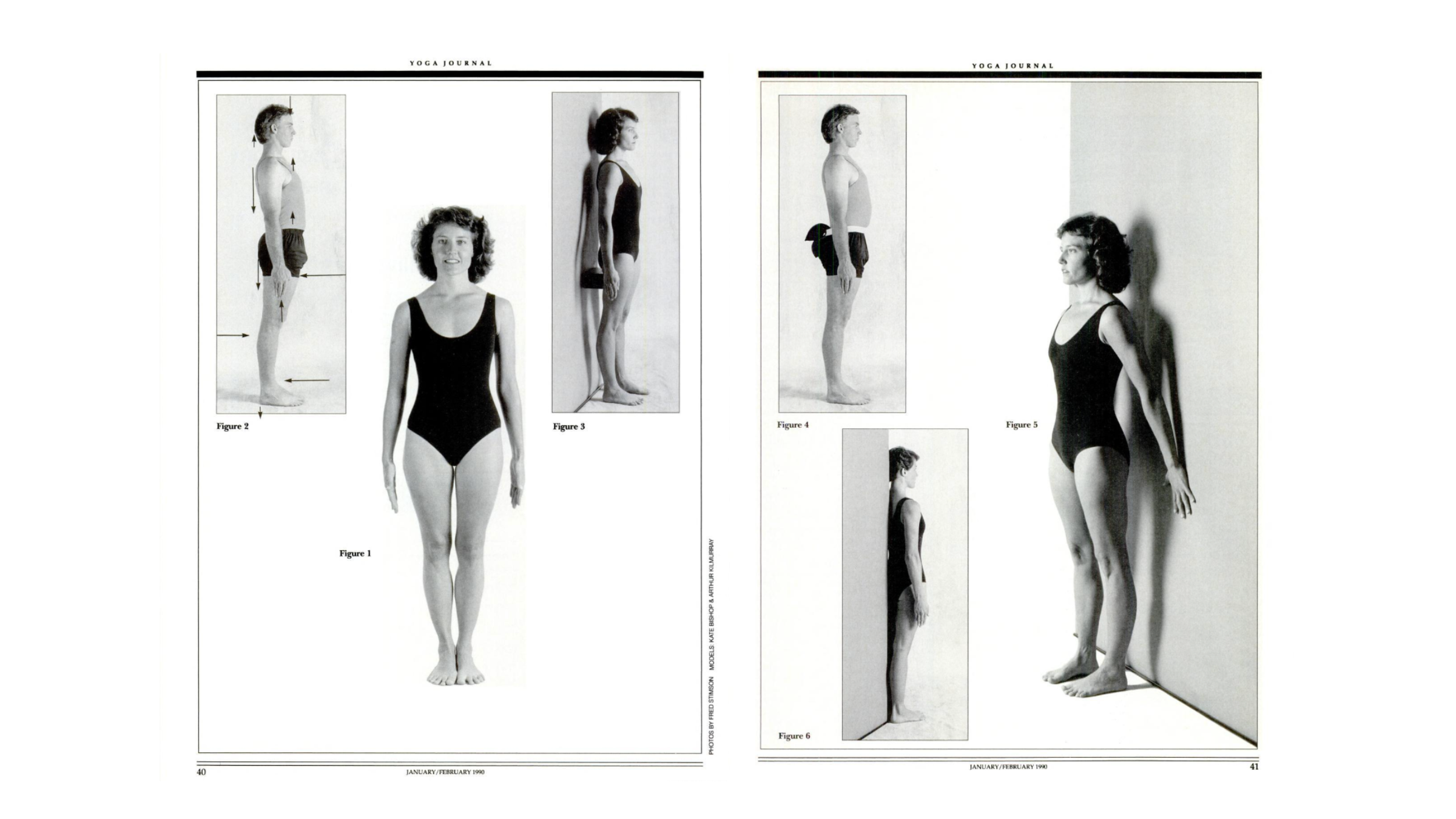
The most vital instruction for the spine is to differentiate the back body from the front body. We must imagine the "dinosaur tail"—a downward, backward pull of the back muscles that allows the front body to release and extend upward. When the back body anchors down, the heart and rib cage can lift forward and up, creating a balance between stability and openness.
4. Shoulder and Head Alignment
The shoulder blades should move into the rib cage to provide support, rather than pulling toward the neck. Finally, the head must be positioned directly over the center of the torso. For many, this requires a significant recalibration to counter the "forward-jutting" posture common in our head-dominant society. Using an external reference, such as a doorway corner, can help align the back of the skull, the coccyx, and the heels in a single, harmonious line.
Conclusion: A Transformative Future
The practice of Tadasana is a microcosm of our broader relationship with the Earth. Because we are bound by gravity and electromagnetic forces, we are never truly separate from the planet. Every time we step onto the mat—or stand barefoot on the grass—we have the opportunity to move from a state of disconnection to a state of communion.
By refining our posture, we do more than improve our physical health; we harmonize our inner rhythms with the macrocosmic cycles of the Earth and the solar system. In doing so, we gain access to the "cosmic wisdom" necessary to navigate the coming decades of ecological and human transition. The mountain does not strive to be anything other than what it is; in Tadasana, we reclaim that same essential, grounded presence.
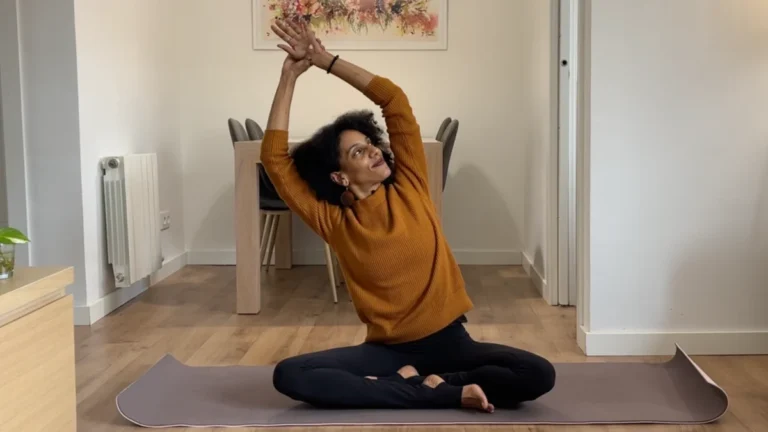
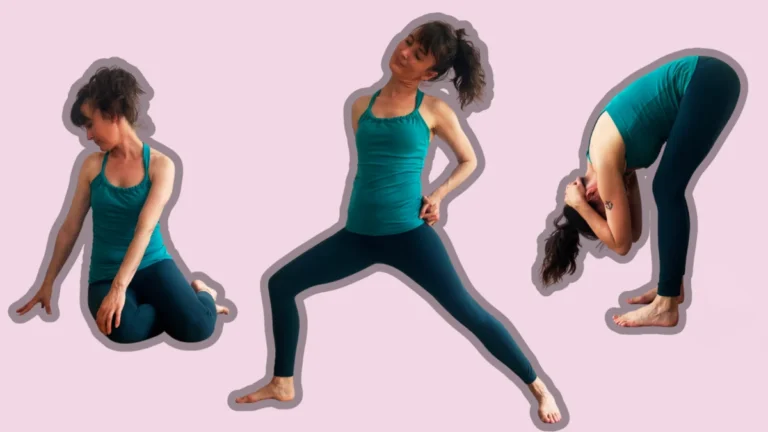
For those interested in exploring the practical applications of these techniques, refer to the accompanying photographic guides (Figures 1-6) which detail the use of props—such as wall corners and blocks—to assist in correcting spinal and pelvic alignment. By integrating these practices, practitioners can transform a simple standing pose into a profound act of planetary stewardship.