










Published June 12, 2026
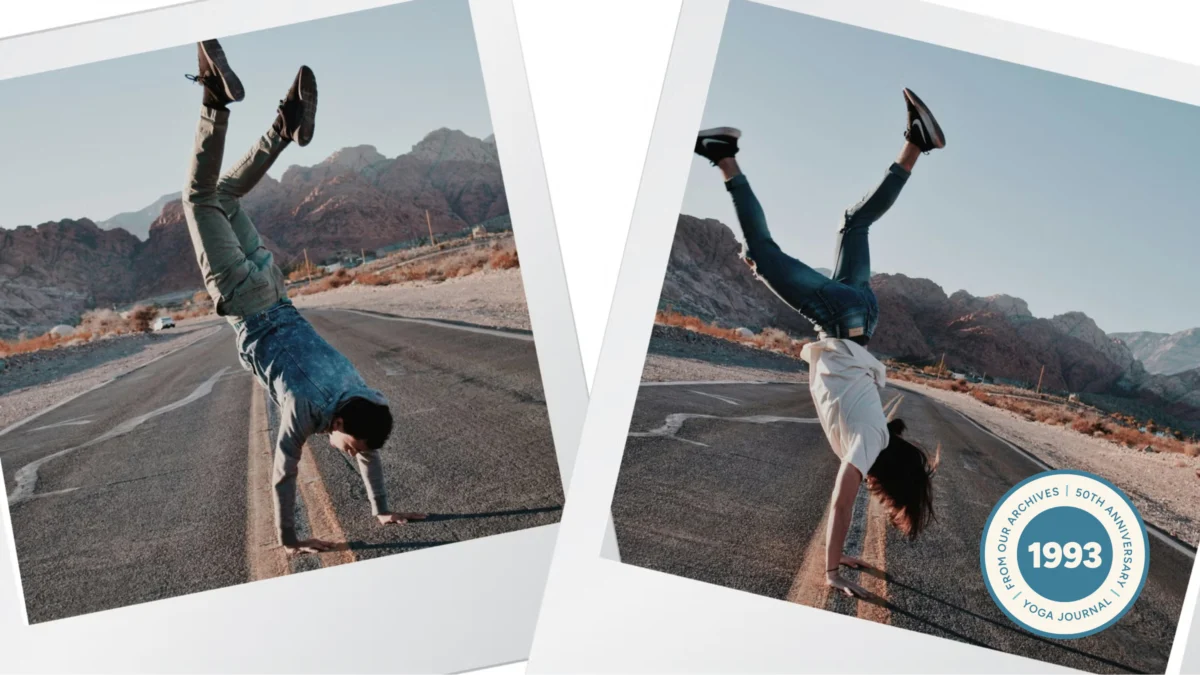
In the modern landscape of physical culture, few poses capture the imagination—or the daunting challenge—of the yoga practitioner quite like Adho Mukha Vrksasana, or Handstand. While often viewed as a peak aesthetic achievement, the Handstand is, at its core, a profound psychological and neurological exercise. By examining this pose through the lens of Mihaly Csikszentmihalyi’s seminal work, Flow: The Psychology of Optimal Experience, we discover that the true value of the pose lies not in the final vertical line, but in the internal order it imposes upon the practitioner’s consciousness.
The Philosophy of Effort: Why We Struggle
The question often posed to instructors—"Why do we bother with something so difficult?"—is a recurring theme in the yoga studio. When faced with the physical intensity of arm balances, the human mind naturally gravitates toward the path of least resistance. However, as Csikszentmihalyi argues, the most satisfying moments in human life are not those of passive relaxation, but those in which we stretch our body and mind to their limits in a voluntary effort to achieve something difficult and worthwhile.
This "optimal experience," or "flow," is characterized by a total immersion in the present moment. In this state, the ego recedes, and the psyche—which otherwise tends toward entropy and disorder—is brought into sharp focus. For the yogi, the Handstand is not a battle against the self; it is a tactical strike against the disorder of a scattered mind.
The Anatomy of the Inversion: A Structural Breakdown
To understand the Handstand, one must stop viewing it as a feat of raw arm strength and start viewing it as a structural integration. The Handstand is, effectively, an upside-down Tadasana (Mountain Pose).
In Tadasana, the downward pressure of the feet generates a force that rebounds through the skeletal system. In Handstand, this relationship is inverted. The hands and arms act as the foundation, generating a force that ripples upward through the torso, pelvis, and legs. This force creates a "fountain" effect, where dynamic support holds the body in a singular, vertical alignment.
The Role of Neuromuscular Patterning
The primary difficulty in Handstand is not muscular exhaustion, but the coordination of the neuromuscular system. Specifically, the relationship between the abdominal muscles—particularly the deep-seated psoas—and the pelvis is the linchpin of success. When these structures are in harmony, strength becomes a functional outcome of alignment rather than a result of brute force.
Chronology of Progression: From Ground to Vertical
Achieving a stable Handstand is a process of systematic building. Practitioners should ensure they have achieved proficiency in foundational poses such as Adho Mukha Svanasana (Downward-Facing Dog) and Chaturanga Dandasana (Four-Limbed Staff Pose). These poses verify that the wrists and shoulders possess the structural integrity required to bear full body weight.
Phase 1: The One-Legged Preparation
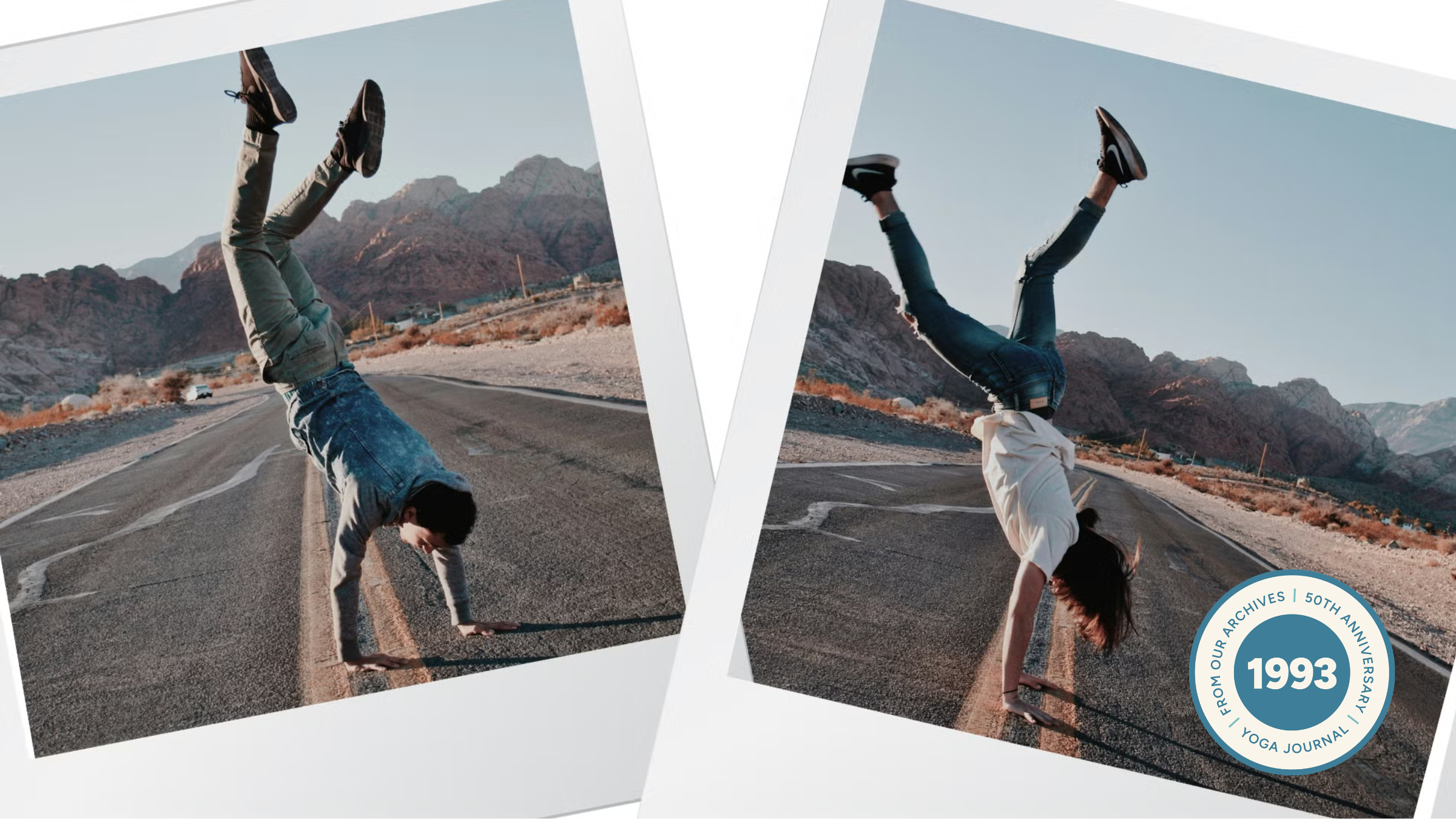
The most effective way to begin is to work with a wall for support. By utilizing a "sprint start" posture—bending the knees to load the legs like coiled springs—the practitioner creates the momentum necessary to rise. The goal here is not to "kick" into the wall, but to lift the pelvis over the shoulders. Once vertical, bending one knee to a 90-degree angle while extending the other leg allows for a more controlled balance of the sacrum.
Phase 2: The Two-Legged Transition
Once the one-legged variation is mastered, the practitioner can move toward a two-legged ascent. This requires greater core activation, as the legs—the heaviest part of the body—must be kept close to the chest to maintain the center of gravity. By walking the feet closer to the hands before springing, the practitioner minimizes the arc of movement, making the transition to verticality smoother and more controlled.
Supporting Data: Common Pitfalls and Technical Corrections
Even with diligent practice, students often encounter plateaus. Troubleshooting these common errors is essential for progress:
- The "Banana" Back: Often, students hyperextend the spine to compensate for a lack of core engagement. While this creates a wider base for balancing, it places undue stress on the lumbar spine. Proper alignment requires lengthening through the shoulders and hips to bring the body into a straight, vertical line.
- The Wall-Dependency Trap: A common psychological error is relying on the wall to stop momentum. When a student habitually slams their heels into the wall, they are training the nervous system to rely on an external object rather than internal control. The objective should be to touch the wall silently—or, eventually, not at all.
- Fear-Based Joint Locking: Fear often causes students to lock their ankles and knees rigidly. This prevents the body from acting as a cohesive unit. Allowing the legs to move like a pendulum, with soft joints, allows for the subtle micro-adjustments necessary to hold a balance.
Professional Insights: The Instructor’s Perspective
Experienced practitioners note that the "success" of a Handstand is measured by the quality of the internal state. An instructor’s role is to guide the student toward "functional strength." This means teaching the student to press the floor away with the hands, creating an active, engaged foundation that supports the entire kinetic chain.
The use of a spotter is highly recommended during the transition to center-room balancing. A partner standing directly behind the practitioner—not to the side—provides the necessary safety net to allow the student to explore their edge without the paralysis of fear.
Implications: The Lasting Impact of Inversion
The implications of mastering Handstand extend far beyond the physical benefits of improved shoulder stability or core density. The practice of "bringing order to consciousness" is a transferable skill. When a student learns to remain focused and calm while inverted, they are developing a psychological toolkit for handling the "entropy" of daily life.
The Handstand teaches the practitioner that, while the world may seem chaotic, the ability to center oneself—to find the "flow"—is an internal choice. It is a testament to the idea that we can create our own stability, regardless of the environment.
Conclusion: The Practice as the Reward
As Csikszentmihalyi’s research suggests, we are not searching for a permanent state of perfection, but for the ongoing process of engagement. When we step onto the mat to practice Handstand, we are choosing to confront a challenge that requires our absolute attention.
In the silence of a held balance, or even in the frustration of a failed attempt, we find the opportunity to be fully present. The reward is not the applause or the Instagram-worthy photo; the reward is the experience itself—the moment where the mind stops wandering, the body finds its alignment, and for a fleeting, beautiful second, everything flows.