






DENVER, CO — In the modern mental health landscape, patients are often inundated with an alphabet soup of clinical acronyms: CBT, DBT, EMDR, and ACT. While these methodologies are grounded in rigorous research, a growing consensus among veteran practitioners suggests that the technical framework of a session is secondary to a more elusive element: the "therapeutic alliance."
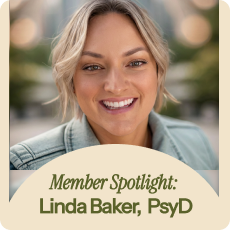
Dr. Linda Baker, PsyD, MA, a Denver-based licensed clinical psychologist and prominent member of the GoodTherapy community, has built a career on this foundational principle. In a recent comprehensive dialogue, Dr. Baker explored the intricacies of what truly makes therapy effective, drawing from her diverse background in high-stakes environments—ranging from men’s maximum-security correctional facilities to international disaster zones—to provide a roadmap for both first-time seekers and seasoned clinicians.
Main Facts: The Primacy of "Goodness of Fit"
The central thesis of Dr. Baker’s clinical philosophy is that "goodness of fit" is the most reliable predictor of positive therapeutic outcomes. Despite the prestige of a therapist’s credentials or the specific modality they employ, the efficacy of the treatment is inextricably linked to how safe, seen, and understood a client feels within the clinical space.
Dr. Baker’s current practice utilizes a sophisticated hybrid of Internal Family Systems (IFS) and Cognitive Behavioral Therapy (CBT). While CBT focuses on the relationship between thoughts, feelings, and behaviors, IFS introduces the concept of the "internal system"—the idea that the human psyche is composed of various "parts" that react to trauma and environmental stressors.
"If you look at the research around positive therapy outcomes, the number one indicator is about goodness of fit," Dr. Baker notes. "It doesn’t matter if somebody’s CBT trained or ACT trained. What really matters is how comfortable you feel with that person… the more honest and authentic you can be, the better the therapy process is going to go."
This emphasis on the "human element" serves as a corrective to the increasingly transactional nature of modern healthcare, suggesting that healing is a co-created process rather than a top-down delivery of medical expertise.
Chronology: From Correctional Facilities to Private Practice
Dr. Baker’s path to her current specialization in men’s mental health and trauma was neither linear nor conventional. Her professional trajectory provides a unique perspective on the universal nature of human vulnerability.
The Formative Years and High-Intensity Training
Early in her career, Dr. Baker was a member of the second-ever graduating class of the University of Denver’s International Disaster Psychology program. This specialized training focused on the psychological impact of large-scale catastrophes, preparing her to work with refugees, asylum seekers, and individuals in high-intensity, trauma-laden circumstances. This period instilled in her a deep understanding of the pervasiveness of trauma and its long-term impact on the nervous system.
The Correctional Shift
Despite an initial desire to focus on women’s issues, Dr. Baker’s early clinical placements repeatedly directed her toward male populations. She spent significant time working within the rigors of men’s prisons, jails, and halfway houses. These environments, often characterized by hyper-masculinity and emotional suppression, required a nuanced approach to building trust and safety.
The Evolution of a Specialist
Today, over half of Dr. Baker’s private practice is dedicated to working with men. She leverages her "deeply feminist intentions" to help male clients navigate their relationships and emotional lives more effectively. By addressing the demographic that historically has had a profound impact on women and society at large, she views her work with men as a strategic extension of her original goal to support women’s well-being.
Supporting Data: The Science of Safety and the "Internal Bus"
To explain the mechanics of her work, Dr. Baker utilizes metaphors that bridge the gap between complex psychological theory and everyday experience.
The Recipe for Emotional Safety
Dr. Baker posits that emotional safety is not a vague feeling but a state of the nervous system achieved through a specific "recipe": Consistency, Predictability, and Reliability.
- Consistency: The therapist’s ability to show up with a stable temperament and presence.
- Predictability: Maintaining boundaries and session structures that allow the client to know what to expect.
- Reliability: The logistical and emotional dependability of the clinician.
When these three factors are present, the client’s nervous system can move out of a state of "high alert" (the sympathetic nervous system’s fight-or-flight response) and into a state of "social engagement," where genuine cognitive and emotional work can begin.
The Internal Family Systems (IFS) Model
In her work, Dr. Baker describes the human psyche using the "bus" metaphor. "I conceptualize all of us like we’re a bus, and we’ve got all these different parts of us riding on the bus," she explains.
- The Driver: Ideally, the "Self" (characterized by curiosity and compassion) is at the wheel.
- The Passengers: Different "parts" (e.g., the perfectionist, the inner critic, the protector).
- The Conflict: Depending on the environment, a problematic part may "hop up and grab the wheel," driving the individual into a "ditch" of maladaptive behavior.
By approaching these "parts" with curiosity rather than shame, Dr. Baker helps clients understand that even their most problematic behaviors often originated as a way to protect them from past pain.
Official Responses: Clinical Insights for Patients and Providers
During her interview, Dr. Baker provided direct guidance for those navigating the often-intimidating world of mental health services.
For the Therapy Seeker:
Dr. Baker emphasizes that therapy is not just for those in crisis. She describes it as a "luxury" and an "opportunity" for self-expansion. Her primary advice for the first session is to "trust your gut." If the "vibe" or the "fit" feels off, she encourages patients to move on, comparing the search for a therapist to dating.

She also addressed the common fear of not knowing "what is wrong."
"It’s actually really common for people to not know exactly what’s going on for them," she says. "People notice a behavior, a mood shift, or something internally. Therapy gently brings that internal struggle to the surface and gives a voice to it."
For the Clinician:
Dr. Baker challenges the "perfectionism" often found in the field. She advocates for radical authenticity and self-attunement. "It’s so important to be really mindful and attuned to yourself coming into sessions… whether that means meditating, going outside, or a hot bath. You need to have internal room so you can provide it for the client."
She also urges therapists to seek feedback constantly. Asking a client, "Is this going well for you?" or "What doesn’t feel good?" can demystify the process and strengthen the therapeutic bond.
Implications: Redefining "The Problem" in a Cultural Context
Dr. Baker’s insights have broader implications for how society views mental health and "normalcy." One of her most frequent refrains—"It’s not a problem unless it’s a problem"—serves as a critique of cultural and familial pressures.
Many individuals enter therapy believing they are "broken" because they do not align with societal expectations regarding productivity, relationship structures, or emotional expression. Dr. Baker suggests that many of these "problems" are actually misalignments between an individual’s true values and the "ingrained values" of their culture or family of origin.
By shifting the focus from "fixing a defect" to "aligning with values," Dr. Baker’s approach represents a move toward a more humanistic and less pathologizing form of psychology. This is particularly significant in her work with men, where deconstructing traditional scripts of "strength" and "stoicism" is often the first step toward genuine healing.
As the field of psychology continues to evolve, Dr. Baker’s emphasis on trauma-informed care and the sanctity of the therapeutic relationship provides a vital reminder: the most powerful tool in the clinician’s office is not a manual or a diagnostic code, but the capacity to create a space where another human being can finally feel safe enough to be themselves.
About Linda Baker, PsyD, MA:
Dr. Baker is a licensed clinical psychologist based in Denver, Colorado. She specializes in trauma, men’s issues, and life transitions, utilizing an integrative approach that includes IFS and CBT. She is a graduate of the University of Denver’s International Disaster Psychology program and a member of the GoodTherapy network.