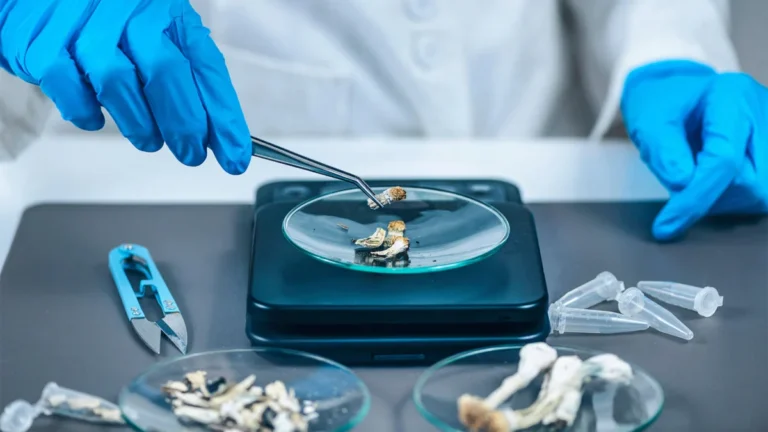





The sun dipped below the horizon hours ago, leaving the city in shadows. But inside the laboratory, the world remains bathed in the sterile, unwavering glow of benchtop equipment and flickering computer monitors. A timer emits a sharp, rhythmic ding. A scientist, moving with the practiced efficiency born of thousands of repetitions, rises from their stool. They don a pair of nitrile gloves, retrieve a new sample, and reset the clock. Then, they return to the data—analyzing, waiting, and watching for the next critical time point.
This is the unvarnished reality of cancer research. It is a world far removed from the glossy headlines that announce "miracle cures" or the celebratory press releases of clinical breakthroughs. It is a world of quiet dedication, grueling repetition, and a profound, stubborn belief in the scientific process. During National Cancer Research Month, the Cancer Research Institute (CRI) invites the public to look past the final product and acknowledge the indispensable, invisible labor that makes modern medicine possible.
The Mechanics of Discovery: Why Science is a Slow Burn
To understand the pace of cancer research, one must understand the nature of scientific verification. When a scientist conducts an experiment, they are not merely "trying something out"; they are building a bridge of data. If an experiment yields a promising result, the immediate next step is not celebration—it is skepticism. To validate a discovery, that experiment must be rerun, often dozens of times, under identical conditions to ensure the trends are robust, consistent, and reproducible.
The complexity of this process is often compared to a master chef attempting to recreate a signature dish. Even when following a written recipe with surgical precision, the outcome can shift. Is the oven temperature fluctuating due to the ambient humidity? Was the salt slightly different? In a laboratory, these variables are magnified. A slight shift in cell culture temperature, a variation in the chemical purity of a reagent, or even the minute calibration of a pipette can cause an experiment to go awry.
"Science is the same," explains Dr. Alicia Zhou, CEO of the Cancer Research Institute. "Experiments can be repeated exactly as they are written, yet results can differ. It is up to the scientist to identify the variable and tweak it until results are consistent, reproducible, and therefore trustworthy."
This is the "slow churn" of progress. It is frequently unglamorous, often exhausting, and occasionally prone to frustration. Scientists spend weeks chasing a hypothesis, only to be met with inconclusive results. Yet, the hallmark of a researcher is the ability to show up the next morning, adjust the parameters, rethink the logic, and begin again. In this environment, a "failure" is never an endpoint; it is a vital piece of data—a clue that narrows the field of uncertainty.
The Long Road from Bench to Bedside
The journey from a laboratory hypothesis to a patient’s bedside is a marathon that spans years, and frequently, decades. This trajectory is categorized by several distinct phases:
- Fundamental Discovery: The initial, often serendipitous, observation—such as identifying a specific gene or protein pathway involved in tumor growth.
- Validation and Scrutiny: The rigorous process of proving the discovery works across various cell lines, animal models, and biological contexts.
- Preclinical Development: Refining the discovery into a potential intervention, such as a drug or immunotherapy, and testing its safety.
- Clinical Trials: The high-stakes, multi-phase testing on human subjects, where safety and efficacy are finally confirmed.
Even when a discovery seems solid, the work is far from finished. The finding must be shared, scrutinized by peers, and replicated by independent labs across the globe. It must survive the gauntlet of the scientific peer-review process. Only when it stands up under the weight of universal scrutiny can it move from the quiet of the lab into the clinical environment.

Funding the Future: The Crisis of Talent
The machinery of discovery relies on more than just intellectual rigor; it relies on capital. Scientific funding is the fuel that allows researchers the time to explore difficult questions and the patience to arrive at answers that aren’t immediately obvious. However, this funding ecosystem is increasingly fragile.
Dr. E. John Wherry, Associate Director of the CRI’s Scientific Advisory Council, warns that the current landscape threatens the very future of the field. "If we don’t protect this next generation of researchers, we risk losing the very people who will drive the discoveries of tomorrow," he says.
The impact is most acutely felt by young investigators—the PhDs and postdoctoral fellows who are just beginning their careers. These individuals are the lifeblood of innovation, yet they are often the first to feel the brunt of budget cuts and grant competition. Without consistent support, the risk is not just a delay in research, but a "brain drain" where the next generation of scientific minds is forced to abandon oncology for more stable, less impactful sectors.
Dr. Valsamo (Elsa) Anagnostou, a CRI CLIP Investigator, emphasizes the specific need for translational support. "There is a huge need for support of translational research," she notes. "We must bridge the gap between scientific discoveries in the lab and the actual interventions that make a difference in clinical outcomes for patients."

The Human Cost and the Human Reward
The narrative of cancer research is ultimately a human one. It is a story of personal sacrifice and intellectual bravery. Take, for example, the work of Dr. Kenneth Murphy, the 2026 recipient of the AACR-CRI Lloyd J. Old Award in Cancer Immunology. Dr. Murphy’s path to fame was paved with what he describes as "disasters."
"The truth of it is, we stumbled across that gene for the wrong reasons, and it was a disaster, and we finally figured out what was missing," Dr. Murphy recounts. That "disaster" eventually led to the fundamental understanding of dendritic cells, a breakthrough that fundamentally altered the global approach to immune responses.
This persistence is what saves lives. It is the bridge between a terminal diagnosis and a future. Sharon Belvin, a survivor of Stage 4 melanoma, stands as a testament to the cumulative effect of these quiet laboratory hours. "My life, and the lives of so many others, are living proof that this work actually matters," she says.
Implications for the Future of Oncology
As we reflect on the state of cancer research, the implications are clear. We are currently in an era of unprecedented potential, particularly in the fields of immunotherapy and precision medicine. However, this potential is tied to the stability of the research ecosystem.
If society wishes to continue the trend of extending and saving lives, we must acknowledge the "architecture of hope"—the physical, mental, and financial infrastructure that supports the scientist in the lab. This means:
- Protecting Early-Career Grants: Prioritizing funding for young investigators to ensure a robust pipeline of talent.
- Encouraging High-Risk/High-Reward Research: Providing the "space" for scientists to pursue unconventional, difficult questions that traditional, conservative grant models might reject.
- Valuing the "Negative" Result: Cultivating a scientific culture that publishes and values failed experiments as much as successful ones, preventing the duplication of errors.
Conclusion: The Light That Stays On
Before the triumphant headlines, before the clinical trials, and before the patient hears the words "remission," there is the lab. There is the silence, the hum of the freezer, the ding of the timer, and the solitary figure working through the night.
Tonight, long after the sun has gone down and the rest of the world has quieted, a light will still be burning in a laboratory somewhere. A scientist will be there, resetting a timer, preparing a sample, and beginning yet another experiment. It is a repetitive, grueling, and often lonely task. Yet, it is the only way forward. Every improvement in survival, every new therapy, and every victory over the disease traces its lineage back to these quiet moments of persistence.
The progress we see in the world is not the result of magic; it is the result of people who refused to stop when the answers weren’t obvious. As we honor National Cancer Research Month, we acknowledge that the future of cancer treatment is currently being written, one experiment at a time, in the quiet, dedicated work of those who refuse to leave the lab until the truth is found.