By Kari McBride
The milestones of motherhood are often documented in blurbs of frantic joy: the first tooth, the first word, the first day of school. I remember my daughter’s first steps as vividly as if they occurred this morning. After 18 agonizing months defined by a blur of clinical appointments, sterile hospital corridors, and the repetitive, grueling labor of physical therapy, those small feet finally found their strength. Watching her swagger and sway down the hallway—a precarious, beautiful dance of defiance against the odds—I was filled with an overwhelming, almost visceral sense of relief. It was a singular moment of triumph that I felt, in my bones, I needed to anchor in my memory forever.
However, as many parents discover, the platitude "savor this moment" is often easier said than done. When you are in the thick of raising a child, the weight of the present often masks the significance of the passage of time. Now that my daughter is a teenager, the nature of our shared existence has shifted. Our current landscape is not defined by the physical milestones of infancy, but by the complex, often invisible realities of navigating chronic pain—a journey we are now walking side-by-side.
The Unlikely Catalyst: An Exercise in Observation
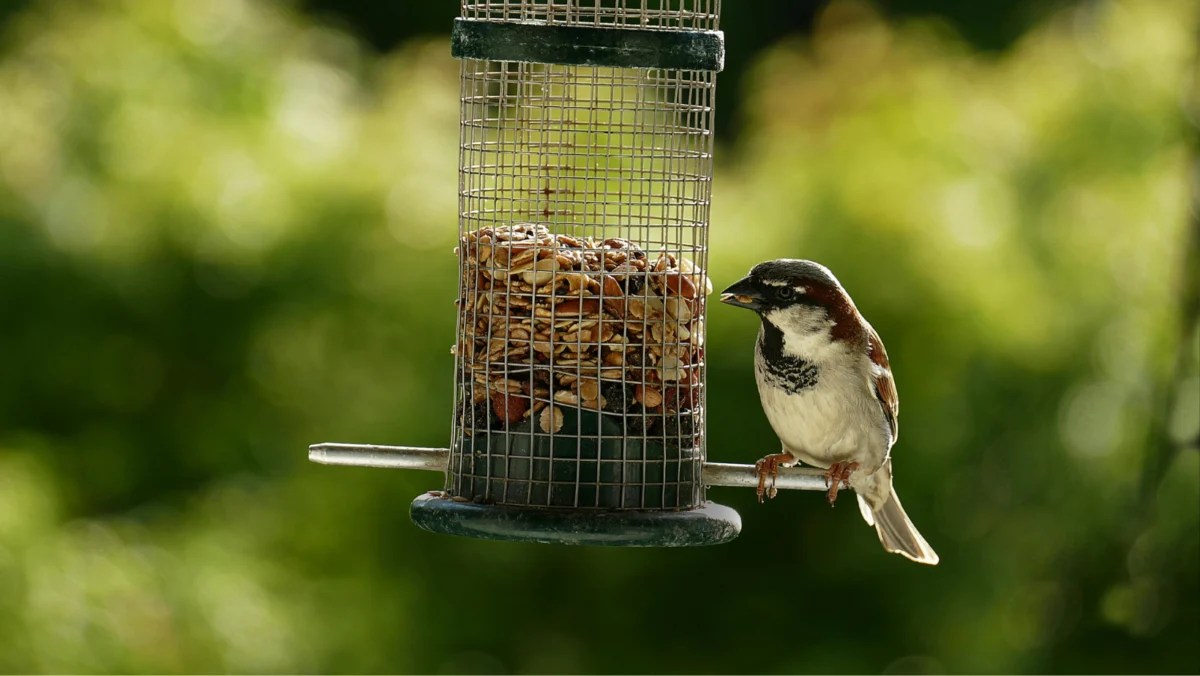
Recently, my daughter insisted that our household required a bird feeder. What began as a negotiation—a teenage desire to interact with the local fauna against my exhaustion-laden hesitation to add another chore to my already bloated to-do list—eventually resulted in a compromise. We now have bird feeders positioned in both our front and backyard.
I anticipated that the feeders would become merely another source of labor: filling seeds, cleaning trays, and managing the inevitable mess. Instead, they have evolved into something entirely different. They have become an involuntary practice in mindfulness.
There is a profound, rhythmic solace in watching the avian visitors. A mourning dove lands softly on the grass; a mockingbird hops with calculated precision along the fence line. Each creature exhibits a distinct personality, a miniature narrative playing out just beyond our windowpane. For a few quiet moments, I find myself standing perfectly still. I am not scheduling an appointment; I am not managing medication; I am simply watching. I am breathing. I am noticing. In those fleeting instants, the chronic pain and the suffocating uncertainty that typically define my daily rhythm begin to loosen their grip.
Chronology of a Shifting Perspective
To understand the weight of these small, avian-inspired respites, one must examine the timeline of how life is recalibrated by chronic illness.
The Era of Intervention: During my daughter’s infancy and early childhood, my life was structured by the medical calendar. Success was measured in physical progress—a measurable gain in muscle tone or a milestone achieved. During this period, "savoring" was a luxury I could rarely afford; I was too busy ensuring survival and progress.
The Period of Transition: As my daughter moved into her adolescence, the nature of our medical reality changed. Chronic pain, for both of us, became a constant companion. The "first steps" were replaced by the "first flares"—periods of time where pain dictated our boundaries. The focus shifted from "fixing" to "managing."
The Current Era of Observation: The introduction of the bird feeders marks a third, more reflective chapter. By intentionally slowing down, I have discovered that the capacity to experience joy has not been eroded by pain; it has merely been displaced. It now resides in the periphery of our daily routines.
Supporting Data: The Science of "Micro-Moments"
While my experience is anecdotal, it aligns with emerging research in the field of health psychology and mindfulness-based stress reduction (MBSR). According to studies published in journals such as Health Psychology, individuals living with chronic pain often experience a phenomenon known as "attentional narrowing." When pain is constant, the brain prioritizes the internal signal of suffering, effectively muting external environmental stimuli.
By engaging in "micro-moments"—short, intentional periods of observation—patients can occasionally break the cycle of attentional narrowing. This does not cure the underlying condition, but it does alter the patient’s relationship with their environment. Researchers have found that even five minutes of engagement with nature can trigger a parasympathetic nervous system response, lowering cortisol levels and providing a temporary, albeit essential, reprieve from the physiological stress of pain.
Furthermore, the "Broaden and Build" theory, championed by psychologists like Barbara Fredrickson, suggests that experiencing positive micro-emotions builds psychological resources over time. These resources allow individuals to become more resilient in the face of long-term adversity. The bird feeder is not just a garden accessory; it is a tool for cognitive regulation.
Perspectives from the Medical Community
I spoke with clinical practitioners regarding the importance of finding "anchor points" when managing chronic, life-altering conditions. Dr. Elena Vance, a specialist in pain management, notes that the psychological toll of chronic illness is often exacerbated by the feeling that one’s life is "on hold."
"Patients often feel they are waiting for a recovery that may not come, or a treatment that may not work," Dr. Vance explains. "The act of reclaiming small, non-medical activities—like gardening or birdwatching—is a vital act of agency. It shifts the patient from a position of ‘sufferer’ to a position of ‘observer.’ That shift is a fundamental component of emotional stabilization."
When asked about the role of caregivers, Dr. Vance emphasized that the parent-child bond is critical. "When a parent and child share a ritual—even one as simple as watching birds—it creates a neutral space where they are not ‘patient’ and ‘caregiver,’ but simply two people observing the world together. This normalization is therapeutic for both parties."
The Implications of "Savoring"
The realization that my daughter and I are both living with chronic pain has forced a radical re-evaluation of what constitutes a "successful" day. In the past, success was defined by the absence of pain or the completion of a milestone. Today, success is defined by the quality of our attention.
The implications of this are significant. If we rely on major milestones to justify our happiness, we are destined for long stretches of despair, given the erratic nature of chronic illness. By learning to value the "small experiences," we are diversifying our emotional portfolio. We are moving away from a binary model of "pain vs. health" and toward a more nuanced model of "engagement vs. isolation."
These moments do not last long. The birds inevitably fly away, and the physical reality of my pain draws me back inward. The discomfort remains, but it no longer occupies the entirety of my consciousness. This brief reprieve provides something tangible to hold onto when the days become particularly heavy.
Redefining the "Firsts"
There is only one "first step." There is only one "first word." In life, we are often obsessed with the singular nature of these events. But I am beginning to realize that the obsession with "firsts" can blind us to the beauty of the "continuing."
The teenager who once needed me to hold her hand while she learned to walk is now the same person who suggests we watch the mockingbirds together. She is teaching me that while the big, cinematic moments of life are significant, the quiet, repetitive, and often overlooked moments are where life actually happens.
Maybe this is truly what it means to "savor a moment." It isn’t about freezing time or capturing an impossible-to-repeat milestone. It is about the choice—the active, deliberate choice—to stop, to look, and to acknowledge that even within the architecture of a life shaped by pain, there is still room for wonder.
The birds will come back tomorrow. I will be there to watch them. And in that, I have found a profound and necessary peace. The pain may not be gone, but for the first time in a long time, it is not the only thing defining my world. I have learned that the view from the window is, in its own way, just as miraculous as that first, wobbly step down the hall.