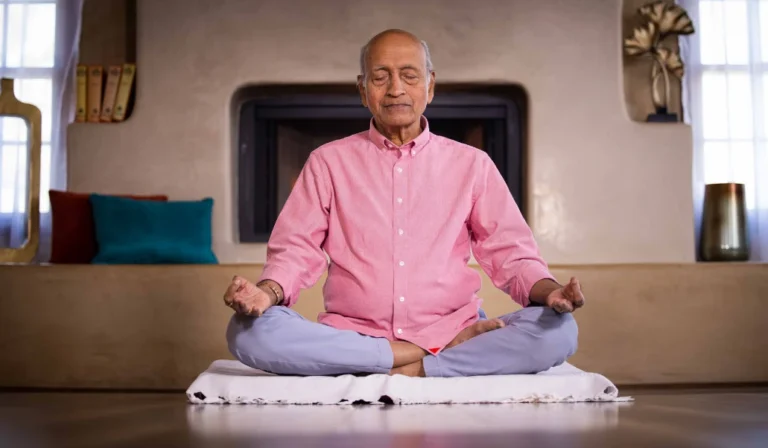












The pursuit of yoga is often misunderstood in contemporary society as a mere physical exercise or a method for achieving flexibility. However, at its foundational level, as articulated by the sage Patanjali in the Yoga Sutras, the practice is a profound psychological discipline. Patanjali defines yoga as chitta vritti nirodha—the cessation of the fluctuations of the mind. To reach this state of stillness, one must navigate the complexities of human consciousness, characterized by the five vrittis: right knowledge, wrong knowledge, imagination, sleep, and memory.
Achieving this state is not a passive surrender but a deliberate, strategic undertaking. Patanjali outlines a dual-path mechanism in Sutra 1.12: abhyasa (repeated practice) and vairagya (non-attachment). Together, these two pillars provide the structural integrity required to move from the chaotic state of a reactive mind to the serene, steady state of the witness-consciousness.
The Mechanics of Transformation: Understanding Abhyasa and Vairagya
In the philosophical framework of the Yoga Sutras, abhyasa and vairagya are not merely suggestions; they are the essential tools for dismantling the habitual patterns that dictate human suffering.
The Necessity of Repeated Effort (Abhyasa)
Abhyasa translates to "repeated effort or exercise." It is the conscious decision to engage in a discipline until it becomes second nature. Human beings are creatures of habit; our neurobiology is wired to favor efficiency through repetitive action. Patanjali posits that we can use this same biological tendency to our advantage. By consistently practicing steadiness, we overwrite the old, erratic scripts of the mind with new, stable ones.
However, abhyasa is not simply about mindless repetition. It is sthitau yatnah—an intentional effort to maintain stability. In a world defined by entropy, distraction, and constant change, maintaining a steady mental state is an act of defiance. It requires the practitioner to recognize the spark of purusha—the unchanging observer—within themselves, and to anchor their awareness there, rather than in the shifting tides of external circumstances.
The Role of Non-Attachment (Vairagya)
If abhyasa is the active engine of change, vairagya is the steering mechanism. Often mistranslated as "detachment" or "indifference," vairagya is more accurately understood as a refined state of non-attachment. It is the wisdom to engage with the world without becoming a slave to one’s desires or a victim of one’s aversions.
Vairagya provides the flexibility that prevents discipline from turning into rigidity. Without the softening influence of non-attachment, a rigorous practice can easily descend into fanatical adherence, causing the practitioner to become brittle and dogmatic. When abhyasa and vairagya are paired, the practitioner gains the ability to pursue growth with intensity while simultaneously remaining open and vulnerable to the influence of the spirit.
Building a Firm Foundation: The Practice of Dridha Bhumi
Patanjali elevates these concepts by introducing the idea of dridha bhumi, or the cultivation of a "firm ground." According to Sutra 1.14, this stability is not achieved overnight; it is the result of dirgha kala (a long time), nairantarya (continuity), and satkara (care and respect).
Dirgha Kala: The Long-Term Perspective
In an era of instant gratification, the concept of dirgha kala is perhaps the most challenging aspect of yoga. Many practitioners abandon their path after a few weeks, discouraged by the lack of immediate, transformative results. Patanjali argues that real, integrated change requires weeks, months, or years of consistent application.
The danger of forced, sudden change is that it creates a psychological "backlash." When the personality is radically altered overnight, the subconscious often rebels. Incremental, long-term practice allows the nervous system to adapt slowly, ensuring that the new way of being is deeply rooted in the individual’s character rather than superimposed upon it.
Nairantarya: The Integration of Practice
True continuity, or nairantarya, is not confined to the meditation cushion or the yoga studio. It is the ability to maintain a yogic orientation during the mundane challenges of daily life. A person who practices deep meditation in the morning but succumbs to anger, greed, or confusion in the workplace has not yet achieved nairantarya.
Continuity requires that the principles of awareness and discipline are applied to every interaction. Whether one is dealing with a difficult client or a complex interpersonal conflict, the practice remains the same: to act with intention and to witness the situation without losing one’s internal stability.
Satkara: Practicing with Reverence
Satkara—practice rooted in care, respect, and awareness—is the antidote to the ego’s desire to "achieve" enlightenment. It reminds the practitioner that the goal is not to conquer the mind, but to nurture a state where the purusha can be revealed.
When we approach our practice with satkara, we move away from a dictatorial mindset—the "shoulds" and "musts" that characterize a rigid practice—and toward a space of inspiration. This is the difference between being forced to work and being driven by a profound love for the truth. When practice is fueled by inspiration, it becomes self-sustaining. The practitioner finds that the discipline is no longer a burden, but a joy.
The Alchemy of Desire: Shifting from Material to Spiritual
A central question in yoga philosophy is how one successfully transitions from a material-oriented existence to one that is focused on the purusha. Patanjali addresses this through the concept of guna vaitrishnya—the end of thirst for the material, born from the realization of the supreme spirit.
Natural Renunciation
Renunciation is often viewed as a painful process of self-denial. However, in the yogic tradition, it is viewed as a natural byproduct of elevated experience. Just as a person who discovers the complex, nuanced flavors of nourishing, whole foods naturally loses their taste for processed, low-quality snacks, the person who experiences the peace of the purusha naturally loses their thirst for the transient pleasures of the material world.
This is not a forced suppression of desire, but a transmutation of it. When the higher truth is perceived, the lower cravings fall away on their own. This is the essence of vairagya in daily life: we do not need to fight our distractions if we are truly captivated by a more profound reality.
Love as a Catalyst
The most powerful form of vairagya is found in love. Love has the unique ability to override our standard preferences and discomforts. A parent who stays awake to care for a child, or two people who endure a storm because they are together, demonstrate how desire can shift automatically when the heart is invested. Patanjali suggests that by cultivating a relationship with the spirit, we can harness this same automatic shift in our preferences, allowing us to pursue spiritual growth with the same ease and intensity that a lover brings to their beloved.
Implications for the Modern Practitioner
The teachings of Patanjali on abhyasa and vairagya remain as relevant today as they were millennia ago. In a modern landscape defined by constant information overload and emotional volatility, these practices offer a path to psychological autonomy.
1. The Strategy of Boundaries
To cultivate dridha bhumi, the practitioner must be willing to set firm boundaries. This involves identifying the environments, relationships, and habits that consistently derail one’s focus. By imposing limitations on these external influences, we create a sacred space—a "firm ground"—upon which our internal work can proceed.
2. Balancing the Active and the Passive
The ultimate goal of yoga is nirodha—a state of absolute, effortless stillness. However, reaching that state requires a paradox: we must be highly active in our engagement with the material world (creating boundaries, practicing discipline, refining habits) while remaining completely passive and vulnerable in our relationship to the spirit. Balancing this "active-passive" duality is the secret to sustained progress.
3. Avoiding the Fanaticism Trap
The modern practitioner must remain vigilant against the temptation to turn yoga into a rigid ideology. Satkara serves as the guardrail here. If a practice, no matter how "traditional," leads to a sense of superiority, rigidity, or diminished capacity for compassion, it is likely that the element of satkara is missing. The true measure of any yogic practice is not how many postures one can hold, or how long one can sit in silence, but how much more effectively one can serve others and navigate the complexities of life with equanimity.
Conclusion
The path to yoga is not a departure from the world, but a deepening of one’s engagement with it. Through the disciplined application of abhyasa—repeated effort to maintain steadiness—and the graceful influence of vairagya—non-attachment to the fruits of our actions—we build a foundation that is both firm and flexible.
By grounding our practice in long-term commitment (dirgha kala), consistency (nairantarya), and heartfelt awareness (satkara), we move away from the ego-driven struggles of the mind and toward the effortless, blissful reality of the purusha. In doing so, we do not just change our habits; we change our fundamental orientation to existence, finding stillness in the center of the storm.