NUUK, Greenland — In a move signaling a potential tectonic shift in Arctic geopolitics, U.S. Special Envoy to Greenland Jeff Landry arrived in Nuuk on May 18, 2026, bearing a clear directive from the White House: to initiate the reestablishment of a robust American military and strategic presence on the world’s largest island.
The visit, which marks a significant escalation in the Trump administration’s long-standing interest in the territory, comes at a time of heightened global tension. Landry, serving in his capacity as the Governor of Louisiana, spent his first days on the island holding high-level, and often contentious, meetings with Greenlandic leadership. His mission is twofold: to assess the feasibility of reopening shuttered Cold War-era military installations and to navigate the diplomatic fallout of President Donald Trump’s controversial rhetoric regarding the potential acquisition of the autonomous Danish territory.
A Strategic Pivot: The Modern Cold War in the North
For decades, the Arctic was considered a region of low tension and high cooperation. However, the rapidly melting polar ice caps have transformed the region into a theater of strategic competition. Washington’s renewed interest in Greenland is not merely a project of military expansion; it is a calculated response to the encroaching influence of Russia and China in the "High North."
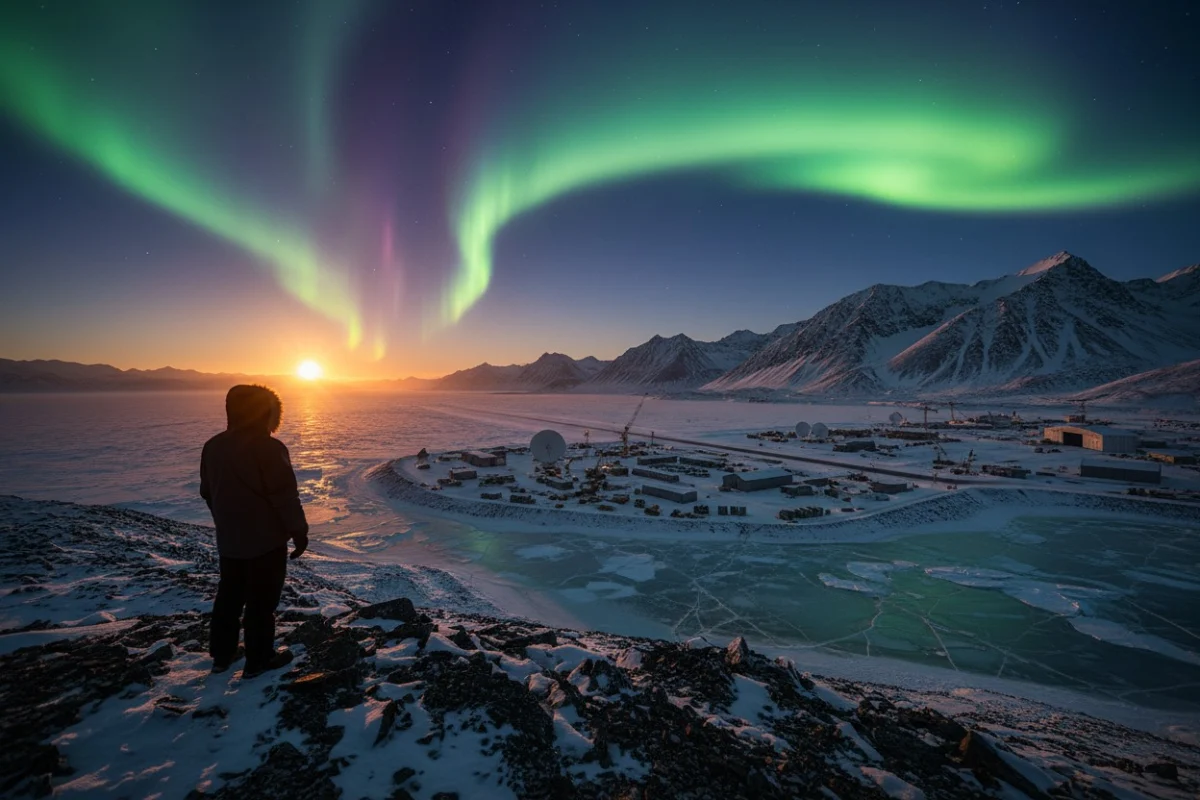
During the 20th century, the United States maintained 17 military installations across the island, serving as a critical surveillance network against the Soviet Union. Following the collapse of the USSR, the vast majority of these facilities were shuttered. Today, the only vestige of that era is the Pituffik Space Base, a critical node in the U.S. ballistic missile early-warning system.
Under the existing 1951 defense agreement—which was significantly updated in 2004—the U.S. maintains the legal right to expand its troop deployments and infrastructure, provided that it consults with Copenhagen and the Greenlandic government. However, the current administration’s aggressive approach, coupled with President Trump’s past suggestions of purchasing the island, has strained these legal frameworks to their breaking point.
Chronology of an Escalating Diplomatic Crisis
The current friction is the result of years of mounting pressure. To understand the gravity of the current situation, one must look at the timeline of U.S.-Greenland relations:
- 1946: The United States officially proposes the purchase of Greenland for $100 million, citing its critical value to national security. The offer is firmly rejected by Denmark.
- 1951: A formal defense agreement is signed, cementing the U.S. military presence on the island as part of a broader NATO security architecture.
- 2019: President Trump revives the idea of purchasing Greenland, sparking a diplomatic firestorm that leads to the cancellation of a scheduled visit to Denmark.
- 2024–2025: Reports emerge of classified, high-level negotiations between Washington and Copenhagen regarding the opening of three new military bases in southern Greenland.
- May 18, 2026: Special Envoy Jeff Landry arrives in Nuuk, marking the most significant U.S. diplomatic push since the administration’s takeover rhetoric began.
- May 20, 2026: Landry publicly suggests that the U.S. is exploring the revival of former bases, questioning the nature of Greenlandic sovereignty in a televised interview.
The Mineral Wealth Beneath the Ice
Beyond the strategic military necessity, the push for control over Greenland is inextricably linked to its vast, untapped natural resources. Early surveys by Arctic pioneers, including the legendary Bernt Balchen, identified significant surface indications of iron ore. Modern geological assessments are even more staggering, with estimates suggesting the presence of over 100 billion tons of high-grade iron ore, alongside rare earth elements that are essential for the production of modern electronics, electric vehicle batteries, and defense technologies.
For the United States, the fear is that if it does not secure a footprint now, these resources—and the infrastructure required to extract them—will fall under the influence of competitors. China has long expressed interest in the Arctic "Polar Silk Road," seeking to invest in Greenlandic infrastructure and mining, a prospect that Washington views as a direct threat to its national security and supply chain resilience.
Official Responses: A Clash of Sovereignty
The reaction from Nuuk and Copenhagen has been one of unified, if polite, resistance. Greenlandic Prime Minister Jens-Frederik Nielsen, following his meeting with Landry, struck a tone of unwavering firmness.
"The relationship is respectful and constructive, but our position has not moved an inch," Nielsen told reporters. "Greenland’s right to self-determination is non-negotiable. We are not for sale, and we are not a commodity to be traded between empires."
The tension deepened when Landry, speaking to the Danish broadcaster DR, questioned the very definition of Greenland’s sovereignty. When asked if the U.S. respected Greenlandic self-rule, Landry pivoted to a discussion about American military history, noting that the U.S. has historically intervened in regions to "liberate" them. His dismissive tone regarding the concerns of local officials has caused significant alarm in the Danish Folketing (Parliament), where politicians are increasingly concerned that the U.S. is viewing its NATO ally as a pawn rather than a partner.
The Strategic Implication: A Divided NATO
The most alarming aspect of this diplomatic spat is what it suggests about the future of the NATO alliance. As a founding member of the alliance, Denmark finds itself in an impossible position: caught between its obligations to the United States and its duty to protect the autonomy of Greenland.
The Russian factor looms large over these deliberations. Moscow has been aggressively modernizing its Arctic capabilities, including the refurbishment of Cold War-era airfields and the deployment of advanced, stealth-capable nuclear submarines. With over 100,000 troops involved in recent Arctic drills, Russia is signaling that it views the North Pole as a primary theater for future conflict.
Washington argues that an expanded U.S. footprint is the only way to counter this Russian expansionism. However, by ignoring the diplomatic sensitivities of the Greenlandic people, the U.S. risks alienating the very population whose support it needs to maintain a sustainable, long-term presence in the region.
Future Outlook: Can the Rift be Healed?
As Envoy Landry concludes his visit, the path forward remains murky. The Trump administration shows no signs of backing down from its goal of establishing a stronger base network in southern Greenland. Conversely, the government in Nuuk continues to signal that any military expansion must be done with, not to, the Greenlandic people.
The irony of the current situation is that both the U.S. and Greenland recognize the threat posed by external actors like Russia and China. Both parties understand the strategic necessity of a stable, Western-aligned Arctic. Yet, the method by which that stability is achieved—whether through a collaborative partnership or a forced, transactional power dynamic—will likely define the geopolitical landscape of the High North for the next century.
For now, the people of Greenland remain watchful. The island, which has spent decades moving toward greater autonomy from Copenhagen, now finds itself the focal point of a new, high-stakes game of global brinkmanship. Whether this serves as a catalyst for a modernized Arctic security pact or a breaking point in the U.S.-European alliance remains to be seen. What is clear, however, is that the era of the quiet, frozen Arctic is over, and the scramble for the top of the world has officially begun.