Originally published in the May-June 2001 issue of Yoga Journal, this archival feature explores the mechanics, philosophy, and preparation required for one of yoga’s most visually striking arm balances.
Main Facts: The Physics of the Firefly
Arm balances occupy a unique space in the yoga canon. They are simultaneously invigorating and demanding, serving as an equalizer in a practice where students often excel in one area—strength, flexibility, or spinal mobility—while struggling in others. Unlike backbends or simple forward folds, arm balances like Tittibhasana (Firefly Pose) require a sophisticated synthesis of coordination, core engagement, and proprioception.
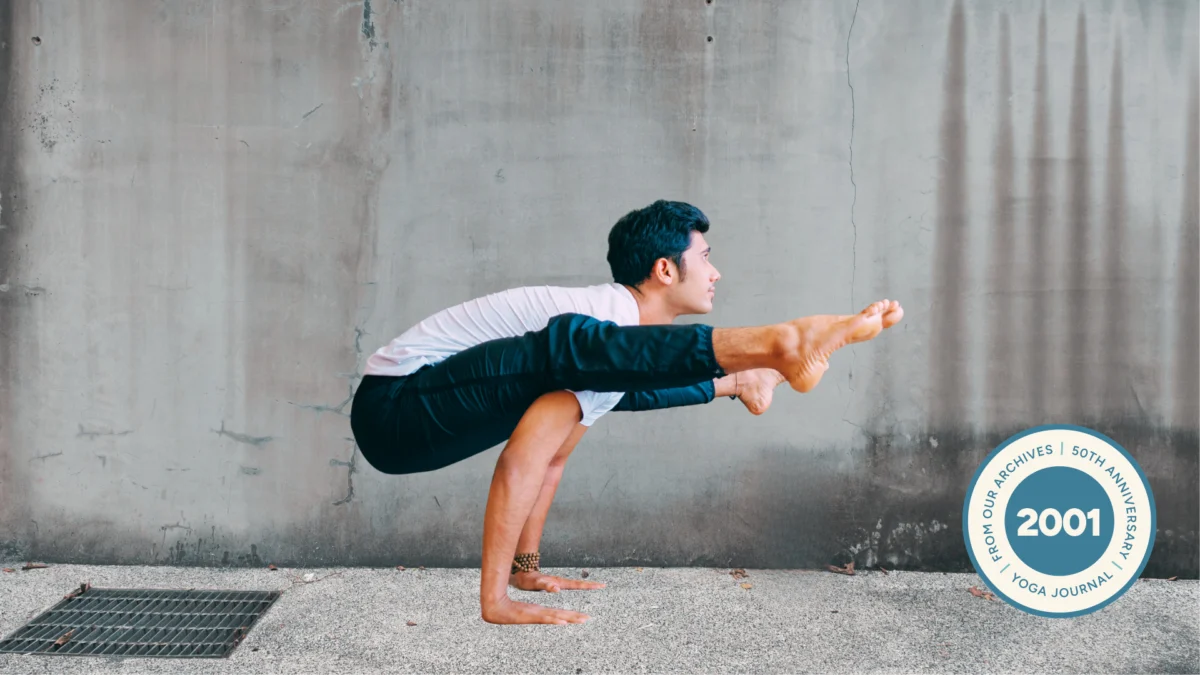
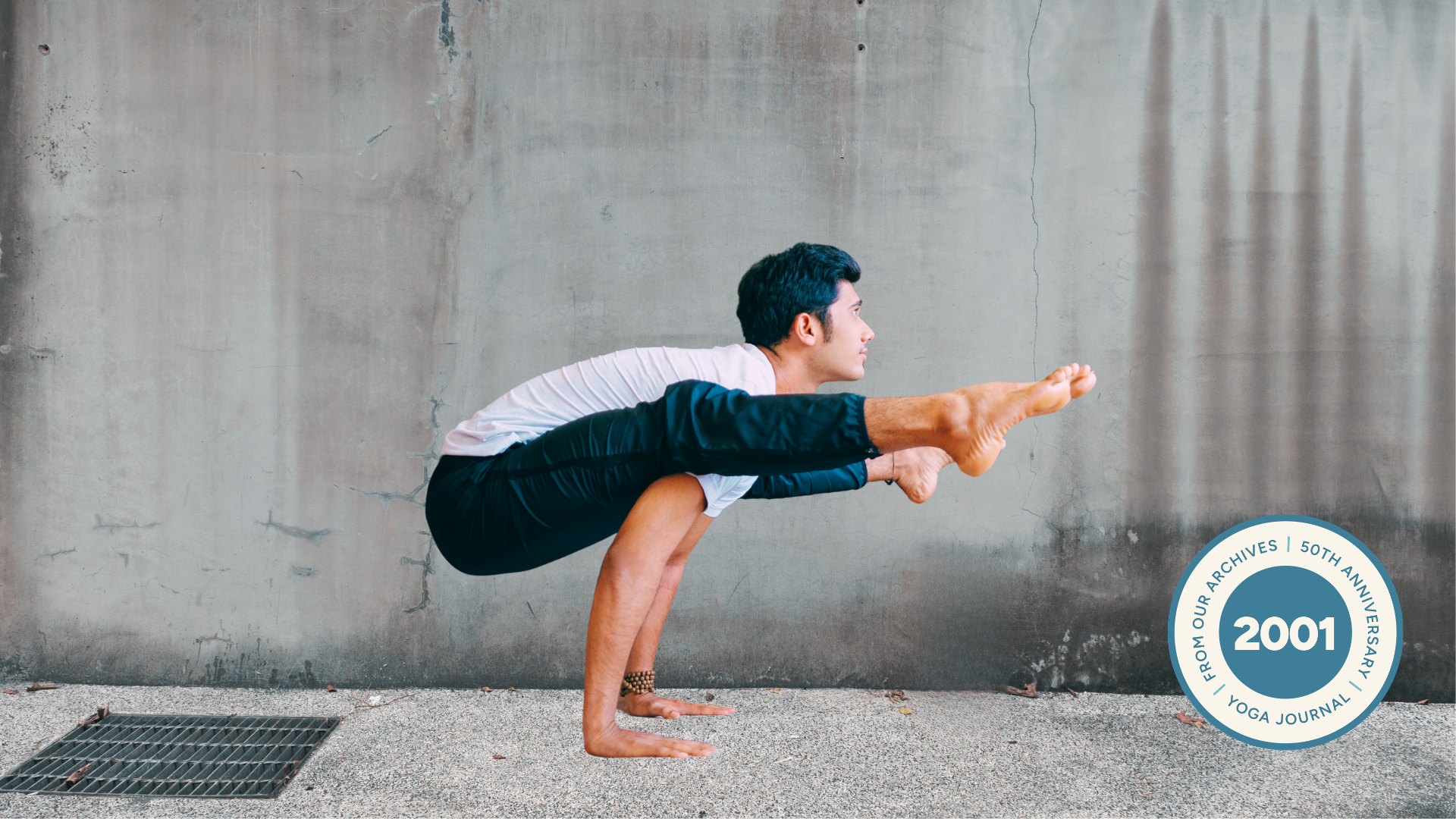
At its core, Tittibhasana is an exercise in leverage. To achieve the pose, a practitioner must balance their body weight on straight arms while their legs are extended horizontally, creating a shape that mimics the glowing wings of a firefly. It is a posture that demands a high degree of hip mobility, upper-body stability, and the ability to maintain a calm, rhythmic breath under physical duress.
Chronology of Progress: From Foundations to Flight
The path to Tittibhasana is rarely linear. It is built upon the incremental refinement of basic movements: forward bending, lateral extension, and core rotation.
Phase 1: Developing Spinal Awareness
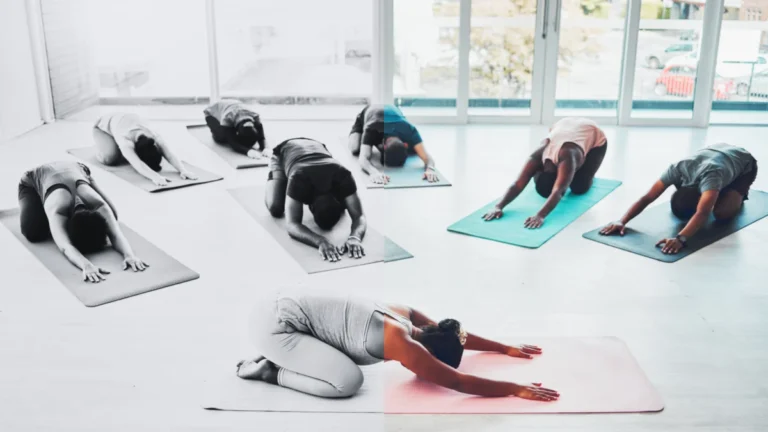
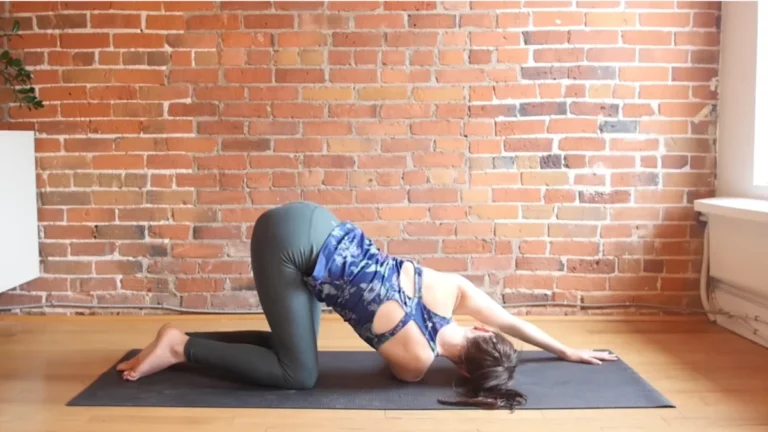
Before attempting the pose, one must address the rigidity of the lumbar spine. Often, students compensate for tight hamstrings by over-rounding the upper back while the lower back remains locked. By practicing a variation of Balasana (Child’s Pose) with the forehead tucked to the knees, students can begin to cultivate a rounded, supple spine. Using the imagery of each vertebra moving independently—like a heel-to-toe step—practitioners can learn to release tension in the posterior chain, a necessary prerequisite for the compression required in Firefly.
Phase 2: Generating Core Heat
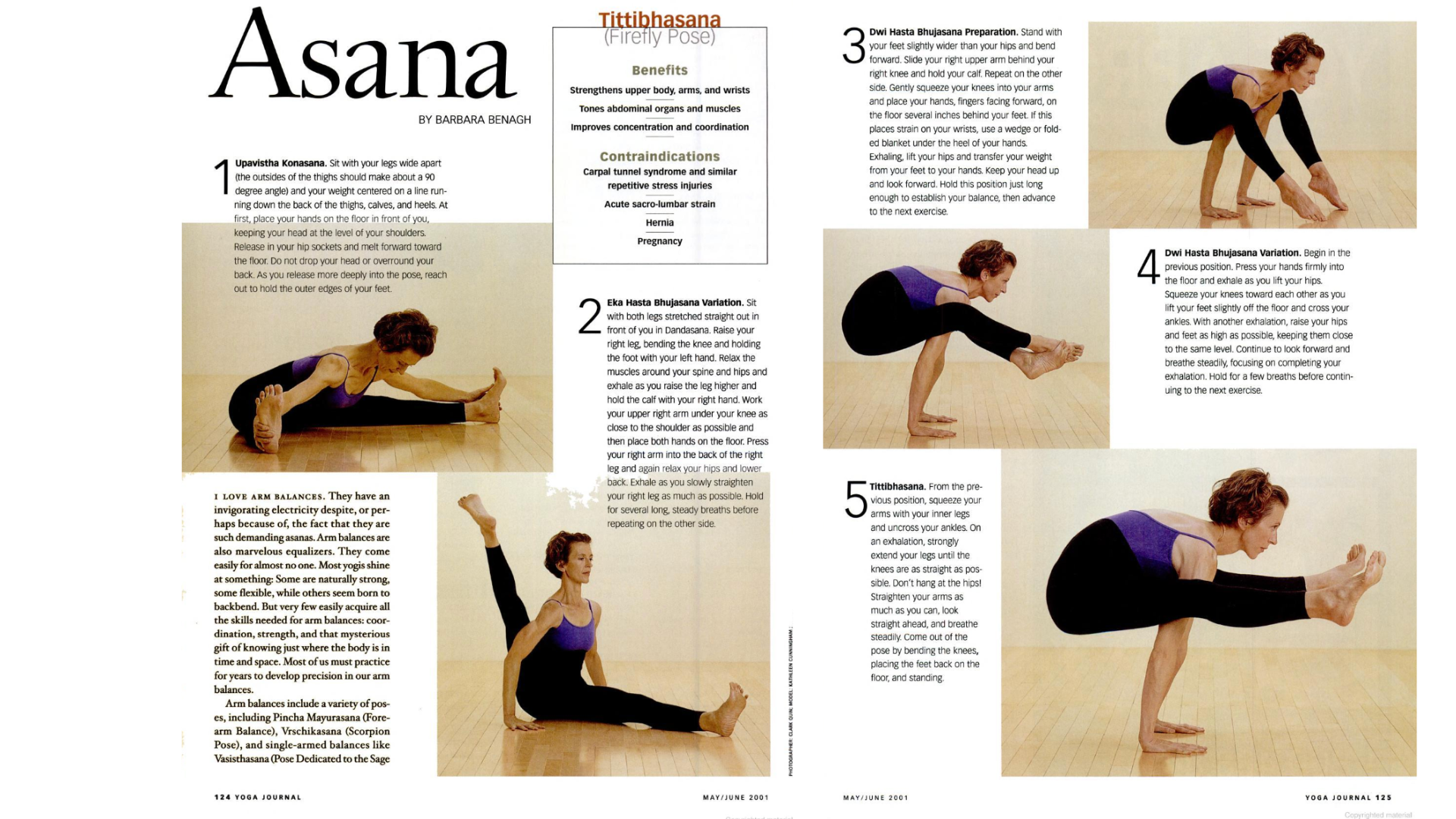
Upavistha Konasana (Wide-Angled Seated Forward Bend) acts as a laboratory for the abdominal engagement needed for lift-off. The key lies in the relationship between the pubic bone and the tailbone. By drawing these two points toward one another, the yogi creates a "lifting" sensation in the pelvis. This action generates the intense heat in the lower abdomen that allows the body to defy gravity once the feet leave the floor.
Phase 3: Hip Integration
The "Leg Over Shoulder" preparation is the final bridge. By placing the leg securely over the upper arm and pressing the knee against the shoulder, the practitioner learns the mechanics of internal rotation. This is where the "flight" begins; if the leg slides down the arm, the balance is lost. Maintaining the hug of the leg against the shoulder while simultaneously extending the heel is the technical crux of the final pose.
Supporting Data: Why We Balance
In the landscape of modern yoga, arm balances are often categorized by their point of contact. While Pincha Mayurasana (Forearm Balance) focuses on vertical stacking, Tittibhasana relies on horizontal distribution.
The physical requirements are non-negotiable:
- Wrist Integrity: The pose requires an acute angle at the wrist. Practitioners with repetitive stress injuries must exercise extreme caution, often utilizing wedges or folded blankets to reduce the load.
- The Abdominal-Pelvic Lock: The ability to merge the pubis and tailbone is not merely a muscular engagement; it is a neurological signal that stabilizes the lumbar spine.
- Breathing Cadence: A long, steady exhalation is the primary tool for overcoming the fear response associated with "falling" into the pose.
Expert Perspectives: The Philosophy of Falling
When teaching, the late Victor Van Kooten often emphasized that the "desire to fly" is a universal human drive. In the context of Tittibhasana, this isn’t just about the physical shape; it is about the willingness to surrender to the process.
The "official" stance of experienced practitioners is that the fall is an inevitable part of the training. "Arm balances are marvelous equalizers," notes the original 2001 feature. Because they are difficult for almost everyone, they strip away the ego, forcing the student to focus entirely on the present moment. If the student focuses only on the outcome—the full expression of the pose—the balance becomes shaky. If the student focuses on the "internal architecture"—the breath, the root of the hands, and the engagement of the core—the pose arises naturally.
Implications for the Modern Practice
The pursuit of Tittibhasana has profound implications for a long-term yoga practice. Beyond the obvious gains in upper-body strength and hip flexibility, it teaches the practitioner how to balance "effort and surrender."
The "Lift Off" Protocol
When transitioning into the final expression, the practitioner must execute a series of simultaneous actions:
- Anchoring: Spreading the fingers and pressing the base of the palms into the floor to create a stable foundation.
- Broadening: Keeping the chest open and wide, which prevents the shoulders from collapsing.
- Engaging: Squeezing the inner thighs against the arms to create a friction-based lock.
- Extending: Using a powerful, rhythmic exhalation to straighten the legs, turning the hamstrings into long, energized lines of force.
When these components align, the pose ceases to be a feat of strength and becomes a state of equilibrium. The "firefly" is lit—a metaphorical manifestation of internal energy that characterizes the pinnacle of an asana practice.
The Role of Counter-Poses
Because Tittibhasana places significant demand on the lumbar region and the wrists, proper sequencing is vital. After the intensity of the pose, it is highly recommended to perform Setu Bandha Sarvangasana (Bridge Pose). This counter-pose allows the spine to move into a gentle extension, strengthening the lumbar muscles that may have been overstretched during the deep rounding of the Firefly.
Conclusion: The Persistence of Practice
As we look back at the 2001 insights on Tittibhasana, the fundamental truth remains unchanged: we do not practice to achieve a "perfect" pose, but to understand the mechanics of our own bodies in space. Whether you are lifting your feet a few inches or fully extending into the classic shape, the value lies in the journey—the subtle recalibration of the core, the steadying of the breath, and the persistent, human urge to rise above the floor.
In the words of the archival text, once you successfully integrate these movements, you may find that the pose is not something you "do" to your body, but something you allow your body to express. You are no longer just a practitioner; you are, for a brief, glowing moment, a firefly in flight.