In a world defined by hyper-connectivity and complex infrastructure, the average citizen is paradoxically vulnerable. A sudden power outage in a high-rise office building, a dead smartphone battery during a transit delay, or a flat tire on a rain-slicked highway can turn a mundane afternoon into a logistical nightmare. While "prepping" is often associated with elaborate doomsday bunkers and years-long stockpiles, a more practical, scaled-down version of readiness has emerged as a cornerstone of modern life: the Everyday Carry (EDC) kit.
Far from the tactical fantasies often peddled on social media, a functional EDC kit is not about preparing for the apocalypse; it is about mitigating the "friction points" of daily existence. It is the practice of carrying a curated set of tools that allow you to solve ordinary problems before they escalate into emergencies.
The Foundation: What is Everyday Carry?
At its core, Everyday Carry is the collection of items an individual keeps on their person or in their immediate bag to solve the predictable, yet inconvenient, problems of modern life. It is not about survivalist machismo; it is about self-reliance.
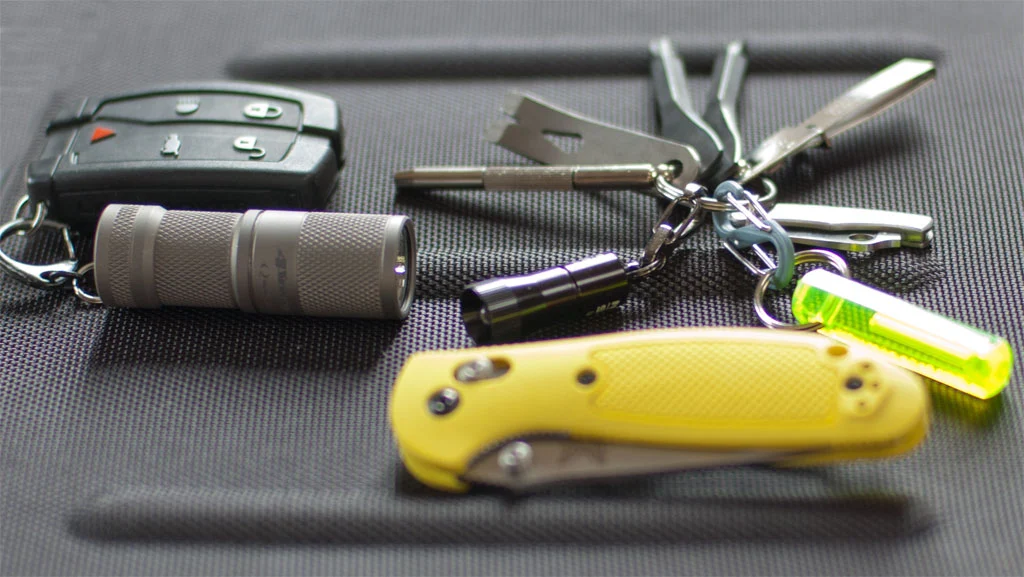
Most people already have the skeletal structure of an EDC kit in their pockets: a smartphone, keys, and a wallet. However, the difference between a person who is merely "carrying stuff" and someone who is "prepared" lies in the intentionality of those items. Are your keys just for a door, or do they hold a tool that can save you in a dark parking garage? Is your wallet just for plastic cards, or does it hold the insurance of physical currency when the digital grid fails?
The Philosophy of "Steady Competence"
The ethos of EDC is rooted in "steady competence." The goal is to shorten the gap between the onset of a problem and its resolution. When you have the right tool for a minor task, you reduce stress, save time, and maintain control over your environment. This is not about performance for an audience; it is about the quiet confidence that comes from knowing you are not helpless when the lights go out.
A Chronology of Preparedness: From Handbags to Utility Packs
The concept of "carrying one’s needs" is not new, though it has evolved significantly over the last century. Historically, humans have always carried tools—knives, flint, cordage, and pouches for sustenance. However, the modern iteration of EDC has been shaped by the rapid adoption of technology and the subsequent fragility of our urban systems.
The Original Urban Survivalists
In a fascinating sociological observation, it becomes clear that women have been the pioneers of EDC for decades. While the "tactical" community debates the merits of titanium versus aluminum, women have carried fully functional support systems—purses—that bridge the gap between home and the outside world. A well-organized purse contains snacks, medication, portable chargers, bandages, sanitizers, and tools.
If we define an EDC kit as a mobile resource station, the handbag is arguably the most successful and long-standing example of urban survival gear. The transition of EDC into the mainstream reflects a shift where more individuals—regardless of gender—are realizing that relying solely on external infrastructure (like public charging stations or open shops) is a gamble.
The Rise of the "Tech-Integrated" EDC
The late 2000s and early 2010s saw a massive shift in what we carry. The smartphone replaced the paper map, the camera, the notepad, and the address book. Yet, this reliance created a new "single point of failure." When the battery dies, the modern user loses access to navigation, communication, and payment. Consequently, the "power bank" became the modern equivalent of a spare tire, signaling a shift where EDC must account for both mechanical and digital failure.
Supporting Data: The Anatomy of a Balanced Kit
A truly effective EDC kit follows the principle of "restraint." Overloading your pockets leads to discomfort, which leads to leaving your gear at home. A kit left on a dresser is useless. To maintain consistency, you must balance capability with weight.
The Three Tiers of EDC
To organize your gear, experts often categorize items into three tiers:
- Tier 1: On-Body (Pockets): Items you have on you at all times. This includes your phone, a slim wallet with cash, a multi-tool or pocket knife, a compact flashlight, and keys with a small tool attachment.
- Tier 2: The Daily Carry (Bag/Sling): Items carried in a small bag or pack. This allows for slightly larger tools: a power bank, a compact first-aid kit, a notebook and pen, and a basic hygiene/utility set.
- Tier 3: The Vehicle/Workplace Stash: A more comprehensive kit kept in your car or at your desk. This is where you can afford more bulk: larger water containers, energy bars, a more robust medical kit, and weather-specific gear like a rain poncho or thermal blanket.
Essential Components
- The Light: A compact, high-lumen LED flashlight is perhaps the most underrated tool. It is essential for power outages, navigating dark stairwells, or inspecting engine issues.
- The Blade: A simple, three-inch folding knife is a utility workhorse. It is used for opening packages, cutting zip ties, or preparing food. It should be seen as a tool, not a weapon.
- The Power: A high-capacity, compact power bank combined with a multi-headed charging cable.
- The Financial Buffer: Always carry $20–$100 in physical cash. When the electronic payment system goes offline due to a network glitch or power failure, physical cash remains the ultimate "hard currency."
Official Perspectives and Expert Guidance
Industry experts and survival instructors consistently emphasize that an EDC kit is not a static object. It is a dynamic, living system that should change based on your lifestyle, climate, and common stressors.
"The best EDC setup is the one you will actually carry consistently," notes the staff at The Survival University. They emphasize that skill acquisition is just as important as hardware. Carrying a first-aid kit is useless if you don’t know how to use the bandages. Carrying a fire-starter is irrelevant if you cannot build a flame.
Furthermore, organizations like the Health Ranger Store have standardized these needs into modular kits, such as the Emerge Survival Every Day Carry (EDC) Kit. These kits serve as a baseline for beginners, providing a foundation of essential items—such as emergency whistles, space blankets, and basic medical supplies—that allow an individual to build their own custom loadout over time.
The Implications of Self-Reliance
The decision to adopt an EDC routine has profound implications for an individual’s psychology. In a society that is increasingly reliant on "just-in-time" delivery and interconnected digital services, an EDC kit acts as a psychological buffer against anxiety.
Reducing the Friction of Modernity
When you are prepared, small "disasters"—like a flat tire in the rain or a dead phone during a commute—stop being crises and become minor inconveniences. This reduction in stress is the true return on investment for the time and money spent assembling your kit.
The Evolution of Responsibility
As we look toward the future, the integration of EDC into our daily lives suggests a cultural shift toward personal responsibility. It acknowledges that while our society is generally safe and efficient, the systems we rely on are not infallible. By taking small, proactive steps, individuals can ensure that their day-to-day operations continue smoothly, regardless of external disruptions.
Conclusion: How to Start Your Journey
Building your EDC kit should be an iterative process. Start by observing your day:
- Did you have to borrow a pen today? Add one to your bag.
- Did your phone die before you got home? Add a power bank.
- Did you struggle to open a package? Add a small blade.
Do not be intimidated by the "tactical" gear found online. You do not need military-grade equipment to solve the problems of a modern office worker or a daily commuter. You need tools that work, that you understand, and that you are willing to carry every single day.
As you refine your kit, remember that the goal is balance. You are not preparing for the end of the world; you are preparing for the realities of the one we live in. By investing in your own readiness, you aren’t just protecting yourself against inconvenience—you are cultivating a mindset of competence and resilience that will serve you in every facet of your life.
For those looking to get started, pre-curated options such as the Emerge Survival EDC Kit offer a convenient starting point. These kits, available at the Health Ranger Store, provide the essential building blocks for your kit, allowing you to add personal, specific items as you gain experience.