










Main Facts: The Intersection of Clinical Treatment and Personal Agency
For individuals living with bipolar 1 disorder, the path to stability is often framed as a strictly clinical journey defined by pharmacology and psychotherapy. However, for Susan Johnson, a veteran educator, author, and mental health advocate, the last three decades have revealed a more nuanced reality: clinical treatment provides the foundation, but "the art of self-care" builds the structure of a functional life.
Johnson, who was diagnosed with bipolar 1 disorder nearly 30 years ago, argues that self-care is not a luxury or a form of self-indulgence, but a physiological and psychological necessity. In her view, self-care acts as a sophisticated early-warning system and a stabilization protocol that prevents the "overwhelm" that often precipitates mood episodes.
The core facts of Johnson’s approach emphasize that while medication and therapy are non-negotiable, they are most effective when paired with a rigorous, personalized regimen of lifestyle interventions. These interventions include:
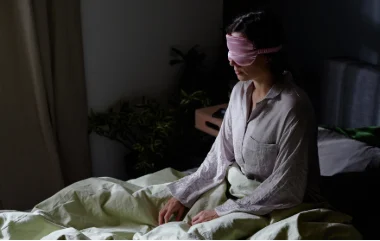
- Regulated Circadian Rhythms: A strict adherence to 8–10 hours of sleep.
- Radical Boundaries: The strategic use of the word "no" to protect emotional bandwidth.
- Micro-Mindfulness: Engaging in sensory experiences—such as watching a sunset or tending to plants—to ground the nervous system.
- Integrated Wellness: Combining physical activity, such as yoga and hiking, with spiritual practices like prayer and journaling.
Chronology: A Thirty-Year Evolution of Management
The journey to Susan Johnson’s current state of stability was not immediate. It was forged through trial, error, and the long-term observation of her own neurobiology.
1995: The Turning Point
Johnson’s journey officially began in 1995 with a diagnosis of bipolar 1 disorder. This period was marked by the initial shock of a chronic diagnosis and the steep learning curve associated with medication management and symptom recognition. Like many newly diagnosed individuals, the early years were focused on survival and basic symptom suppression.
2018: From Patient to Advocate
By 2018, Johnson had transitioned from managing her condition in private to public advocacy. Her story was featured in a “This Is Me” Q&A for bp Magazine, marking a shift in her identity. She began to view her experiences not just as a personal burden, but as a roadmap for others. This period saw the publication of her memoir, Some Dreams Are Worth Keeping: A Memoir of My Bipolar Journey, which documented the "dos and don’ts" she had refined over two decades.
2021: Defining the "Art of Self-Care"
In November 2021, Johnson synthesized her findings into a framework for holistic stability. This was the same year she delivered her TEDx Talk, "Having a Mental Illness Is Not a Death Sentence," at TEDxTenayaPaseo. At this stage, she began advocating for a more "perfected" version of self-care—one that recognizes the shifting needs of the brain during different mood states (mania versus depression).
Present Day: Sustainable Maintenance
Today, Johnson balances a high-responsibility career as an instructional assistant for special education students in Nevada with her roles as an author, Toastmaster, and public speaker. Her current phase of life is defined by "medication adherence as oxygen"—a complete surrender to the necessity of clinical treatment, supported by a meticulously scheduled life.
Supporting Data: The Science Behind the Routine
Johnson’s personal anecdotes are supported by a growing body of psychiatric research regarding "Lifestyle Psychiatry." The strategies she employs are not merely anecdotal; they target the biological underpinnings of bipolar disorder.
The Sleep-Mood Connection
Johnson’s insistence on 8–10 hours of sleep is backed by clinical data showing that sleep deprivation is one of the most potent triggers for manic episodes. According to the Journal of Affective Disorders, disruptions in the circadian rhythm can cause a "molecular clock" misalignment in the brain, leading to mood cycling. By maintaining a regimented sleep schedule, Johnson is effectively stabilizing her internal biological clock.
Stress and the Prefrontal Cortex
Johnson’s use of a calendar to prevent "over-scheduling" and her practice of saying "no" are essential for cognitive load management. Chronic stress elevates cortisol, which can impair the prefrontal cortex—the area of the brain responsible for emotional regulation. For someone with bipolar 1, an overloaded schedule isn’t just a source of stress; it is a neurological risk factor.
The Efficacy of Mindfulness and Nature
Research published in The Lancet Psychiatry suggests that mindfulness-based interventions can significantly reduce the risk of relapse in mood disorders. Johnson’s "peace and reflection" habits—gazing at sunsets or fire pits—serve as grounding exercises that move the body from a "fight or flight" sympathetic nervous system state into a "rest and digest" parasympathetic state.
Official Responses: Clinical Perspectives on Self-Care
The medical community has increasingly moved toward an integrated model of care that mirrors Johnson’s lived experience. Leading mental health organizations and practitioners emphasize that self-care is a clinical tool, not just a lifestyle choice.
The National Alliance on Mental Illness (NAMI)
NAMI’s guidelines for bipolar disorder management align closely with Johnson’s strategies. The organization advocates for a "treatment team" approach, where the patient is an active participant. They officially recommend "social rhythm therapy," which involves maintaining regular times for eating, sleeping, and exercising—the exact "regimented schedule" Johnson describes.
The Depression and Bipolar Support Alliance (DBSA)
The DBSA highlights that "wellness" is a proactive process. Their official stance is that self-care strategies, such as journaling and mood tracking (which Johnson utilizes), are essential for identifying the subtle shifts between a "good day" and the onset of a hypomanic or depressive episode.
The Role of Medication Adherence
Psychiatrists often cite "medication non-adherence" as the leading cause of relapse. Johnson’s public stance—describing her medication as "essential as oxygen"—is seen by clinicians as a gold-standard mindset. Dr. Ken Duckworth, NAMI’s Chief Medical Officer, has frequently noted that accepting the need for long-term medication is often the most difficult, yet most important, step in achieving a "normal" life.
Implications: A Blueprint for Long-Term Wellness
The implications of Susan Johnson’s "art of self-care" extend beyond her personal stability; they offer a template for how chronic mental health conditions can be managed in the modern world.
The Workplace and "Mental Health Days"
Johnson’s practice of taking "me days" using accrued sick time highlights a critical shift in workplace culture. By viewing mental health maintenance as a legitimate use of sick leave, she demonstrates how professionals can remain productive in high-stress environments (like special education) without burning out. This has significant implications for HR policies and the reduction of workplace stigma.
The Power of Routine as a Safety Net
The article underscores that stability is not a static state but a dynamic process. The implication is that a "sustainable routine" acts as a safety net. When life becomes unpredictable—due to travel, work deadlines, or family obligations—the routine provides a "home base" to which the individual can return.
Mania vs. Depression: Adaptive Self-Care
Perhaps the most significant implication of Johnson’s framework is the idea of adaptive self-care. Rather than a one-size-fits-all approach, she suggests that self-care must be "tuned" to the current mood state:
- In Hypomania/Mania: The goal is deceleration—quiet, routine, and fewer commitments.
- In Depression: The goal is gentle activation—connection, movement, and small successes.
Conclusion: Stability as an Earned Skill
Ultimately, Susan Johnson’s experience suggests that living well with bipolar 1 disorder is an earned skill. It requires the humility to accept medical treatment and the discipline to maintain a lifestyle that supports brain health. Her story serves as a powerful rebuttal to the idea that a mental health diagnosis is a "death sentence." Instead, it is a call to master the "art of self-care"—a practice that transforms a volatile condition into a manageable, and even flourishing, life.
As Johnson notes, "The goal isn’t to do all of these things at once. It’s to build a routine you can actually return to." For the millions living with bipolar disorder, this message of incremental, disciplined self-compassion may be the most vital medicine of all.