










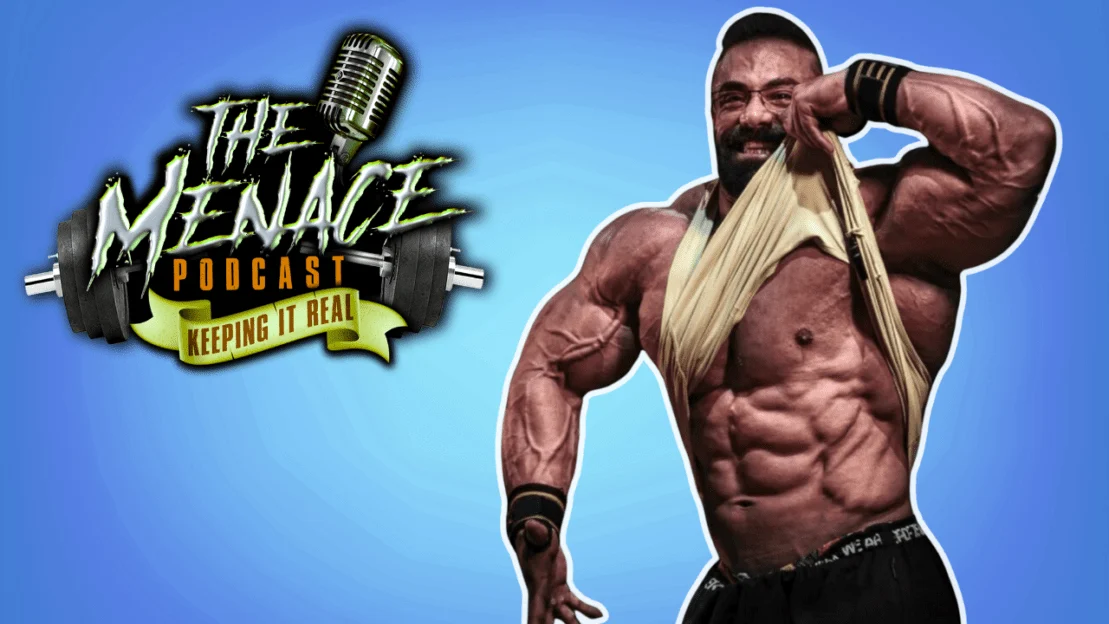
In the high-stakes world of professional bodybuilding, the pursuit of mass often overshadows the nuance of presentation. For legends who spent decades battling under the harsh glow of stage lights, the perspective on what truly constitutes "winning" often shifts with time. Recently, on Episode 289 of The Menace Podcast, bodybuilding icon Dennis "The Menace" James sat down with peers Jose Raymond and Milos Sarcev to engage in a candid retrospective. While James boasts a storied career spanning three decades, he revealed a poignant regret that has shaped his current philosophy: he believes he prioritized raw size over the artistry of posing, a decision he claims may have cost him championship titles.
A Legacy Forged in Iron: The Chronology of "The Menace"
Dennis James’s journey through the IFBB Pro League is the stuff of bodybuilding legend. His career, which bridged the transition from the late 90s to the early 2010s, serves as a masterclass in longevity and consistency.
The 1990s: Rise to Prominence
James burst onto the scene with a density and muscular maturity that made him an immediate fan favorite. His victory at the Mr. Universe competition in the 90s signaled the arrival of a new breed of bodybuilder—one who combined the freakish proportions of the modern era with a work ethic rooted in old-school intensity.
The 2000s: The Olympia Contender
The turn of the millennium marked James’s prime. He became a staple of the Mr. Olympia stage, participating in an astonishing ten editions of the sport’s most prestigious event. His peak, arguably, arrived in 2003, when he secured a fourth-place finish. During this era, James was known for his relentless pursuit of size, often training alongside the most aggressive bodybuilders in the industry. His victory at the Europa Super Show further cemented his reputation as a formidable force who could dominate in any lineup.
2012 and Beyond: The Masters Era
By 2012, James had entered the Masters Mr. Olympia stage, proving that he could maintain a world-class physique well into the later stages of his professional life. Even as he stepped back from active competition, his influence remained, as he transitioned into coaching, commentary, and hosting The Menace Podcast.
The Posing Paradox: Why Presentation Trumps Power
Despite his immense success and undeniable size, James’s reflection on his career reveals a deep-seated belief that he left trophies on the table. The core of his argument is that bodybuilding is, fundamentally, a visual art form, not a test of strength.
"I would pay all the attention to posing," James told the panel. "If I could turn back the time, I would f*****g pose."
The Training Trade-Off
James highlighted a specific adjustment he would make to his daily regimen if he could start his career over. During his competitive years, James was famous for his high-volume cardio sessions, often clocking two hours a day to maintain his conditioning. Looking back, he suggests that one of those hours would have been better spent in front of a mirror.
"The two hours of cardio that I did, I would just do one hour, and one hour [of] posing," he explained.
This revelation underscores a common struggle among elite bodybuilders: the exhaustion that follows a brutal lifting session often makes the isometric work of posing feel like an insurmountable chore. James admitted that when he trained with the legendary Milos Sarcev, he was often reluctant to practice his routines because he felt his muscles were depleted and his energy reserves were spent. He now recognizes this as a missed opportunity to master the one thing that judges actually score.
The Lessons of the Greats: The Melvin Anthony Benchmark
James pointed to his contemporary, Melvin Anthony, as the gold standard for stage presence. Anthony, known for his fluid, dance-like transitions and impeccable control, was the antithesis of the "stiff" bodybuilder.
"Melvin Anthony was one of them guys," James recalled. "He couldn’t keep his shirt on long enough. But you can see, on stage, he held his s**t, and it was always perfect."
The implication is clear: posing is not just about showing off the muscles; it is about "holding" the physique under extreme pressure. It requires a level of neuromuscular control that can turn a "good" physique into a "winning" one. James notes that while he was chasing size and chasing his rivals, he was failing to maximize the visual impact of the muscle he already possessed.
Expert Insight: Milos Sarcev on Midsection Control
Joining the discussion, renowned coach and former pro Milos Sarcev offered a technical perspective on why posing is non-negotiable. Sarcev, known for his "Giant Set" training methodology, argued that posing is the primary tool for developing the aesthetic control that modern bodybuilders often lack.
"For posing, the biggest thing is keeping that midsection," Sarcev explained. "From every angle, that’s it."
Sarcev’s point hits on a major critique of the modern era of bodybuilding: the "distended midsection." While training heavy is necessary for growth, Sarcev suggests that the internal pressure and lack of stomach control during posing can ruin an otherwise perfect physique. Posing, when practiced correctly, acts as a vacuum-building exercise, training the body to remain tight and compact even when fatigued.
The Implications for Future Contenders
The advice James gives to the current generation is direct and uncompromising: "No one asks you, when you step on stage, how much you bench or how many reps you do. They want to see what you look like, and if you don’t practice the posing, how are you going to get on stage?"
Shifting the Paradigm
The implications of this conversation for aspiring bodybuilders are significant. The industry is currently witnessing a trend where athletes are increasingly obsessed with "data-driven" training—tracking every rep, set, and caloric intake. While this is essential for progress, James and Sarcev argue that it is incomplete.
- The Stage as the Final Product: If the stage is the end goal, the routine must be the focus. A bodybuilder who bench presses 500 pounds but cannot hit a side chest pose with grace will lose to a smaller, more graceful opponent every time.
- Psychological Preparation: Posing requires mental endurance. It is the ability to maintain a contraction when the body is screaming for rest. By integrating posing into the training session, athletes develop the "mental callouses" needed for the Olympia stage.
- The Aesthetic Standard: By prioritizing posing, athletes can learn to mask their weaknesses and highlight their strengths. This tactical awareness is what separates a top-ten finisher from a Mr. Olympia champion.
Conclusion: Refining the Art of Bodybuilding
Dennis James’s reflection is not a dismissal of hard work; rather, it is an elevation of the craft. Throughout his career, he was a giant in the sport, but his admission proves that even at the highest levels, there is always room to reconsider the balance between the "builder" and the "poser."
As the sport evolves, the insights shared on The Menace Podcast serve as a vital reminder to athletes across the globe. Whether one is a beginner or a seasoned pro, the mirror is the ultimate judge. If you are not prepared to pose, you are not prepared to compete. As James succinctly put it, the world doesn’t care about your bench press; they care about the image you project on that stage. By shifting the focus from the quantity of the training to the quality of the presentation, the next generation of bodybuilders may find that the secret to winning isn’t just in the iron, but in the art.
For those looking to gain a competitive edge, the lesson from "The Menace" is simple: when you think you’ve finished your workout, you’re only halfway there. It is time to step in front of the mirror, peel off the shirt, and perfect the pose.