By Kari McBride
The milestones of motherhood are often marked by grand, cinematic gestures: the first word, the first day of school, the first steps across a living room floor. I remember my daughter’s first steps as if they occurred only moments ago. After 18 grueling months defined by a blur of clinical appointments, sterile hospital stays, and rigorous therapy sessions, those small, tentative feet finally found their footing. Watching her swagger and sway down the hallway, I was overcome by an intense, visceral joy. It was a victory—a physical manifestation of perseverance—and in that moment, I knew I wanted to bottle the experience and keep it forever.
People often offer the platitude, “Savor this moment; it won’t happen again.” At the time, I believed I understood the weight of those words. I thought I was present. However, life—and the subsequent onset of chronic illness—has a way of reframing our understanding of time, stillness, and what it truly means to "savor."
The Weight of Reality: Living with Chronic Conditions
Chronic pain is an invisible adversary. It does not announce itself with fanfare, but rather through a slow, persistent erosion of one’s daily capacity. For my daughter and me, our lives have been fundamentally reshaped by health challenges that dictate our schedules, our energy levels, and our emotional bandwidth.
When you live with chronic pain, the world tends to shrink. Your radius of movement, your social interactions, and your ambitions are often curtailed by the physical tax of existing in a body that refuses to cooperate. The days become a series of negotiations: How much energy do I have? Can I manage this errand? When will the next flare-up occur?
In this environment, the concept of "savoring" takes on a different, more urgent meaning. It is no longer about preserving a grand milestone; it is about harvesting tiny, ephemeral fragments of peace from an otherwise taxing existence.
A New Perspective: The Bird Feeder Initiative
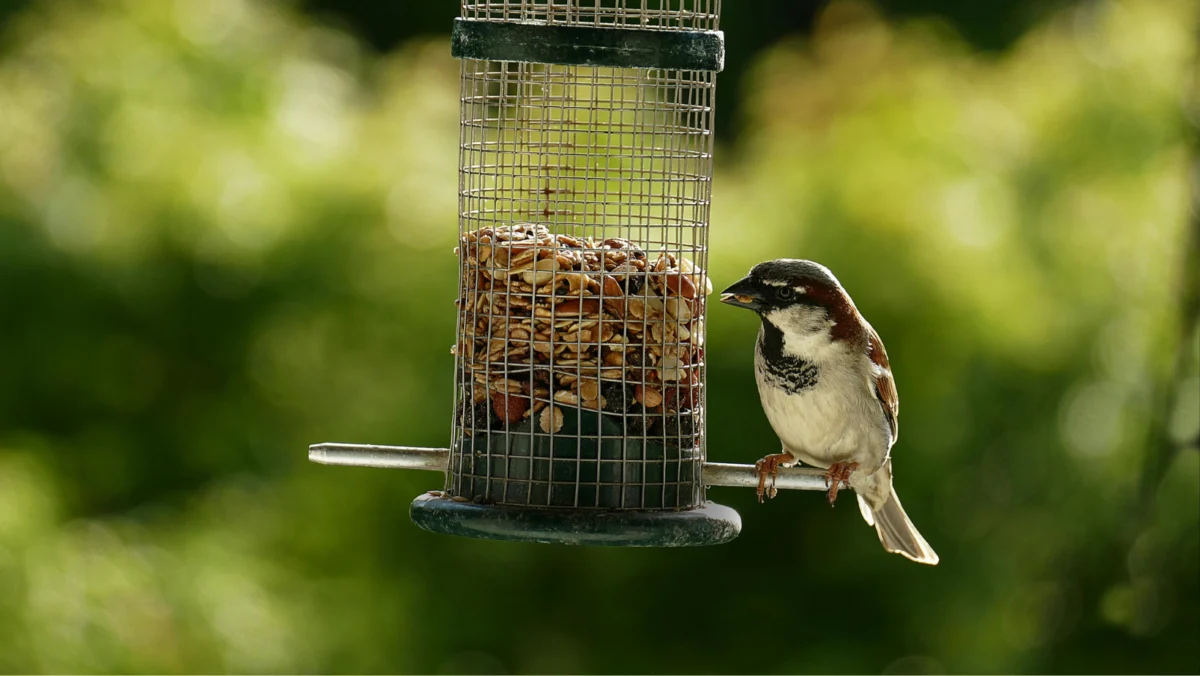
The shift in my perspective arrived unexpectedly, in the form of a bird feeder. My daughter, now a teenager, recently initiated a persistent campaign for us to install feeders to attract local birdlife. At the time, my internal dialogue was dismissive. I viewed the request through the lens of a weary caregiver: Yet another chore. Another item to add to the shopping list, another thing to clean, another responsibility in a life already heavy with logistics.
After a period of lighthearted negotiation, I relented. We installed feeders in both the front and back yards. I expected them to be a minor nuisance; instead, they became a sanctuary.
The Science of Observation
There is a profound, almost hypnotic quality to watching the avian life in our neighborhood. A mourning dove lands on the grass with a soft flutter; a mockingbird hops along the fence line, asserting its territory with a curious, tilted head. Each bird exhibits a distinct personality, a miniature drama playing out in the wings of our yard.
For a few quiet moments, I find myself standing still. I stop calculating the pain levels. I stop worrying about the next appointment. I simply breathe and notice. In these instances, the sharp, jagged edges of the pain and uncertainty that usually dominate my cognitive space begin to loosen their grip. It is not a cure—the pain does not evaporate—but it is a reprieve. It is a neurological "reset" that allows the nervous system to shift, if only momentarily, from a state of hyper-vigilance to one of observation.
Chronology of Resilience: From Milestones to Micro-Moments
The journey from the "first steps" of a toddler to the "first sightings" of a bird feeder represents a shift in how we process human experience.
- The Early Years (The Era of Grand Milestones): During the infancy of my daughter’s health journey, focus was entirely on progress. We measured time by the benchmarks of recovery. Every session was a hurdle to clear, and "savoring" meant documenting the victory.
- The Transitional Period (The Onset of Chronic Maintenance): As our conditions stabilized into a chronic state, the milestones became less frequent. The focus shifted from "fixing" to "managing." This period was characterized by a sense of loss—a mourning for the life we assumed we would lead.
- The Present (The Era of Micro-Moments): Today, we are learning that joy is not limited to the monumental. By choosing to stop and observe the rhythm of the birds, we are reclaiming our agency. We are deciding that our days are not solely defined by what we cannot do, but by the small, beautiful things we choose to witness.
Supporting Data: The Psychological Impact of Nature Observation
The therapeutic value of observing nature is well-documented in modern psychology. Studies in Environmental Psychology have consistently shown that "nature exposure"—even in the form of bird-watching or looking at greenery—can significantly lower cortisol levels, the body’s primary stress hormone.
For those living with chronic pain, the "attention restoration theory" is particularly relevant. Chronic pain demands a high degree of cognitive effort; we are constantly monitoring our bodies and our discomfort. By engaging in "soft fascination"—a state of mind where we observe nature without requiring deep focus—we allow our cognitive resources to recharge. The bird feeder is not just a hobby; it is an informal clinical intervention. It provides a structured way to practice mindfulness, which has been shown in various studies to decrease the emotional suffering associated with physical pain.
Official Perspectives: The Role of Pacing and Mindfulness
Medical professionals often emphasize the importance of "pacing" for patients with chronic illnesses. Pacing involves balancing activity with rest to avoid burnout and pain flare-ups. However, mental pacing is just as vital as physical pacing.
Experts in pain management frequently suggest that patients cultivate "islands of normalcy." These are activities or mental spaces that are untethered from the illness. For my daughter and me, the bird feeders serve as these islands. When the birds fly away and the reality of our health returns, the reprieve ends—but the memory of the stillness remains. We are learning that the absence of pain is not the only definition of a "good" day. A good day can simply be a day where we managed to find a moment of grace.
Implications: A New Definition of Savoring
The implication of this shift is profound: if we wait for the "big" moments to be happy, we are destined for long stretches of despair. By learning to savor the fleeting, we essentially "hack" our own contentment.
This is not a denial of our reality. I am not pretending that our health challenges do not exist or that they are not difficult. Instead, this is a conscious act of rebellion against the idea that pain should occupy 100% of our internal landscape.
There is only one "first" step, but there are thousands of bird arrivals. There are thousands of sunsets, thousands of cups of tea, and thousands of quiet mornings. The small experiences pass quickly—unless we choose to stop and see them.
Maybe this is the true essence of savoring a moment. It isn’t about holding on until the clock runs out; it is about acknowledging the brevity of the experience and choosing to be present for it anyway. As I watch the mockingbird take flight, I realize that even within the confines of chronic pain, there is a wide, expansive world to be noticed. And for now, that is enough.