In a transformative leap for neurovascular medicine, the Advanced Research Projects Agency for Health (ARPA-H)—a federal agency within the U.S. Department of Health and Human Services—has launched an ambitious initiative to redefine the standard of care for stroke patients. By committing up to $175.3 million to the development of endovascular robotics and micro-robotics, the agency is seeking to shrink the "time-to-treatment" window that currently dictates the difference between life and death for thousands of stroke victims annually.
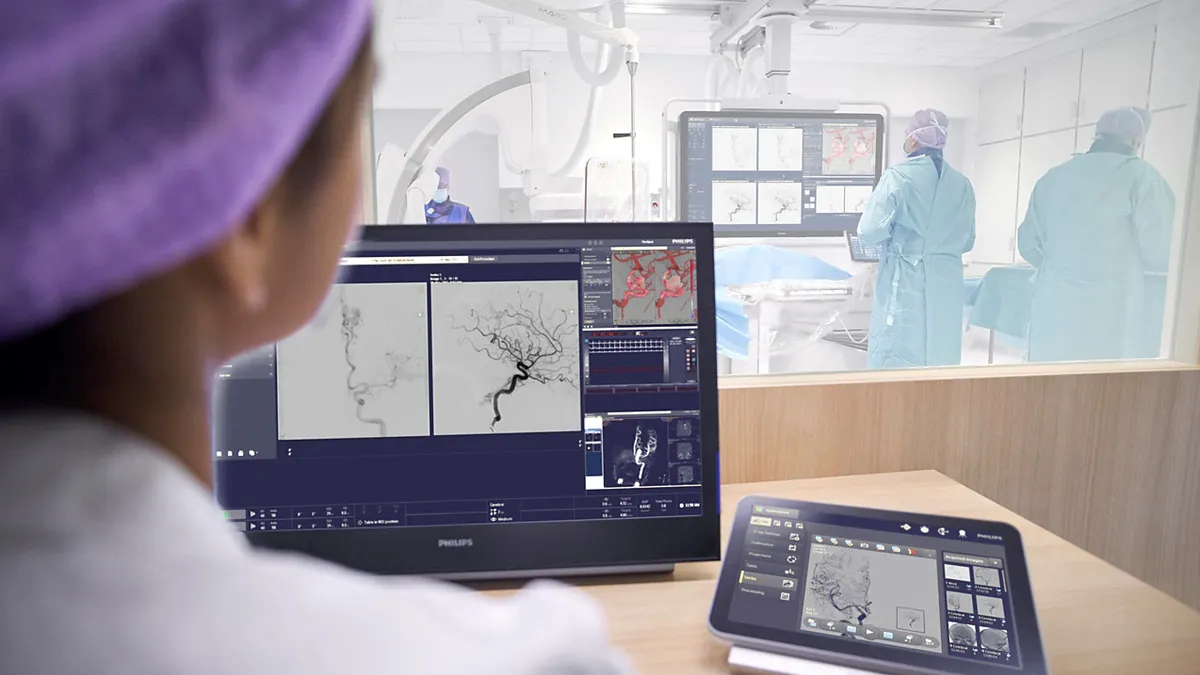
At the forefront of this initiative is Royal Philips, which is leveraging its established image-guided therapy infrastructure to develop a system capable of performing mechanical thrombectomies—the surgical removal of blood clots—with varying degrees of autonomy. This project, which integrates cutting-edge artificial intelligence with specialized hardware, represents a fundamental shift from manual, physician-led procedures to collaborative human-robotic systems.
The Core Objective: Revolutionizing Stroke Care
Mechanical thrombectomy is a highly specialized procedure, traditionally performed by neuro-interventionalists who must navigate delicate catheters through the intricate, winding geography of the human vasculature. The procedure is time-sensitive; every minute of arterial blockage equates to the loss of millions of neurons. Currently, access to such care is geographically limited to high-volume comprehensive stroke centers, leaving many patients in rural or underserved areas at a severe disadvantage.
The ARPA-H-funded initiative seeks to democratize this expertise. By developing robots that can either assist surgeons or perform autonomous maneuvers, the project aims to reduce the physical burden on physicians, decrease exposure to radiation, and, eventually, facilitate remote interventions where a specialist could supervise a procedure from a different location.
Chronology of the Initiative
The push toward robotic stroke intervention has been building for several years, moving from theoretical research to the current phase of intensive federal backing.
- Pre-2023: Foundation Building. Philips and its academic partners spent years refining image-guided platforms, such as the Azurion system, which serves as the "eyes" of the interventional suite. Concurrently, academic labs at Johns Hopkins and Boston University were developing the "limbs"—steerable catheters and navigation algorithms.
- Early 2024: ARPA-H Call for Innovation. Recognizing the bottleneck in stroke care access, ARPA-H issued a call for projects aimed at "breakthrough" medical technologies, specifically targeting endovascular challenges.
- Late 2024: Funding Awarded. ARPA-H announced the selection of several key players—including Philips, Siemens Healthineers, and Kitware—to receive a total of $175.3 million. This funding was structured to support both the development of the hardware (the robots) and the infrastructure (the simulation software).
- 2025 and Beyond: Development and Validation. The current phase involves integrating imitation-learning algorithms with physics-based vessel simulations. This phase is intended to culminate in rigorous testing and validation, setting the stage for future clinical trials and regulatory review.
Supporting Data and Technical Architecture
The technical complexity of navigating a catheter through a blood vessel while avoiding arterial wall damage is immense. The project tackles this through three distinct pillars:
1. The Philips-Johns Hopkins Integration
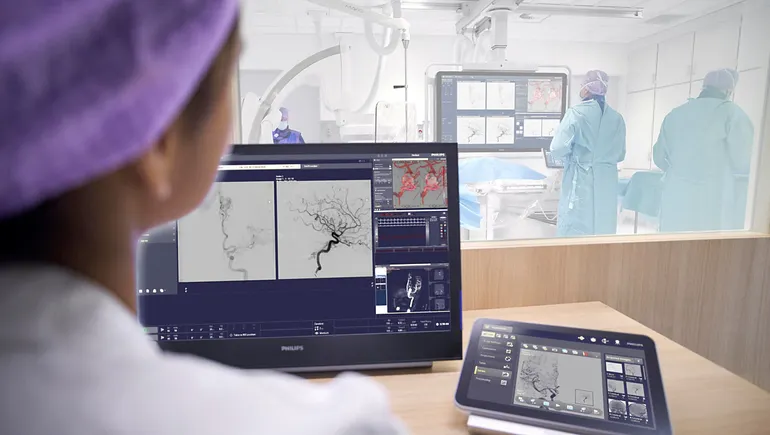
Philips is combining its Azurion imaging suite with advanced AI. The Johns Hopkins University team is spearheading the development of an autonomous navigation system. This software acts as the "brain," utilizing imitation learning—a type of machine learning where the AI observes and mimics the movements of expert surgeons—to navigate the complex neurovasculature.
2. Steerable Catheter Innovation
Hardware development is being handled by researchers at Boston University, who are designing catheters that offer greater degrees of freedom than traditional guidewires. These devices are designed to respond with extreme precision to electronic commands, allowing the robot to execute sharp turns within the brain’s delicate arteries.
3. The Kitware Simulation Test Bed
A major hurdle in robotic surgery is the lack of standardized testing. ARPA-H has awarded Kitware $17.5 million to build a virtual simulation and validation test bed. This platform provides a physics-based representation of the cardiovascular system, allowing developers to "train" their robots in a virtual environment that mimics the resistance, elasticity, and flow dynamics of real human blood vessels. This test bed will be shared among all awardees, including Siemens Healthineers and the University of California, San Diego, creating a collaborative ecosystem that will likely accelerate the regulatory pathway.
Official Responses and Perspectives
The project has drawn significant praise from the medical community, particularly regarding the potential to mitigate the current shortage of neuro-interventionalists.
Dr. J. Mocco, chair of neurological surgery at Weill Cornell Medicine, who is involved in the project, underscored the importance of the technology: "Robotics has the potential to improve precision and accuracy in endovascular stroke care, while also extending specialist expertise through remote procedures."
From the perspective of regulatory strategy, ARPA-H has signaled that the public availability of data and software from these projects is a deliberate strategy. By creating a unified, validated test bed, the agency aims to lower the barrier to entry for smaller companies, fostering a more competitive and innovative marketplace for neurovascular robotics.

Implications for the Future of Medicine
Bridging the Care Gap
The most profound implication of this initiative is the potential for "hub-and-spoke" care models. If a robot in a rural hospital can perform the initial stages of a thrombectomy under the remote guidance of a surgeon at a major urban center, the standard of care for stroke patients could be standardized nationwide, regardless of the patient’s zip code.
The Shift to "Physician-as-Supervisor"
The role of the surgeon is expected to evolve from manual operator to system supervisor. This change addresses one of the primary constraints in modern surgery: physical fatigue. Long, complex endovascular procedures can take hours, often requiring surgeons to wear heavy lead aprons that cause orthopedic strain. Robotic systems promise to remove the surgeon from the immediate radiation field, potentially increasing the number of procedures a single specialist can oversee in a day without compromising their health or focus.
Regulatory and Ethical Hurdles
Despite the excitement, the path to clinical adoption remains complex. The FDA will need to establish new frameworks for assessing "autonomous" medical devices. Questions regarding liability—who is responsible if a robot makes an error?—remain at the forefront of the legal and ethical discussion. Furthermore, the reliance on imitation learning raises questions about algorithmic bias; if the AI is trained primarily on data from specific demographics or specific surgical styles, how will it perform in a broader, more diverse patient population?
A Collaborative Future
The inclusion of major industry players like Siemens Healthineers and Philips alongside academic powerhouses ensures that the technology will have a clear route to commercialization. As these entities contribute their proprietary data to the ARPA-H test bed, the industry moves closer to a "platform" approach for surgery, where software updates could potentially enhance the capabilities of existing robotic systems, much like a smartphone operating system update.
In conclusion, the collaboration between Philips, the academic research community, and ARPA-H marks the beginning of a new era in interventional neurology. While the technology is still in the developmental stage, the integration of AI-driven navigation and physics-based simulation provides a robust roadmap toward a future where robotic autonomy is a standard tool in the fight against stroke, ultimately saving thousands of lives through enhanced precision and improved access to critical care.