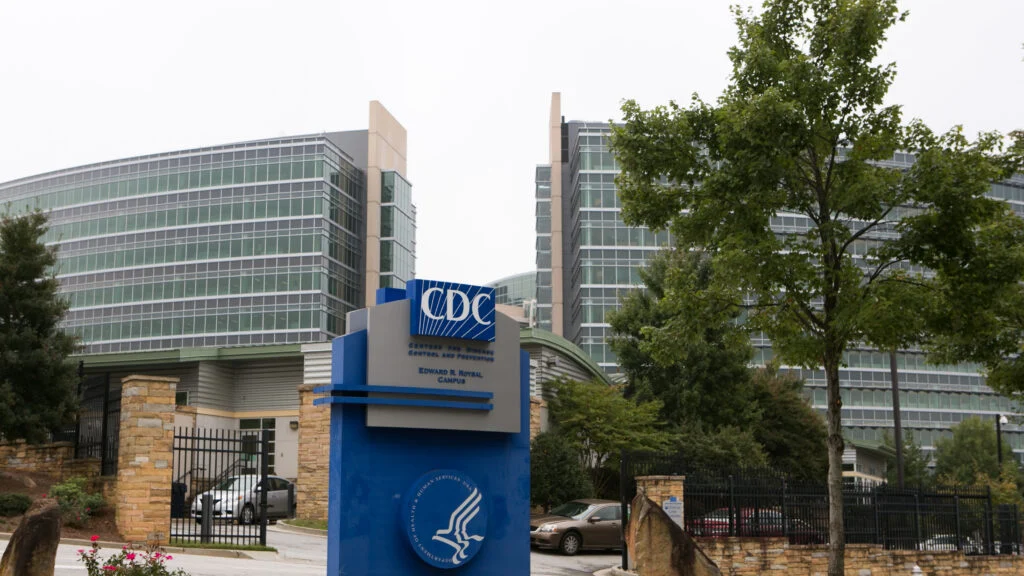
One year ago, a cadre of high-ranking officials at the Centers for Disease Control and Prevention (CDC) reached a breaking point. Faced with systemic political interference that threatened to dismantle the agency’s foundational commitment to evidence-based science, they chose to resign. Today, those former leaders—Debra Houry, Daniel Jernigan, and Demetre Daskalakis—are sounding a collective alarm. They argue that the vulnerabilities exposed during their tenure were not merely the result of a single administration’s ideology, but deep-seated structural weaknesses that, if left unaddressed, will permanently compromise the nation’s public health security.
The Chronology of a Crisis
The erosion of the CDC did not happen overnight; it was a deliberate, month-by-month unraveling of norms that had stood for decades.
- Early 2025: The first major warning sign appeared with the unprecedented suspension of the Morbidity and Mortality Weekly Report (MMWR), the agency’s flagship scientific publication. For 60 years, the MMWR served as the gold standard for epidemiological data. The moratorium was triggered by the rejection of a study confirming the effectiveness of Covid-19 vaccines—a rejection led by then-acting director Jay Bhattacharya, who cited "methodological flaws" that were later refuted by the journal JAMA Network Open, which published the study after standard peer review.
- Mid-2025: A wave of federal staffing cuts hit the agency, leading to the emergence of "zombie programs." While Congress continued to appropriate funds for essential services—such as monitoring infectious disease threats and supporting local health departments—the programs became functionally dead because the career scientists and public health experts who operated them had been laid off or forced into resignation.
- Spring 2026: Political overreach moved from the office to the field. During a hantavirus outbreak on a cruise ship, the agency’s acting director ignored internal scientific consensus. Despite CDC medical officers recommending home monitoring, Health Secretary Robert F. Kennedy Jr. overruled them, mandating up to six weeks of government-facility quarantine for passengers.
- Present Day: The agency remains in a state of flux. While current director Erica Schwartz has pledged a return to scientific rigor, the institutional firewall remains porous. Disputed webpages containing misleading information on vaccine safety remain online, and the line between policy and partisan preference continues to blur.
Structural Vulnerabilities: Data and Evidence
The core of the current crisis lies in the conflation of political authority with scientific legitimacy. In a functioning democracy, political leaders have the mandate to set policy, but they do not have the right to alter the underlying data to suit those policies.
The authors point to the "zombie programs" as a prime example of the executive branch circumventing the legislature. By weaponizing staffing decisions, the administration effectively neutered programs that Congress had explicitly authorized and funded. This represents a fundamental shift in the balance of power, where executive fiat overrides legislative intent.
Furthermore, the allocation of discretionary funds has become increasingly opaque. The authors highlight a $32 million "Great Health for America" initiative that directed resources to specific locations—including the site of a SpaceX facility—without competitive bidding or clear public health justification. These departures from standard administrative protocols have forced state health departments and clinical organizations to look elsewhere, often to the World Health Organization or private medical bodies, for reliable guidance.
Official Responses and the "Schwartz Doctrine"
Current CDC Director Erica Schwartz occupies a precarious position. In her confirmation hearings, she promised to uphold scientific integrity and stated that she would provide dissenting advice to Secretary Kennedy in private. However, critics—including the authors—note a troubling lack of clarity regarding her "red lines."
When pressed on whether she would implement directives that explicitly conflict with established data, her response remained vague. The authors argue that the integrity of the CDC cannot rest on the moral fortitude of a single individual. "She will have to determine where her line is, just as we did," they write. "The country’s scientific safeguards, however, should not depend on the judgment or resolve of any single leader."
A Legislative Agenda for Restoration
The former officials propose a four-point plan for Congress to reclaim the agency’s independence and protect the American public from future health crises.
1. Shield Science from Politically Driven Policies
Congress must pass legislation requiring that any major public health directive be accompanied by a formal scientific assessment. This document must explicitly detail the evidence, the potential risks, the expected benefits, and why the specific action is proportionate to the threat. This ensures that when a policy is enacted, the public can clearly distinguish between an evidence-based recommendation and a political choice.
2. Protect Scientific Publication
To prevent future "gag orders" like the 2025 MMWR moratorium, scientific output must be protected by a statutory firewall. Once a study passes the agency’s internal ethical and peer-review process, political appointees should have no authority to suppress it. Any attempt to delay or alter a publication should be documented and made transparent to the public.
3. Restore Independent Expert Advice
Federal advisory committees, such as the Advisory Committee on Immunization Practices (ACIP), have been decimated or reconstructed to serve specific political goals. Reform must ensure that committee members are selected based on expertise and vetted for conflicts of interest, with staggered terms that survive changes in administration. Transparent disagreement among experts should be encouraged, not stifled, as it is a vital component of public trust.
4. Enforce Congressional Appropriations
The executive branch must be prohibited from using staffing maneuvers to dismantle congressionally funded programs. Furthermore, any significant discretionary expenditure that deviates from established appropriations must require explicit Congressional approval. This would halt the use of the CDC’s budget as a slush fund for ideological projects.
The Implications for Public Health
The departure of experts like Houry, Jernigan, and Daskalakis marks a critical moment for U.S. public health. The authors emphasize that they did not "walk away" from public health; they continue to work in academia, clinical practice, and local health departments. Their departure was a protest against the normalization of political interference.
The implications of this erosion are global. As the U.S. ceases to be the "gold standard" for public health, other nations lose their primary partner in global health security. When a country stops trusting its own health authorities, it becomes vulnerable to misinformation and preventable outbreaks.
"Hope is not a strategy," the authors warn. The path forward requires a cold, hard look at the structural design of the CDC. While political debate over government spending and the extent of state authority is healthy and necessary, the science of disease transmission and the efficacy of vaccines should remain outside the reach of partisan ideology.
Congress now faces a binary choice: either codify the independence of the CDC and protect the professionals who serve the public, or allow the agency to become a hollow vessel for whoever occupies the White House. The health of the nation, and its ability to respond to the next inevitable pandemic, depends on the courage of lawmakers to draw a line in the sand.