




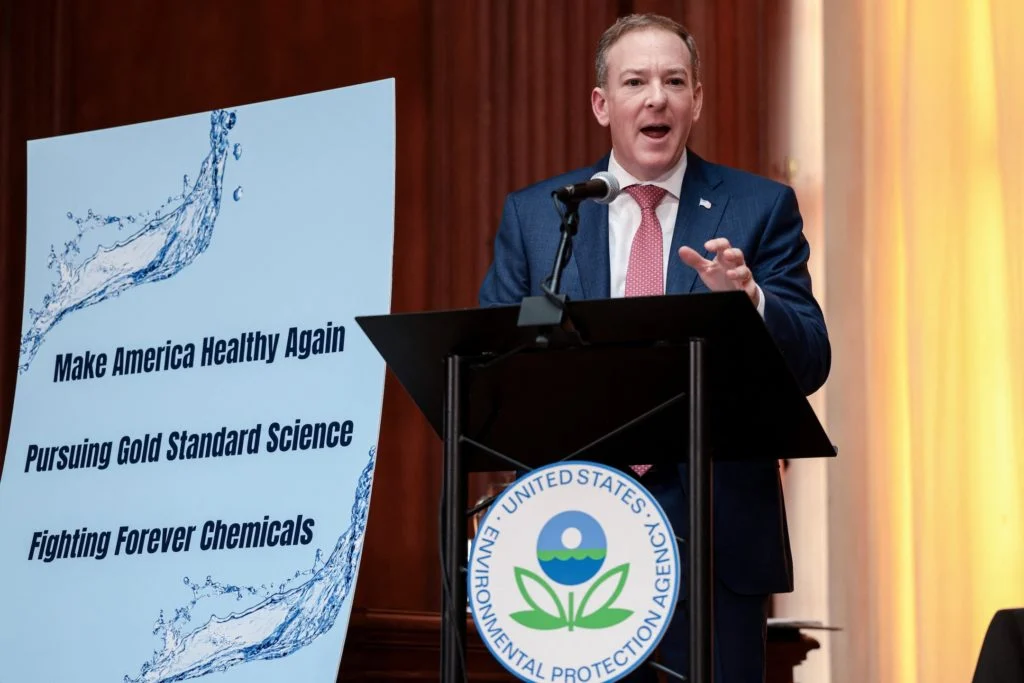
In a high-stakes pivot of federal environmental policy, the Trump administration has initiated a formal effort to roll back national drinking-water limits on per- and polyfluoroalkyl substances (PFAS)—a class of synthetic compounds often referred to as "forever chemicals" due to their persistent nature in the environment and the human body. The move signals a decisive shift away from the Biden-era regulatory framework, which had established the first-ever legally enforceable national standards for these contaminants in public water systems.
While the Environmental Protection Agency (EPA) maintains that it remains committed to addressing chemical contamination, the rollback suggests a fundamental disagreement over the scope of executive authority, the economic burden on water municipalities, and the procedural integrity of environmental rulemaking.
The Nature of the Crisis: What Are PFAS?
To understand the controversy, one must first understand the ubiquity of the chemicals in question. PFAS are a family of thousands of synthetic substances characterized by a carbon-fluorine bond—one of the strongest in organic chemistry. This durability makes them resistant to heat, water, oil, and degradation. Since their development in the mid-20th century, they have become essential components in a vast array of consumer and industrial products, including nonstick cookware, waterproof fabrics like Gore-Tex, dental floss, food packaging, and firefighting foams.
However, this "wonder of chemistry" has a dark side. Because they do not break down in nature, they have infiltrated the global ecosystem. PFAS have been detected in the blood of nearly every human being tested, in the soil of remote wildernesses, and in the groundwater of thousands of communities across the United States.
Scientific research has consistently linked exposure to elevated levels of PFAS to a range of severe health consequences, including various forms of cancer (specifically kidney and testicular), thyroid disease, liver damage, developmental issues in children, and metabolic disorders such as obesity and elevated cholesterol. The concern, voiced by health experts for decades, is that these chemicals bioaccumulate—meaning they build up in human tissue over time, even with exposure to relatively small doses.
Chronology of a Regulatory Tug-of-War
The trajectory of PFAS regulation in the United States has been marked by rapid movement followed by abrupt reversal.
- Pre-2021: For years, the EPA issued non-binding health advisories regarding PFAS, but stopped short of creating federal maximum contaminant levels (MCLs). The absence of a national standard left a patchwork of state-level regulations, creating significant disparities in water safety depending on geographic location.
- 2021–2024 (The Biden Era): Recognizing the public health urgency, the Biden administration prioritized PFAS regulation. After years of technical assessment and public comment, the EPA finalized the first-ever national primary drinking water regulation for six specific PFAS compounds. The rule mandated that public water systems monitor for these chemicals and implement treatment technologies if levels exceeded established limits.
- Late 2024–Present (The Trump Shift): Following the change in administration, the new EPA leadership signaled that the Biden-era rule was legally vulnerable. Industry groups—including chemical manufacturers and water utility associations—had launched litigation, arguing that the EPA had exceeded its statutory authority under the Clean Water Act and that the compliance costs were economically unfeasible for smaller municipalities.
The Official Response: Proceduralism vs. Protectionism
EPA Administrator Lee Zeldin has defended the decision to scrap the current rules, framing the issue not as a retreat from environmental safety, but as a correction of a flawed bureaucratic process.
"There are two ways to act on PFAS," Zeldin stated during a recent press briefing. "You can do it the way that the last administration did, where a regulation was rushed out the door. Certain steps were skipped as the law required, and water systems were given deadlines that many of them have communicated to us that they are going to have trouble meeting."
Zeldin’s argument centers on the concept of "regulatory overreach." He contends that by pushing the rule through without sufficient consideration for the technological and financial constraints of municipal water providers, the Biden administration created a regulation destined to be struck down by the courts. "That approach makes for a good press release, but it doesn’t make for cleaner water," Zeldin added.
Conversely, environmental advocates argue that the EPA is merely caving to corporate lobbying. Ken Cook, president of the Environmental Working Group (EWG), was scathing in his assessment: "The Trump EPA is caving to chemical industry lobbyists and water utility pressure. In doing so, it is condemning millions of Americans to drink contaminated water for years to come. The price of this decision will be paid by ordinary people in the form of more PFAS-related diseases."
Supporting Data and the Economic Conflict
The core of the dispute lies in the tension between public health benefits and the massive capital expenditure required to filter water.
The Cost of Compliance
Industry stakeholders, particularly the American Water Works Association and chemical manufacturing trade groups, have argued that the Biden-era rule imposes an estimated multi-billion dollar burden on public water systems. Technologies such as granular activated carbon (GAC) filtration, ion exchange resins, and high-pressure membrane systems (like reverse osmosis) are expensive to install and maintain. For small, rural water districts, the financial barrier to entry is high, potentially forcing local governments to raise taxes or water rates significantly.
The Cost of Inaction
Proponents of the strict regulations point to a different set of data: the long-term healthcare costs associated with PFAS. They argue that the "cost" of the rule must be weighed against the massive economic burden of treating cancer, thyroid disorders, and developmental delays in children. Furthermore, they argue that the financial burden of filtration should be shifted from the taxpayer to the manufacturers of the chemicals—a principle known as "polluter pays."
Political Implications: The MAHA Factor
Perhaps the most fascinating aspect of this regulatory reversal is the internal tension it creates within the current administration’s own political base. The "Make America Healthy Again" (MAHA) movement, championed by figures like Robert F. Kennedy Jr., has built its platform on the premise of removing industrial toxins from the American food and water supply.
The administration finds itself in a precarious position. While they aim to appease industry allies by rolling back "red tape," they simultaneously face pressure from a populist movement that demands aggressive action against chemical contamination. Notably, RFK Jr. appeared alongside Administrator Zeldin during the announcement of the rollback. While critics view this as a contradiction, the administration maintains that they intend to tackle PFAS through a more sustainable, legally robust process.
Whether this is a genuine shift in strategy or a political maneuver to stall regulation remains the central question. As the EPA prepares to draft a new, potentially less stringent framework, the public is left in a state of uncertainty.
Future Implications for Public Health
The rollback of these limits creates a significant vacuum in federal oversight. If the national standards are vacated, water systems in states without their own strict regulations will have no federal mandate to monitor or remove PFAS. This could result in a "zip code lottery," where the quality of one’s drinking water is determined entirely by the state in which they reside.
Furthermore, the legal precedent set by this move may discourage future administrations from pursuing aggressive environmental standards, fearing that any complex, costly regulation will be framed as "rushed" and subsequently dismantled.
As the scientific community continues to gather data on the long-term impacts of low-level, chronic exposure to PFAS, the administration’s "different way" of handling these chemicals will be under intense scrutiny. The ultimate test for the EPA will be whether they can produce a regulatory framework that satisfies industry concerns regarding legal and economic viability while providing the public with the assurance that their water is safe to drink. For millions of Americans, the outcome of this bureaucratic tug-of-war is not just a matter of policy; it is a matter of long-term health and safety.