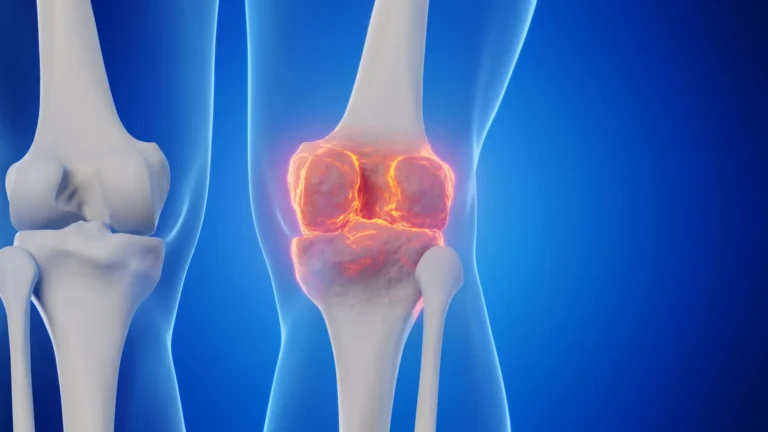
For decades, the scientific community viewed the decline of physical vigor in aging organisms as a simple, inexorable slide toward cellular failure. We have long accepted that as we age, our muscles repair themselves more slowly, our stamina wanes, and our capacity to bounce back from injury diminishes. However, groundbreaking new research from UCLA suggests that this decline is not merely a sign of wear and tear or simple decay. Instead, it appears to be a sophisticated, albeit frustrating, biological trade-off.
A study published in the journal Science has revealed that aging muscle stem cells prioritize long-term survival over immediate performance. In doing so, these cells adopt a "defensive" posture, effectively hitting the brakes on their own regenerative capacity to endure the increasingly harsh conditions of an aging body.
The Discovery: A Brake on Regeneration
The study, led by researchers at the Eli and Edythe Broad Center of Regenerative Medicine and Stem Cell Research at UCLA, focused on the molecular mechanisms governing muscle stem cells. By comparing cells taken from young and old mice, the team identified a significant culprit: a protein known as NDRG1.
In older cells, levels of NDRG1 were found to be 3.5 times higher than in their younger counterparts. The presence of this protein acts as a molecular "brake" within the cell, suppressing a critical signaling pathway called mTOR. In a youthful state, the mTOR pathway is the engine of cell activation and growth, driving the rapid response required to repair muscle tissue after a tear or strain. By suppressing this pathway, high concentrations of NDRG1 force the stem cell into a state of dormancy or slow-motion activity.
Chronology of the Research
The investigation, spearheaded by postdoctoral scholars Jengmin Kang and Daniel Benjamin, followed a rigorous multi-stage experimental path to validate their hypothesis.
- Baseline Comparison: The researchers first mapped the proteomic differences between muscle stem cells in young mice and mice aged to the human equivalent of 75 years. This phase identified the dramatic, nearly fourfold increase of NDRG1 in the older cohort.
- Mechanistic Testing: The team sought to determine if NDRG1 was indeed the cause of sluggish repair. By genetically blocking NDRG1 activity in aged mice, they observed an immediate, almost miraculous recovery of youthful behavior. The stem cells "woke up," accelerating their activation and significantly improving the rate of muscle repair following induced injuries.
- The "Cost" Analysis: While the initial results were promising, the long-term data revealed a sobering consequence. Mice with blocked NDRG1 showed a rapid depletion of their stem cell pool. Without the protective "brake" of the protein, these cells were effectively burning out, leading to a diminished capacity for regeneration over repeated injury cycles.
- Verification: The team replicated these results across diverse environments, utilizing both laboratory cell cultures and living tissue models, confirming that the pattern was not an artifact of experimental design but a fundamental biological reality.
The Marathoner vs. The Sprinter: A New Lens on Aging
To explain the complex duality of stem cell behavior, Dr. Thomas Rando, senior author of the study and director of the Broad Center at UCLA, utilizes a compelling analogy: the difference between a sprinter and a marathon runner.
"The stem cells in young animals are hyper-functioning—really good at what they do, namely sprinting," Dr. Rando explains. "They are fantastic at rapid activation, but they lack the stamina for the long term. They can make it through the 100-yard dash, but they can’t make it even halfway through the marathon."
Conversely, aged stem cells operate like marathon runners. They are slow to react to injury, which manifests as the clinical weakness we associate with aging. However, they are exceptionally resilient. They have evolved to navigate the hostile environment of an aging organism—an environment characterized by inflammation, oxidative stress, and metabolic strain.
The very mechanism that makes them poor at "sprinting"—the suppression of growth pathways—is what enables them to survive the "marathon" of a lifetime. This suggests that the stem cells present in an older body are not the most functional ones; they are, quite simply, the survivors.
Cellular Survivorship Bias
This research introduces the concept of "cellular survivorship bias" to the field of gerontology. As an organism ages, stem cells that lack high levels of NDRG1—the "sprinters"—are likely to be wiped out by the stresses of the aging environment. This leaves behind a population of cells that are highly specialized for survival.
While this ensures that the body retains a pool of stem cells into old age, it comes at the cost of regenerative speed. This is a profound shift in perspective: what we characterize as "decline" may actually be a "necessary compromise." The body is not failing; it is choosing to survive at a lower capacity rather than risking the complete depletion of its regenerative resources.
Biological Parallels in Nature
The study draws fascinating parallels between the behavior of these stem cells and adaptive strategies observed across the animal kingdom. During periods of extreme environmental pressure—such as drought, famine, or sub-zero temperatures—many species shift their metabolic resources away from reproduction and growth toward survival and preservation.
Hibernation is perhaps the most famous example of this "survival-first" strategy. Dr. Rando notes that muscle stem cells appear to be engaging in a microscopic form of hibernation. By limiting their metabolic output and growth potential, they conserve the energy and structural integrity required to persist through years of physiological adversity.
Implications for Future Therapies
The potential for medical intervention following these findings is significant, yet nuanced. The goal of modern regenerative medicine is often to "rejuvenate" tissue. If researchers can safely lower NDRG1 levels, they might be able to restore youthful repair capabilities to the muscles of the elderly, potentially reversing sarcopenia (age-related muscle loss) or speeding up recovery from orthopedic injuries.
However, Dr. Rando offers a cautionary note that serves as a cornerstone for future research: "There’s no free lunch."
The Risks of Intervention
- Stem Cell Depletion: Artificially forcing "marathoner" cells to act like "sprinters" may lead to the premature exhaustion of the stem cell pool. Once those cells are gone, the body’s ability to regenerate tissue could be permanently compromised.
- Oncogenic Risk: The mTOR pathway, which the researchers suppressed to limit growth, is also involved in cellular replication. Over-activating this pathway to boost muscle repair could, in theory, increase the risk of uncontrolled cell growth, or cancer.
- Tissue Homeostasis: Muscle repair is a delicate dance of signaling pathways. Disrupting one protein may have cascading effects on the immune response and inflammation levels within the muscle tissue, potentially leading to unintended side effects.
Looking Forward: The Future of Aging Research
The study represents a significant leap in our understanding of the trade-offs inherent in longevity. By opening this "doorway" into the molecular mechanisms of cellular survival, the UCLA team has provided a roadmap for future investigations. The next phase of research will likely focus on whether it is possible to "fine-tune" the balance between survival and performance, rather than simply toggling it on or off.
Could there be a way to boost repair without triggering the exhaustion of the stem cell pool? The researchers remain optimistic but realistic. The focus will now turn to identifying other proteins and pathways that cooperate with NDRG1 to modulate this balance.
As we continue to navigate the challenges of an aging population, the work of Dr. Rando and his colleagues serves as a reminder that the body’s wisdom is often deeper than it appears. Aging is not merely a loss of function; it is a calculated, strategic adaptation. By understanding the "why" behind these cellular trade-offs, we move closer to developing therapies that respect the body’s natural survival instincts while offering the potential for a healthier, more active life.
Funding for this study was provided by the National Institutes of Health, the NOMIS Foundation, the Milky Way Research Foundation, the Hevolution Foundation, and the National Research Foundation of Korea.