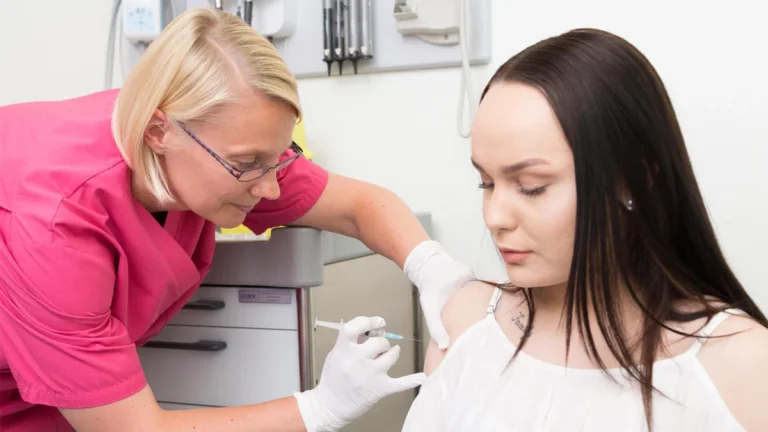
The landscape for treating atopic dermatitis—commonly known as eczema—is undergoing a seismic shift. For years, the gold standard has been Dupixent, the powerhouse medication manufactured by Sanofi and Regeneron. While Dupixent revolutionized the standard of care for millions, it is not a panacea. The drug’s reliance on frequent injections, its relatively slow onset of action, and its failure to provide adequate relief for a significant subset of patients have created a massive, lucrative opening for biopharmaceutical innovators.
This week, Alameda, California-based biotech startup Infinimmune announced it has successfully closed a $75 million Series A funding round. The influx of capital is earmarked for the advancement of its two lead clinical prospects, IFX-101 and IFX-201, both designed to challenge the status quo in autoimmune and inflammatory skin conditions.
The Market Landscape: Why the "Dupixent Era" is Evolving
The global market for atopic dermatitis treatments is projected to soar, with analysts at Grand View Research estimating it will reach a staggering $37.3 billion by 2033. This growth is driven by a combination of increasing prevalence, greater diagnostic awareness, and a desperate patient population seeking alternatives to current systemic biologics.
Currently, the clinical space is defined by four major injectable biologics: Dupixent, Eli Lilly’s Ebglyss, Galderma’s Nemluvio, and Leo Pharma’s Adbry. While these therapies have provided life-changing results for many, they share a common limitation: they operate within a narrow set of inflammatory pathways, primarily targeting cytokines such as IL-13 or IL-31. Furthermore, these existing treatments require administration intervals ranging from every two to eight weeks, placing a significant burden on patients who must manage their disease through regular, often painful, injections.
"The field is clinically crowded in atopic dermatitis, but it is not commercially crowded," said Wyatt McDonnell, co-founder and CEO of Infinimmune, in an interview with BioPharma Dive. "From a mechanism perspective, the same thing is true. The existing systemic biologics treat a very specific inflammatory pathway. We believe there is significant room for innovation that goes beyond the current, narrow scope."
Chronology of a Biotech Upstart
Infinimmune’s trajectory has been one of rapid, strategic development. Founded with the vision of leveraging proprietary technology to discover more durable and potent antibodies, the company has quickly moved from early-stage discovery to a well-funded clinical pipeline.
- Foundation and Early Research: Infinimmune established its reputation by focusing on high-precision antibody discovery, attracting the attention of industry giants.
- Strategic Partnerships: The company successfully inked research pacts with Merck & Co. and Immunome. These collaborations were designed to identify novel human antibody therapeutics for undisclosed immune conditions, signaling to the market that Infinimmune’s platform was capable of generating high-value intellectual property.
- The Series A Milestone: In a major show of industry confidence, Infinimmune closed its $75 million Series A round this week. The syndicate is notably headlined by Regeneron’s venture arm—a significant detail given that Regeneron co-developed Dupixent. Other notable participants include Playground Global, RA Capital Management, and the Merck Global Health Innovation Fund.
- Future Roadmap: With the funding secured, Infinimmune is now pivoting toward clinical trials. The company projects that both IFX-101 and IFX-201 will enter the clinic by 2027.
Supporting Data: The Mechanics of Innovation
Infinimmune’s approach hinges on the belief that the next generation of eczema drugs must be more than just "me-too" biologics. Their two lead candidates are monoclonal antibodies with distinct therapeutic targets:
- IFX-101: This candidate targets IL-22, a cytokine involved in skin barrier function and inflammation. While Pfizer previously explored and eventually abandoned an IL-22-focused drug, and other players like Argenx and Leo Pharma are currently investigating the pathway, Infinimmune believes its proprietary discovery engine gives it a unique edge. The company positions IFX-101 as a potential "first-and-best-in-class" therapy.
- IFX-201: This candidate targets the well-trodden IL-13 pathway. However, Infinimmune asserts that its drug is engineered to offer superior durability and power compared to current market incumbents.
The competitive pressure is intense. Apogee Therapeutics and Nektar Therapeutics are currently racing to develop longer-lasting maintenance treatments. Meanwhile, Kymera Therapeutics is working on an oral protein degrader (a "pill" alternative to injections), and Attovia Therapeutics recently debuted on the public market with a bispecific antibody aimed at managing pruritus (itching) and inflammation in eczema patients.

Official Responses and Strategic Vision
For CEO Wyatt McDonnell, the "crowded" nature of the market is an illusion. He argues that most companies are fighting over the same small slice of the pie, leaving significant clinical needs unmet.
"We are aware of the need for aggressive execution on this front," McDonnell stated. His strategy is not just to replace current biologics but to prove that the underlying mechanisms for IFX-101 and IFX-201 are versatile enough to address a broad range of inflammatory conditions beyond just skin health. By securing backing from a diverse group of nine investors—including the venture arm of the company that currently dominates the market—Infinimmune has signaled that the industry is ready to bet on the "next act" of dermatological science.
The involvement of Regeneron’s venture arm is particularly telling. While it may seem counterintuitive for a company to fund a potential competitor to its own blockbuster, it is a common industry tactic for "big pharma" to maintain a stake in the next wave of disruption. It provides Regeneron with a front-row seat to the potential obsolescence—or evolution—of the current standards.
Implications for the Future of Eczema Care
The implications of Infinimmune’s progress extend far beyond the balance sheets of a California startup. If the company’s claims hold true in human trials, the standard of care for atopic dermatitis could move toward "precision immunology."
1. Shift from Broad Suppression to Targeted Modulation
Current biologics often suppress the immune system broadly. If Infinimmune can prove that IL-22 or optimized IL-13 inhibition provides a more refined therapeutic effect, it could reduce the potential side effects associated with long-term systemic treatment.
2. Patient Experience and Compliance
The industry is currently obsessed with "durability." If Infinimmune can deliver a drug that requires less frequent dosing—or, eventually, an oral option—it will shift the competitive dynamic entirely. Compliance is a major hurdle in dermatological care; patients are far more likely to adhere to a regimen that fits seamlessly into their lives rather than one that requires a clinical visit or a complex home-injection protocol every two weeks.
3. The "Next-Gen" Biotech Model
Infinimmune’s model—signing early-stage research partnerships with entities like Merck and Immunome before going public or securing massive venture rounds—serves as a blueprint for modern biotech. It demonstrates that the path to success is no longer just about having a molecule, but about having a proprietary, scalable discovery engine that can produce multiple shots on goal.
As Infinimmune moves toward its 2027 clinical target, the clock is ticking for the incumbents. The $37.3 billion market is not waiting, and the biopharmaceutical sector is clearly signaling that the search for the "post-Dupixent" era has officially begun. Whether Infinimmune emerges as a leader or a target for future acquisition remains to be seen, but their presence has undoubtedly injected new energy into one of the most vital areas of modern immunology.