






In a striking departure from the prevailing mood on Capitol Hill, Rep. Jake Auchincloss (D-Mass.) is championing a radical recalibration of U.S. biotechnology policy. As lawmakers in Washington increasingly embrace protectionist measures—often modeled on tech-sector restrictions—to curb China’s rapid ascent in the life sciences, Auchincloss is urging his colleagues to pivot. His message is one of internal strengthening rather than external containment: stop worrying about China’s inevitable rise, focus on domestic deregulation, and identify a new "villain" to focus political ire upon.
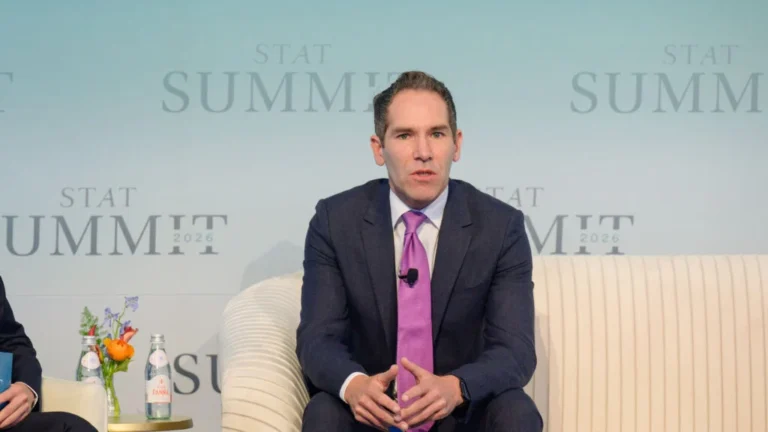
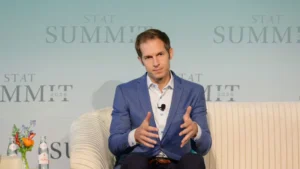
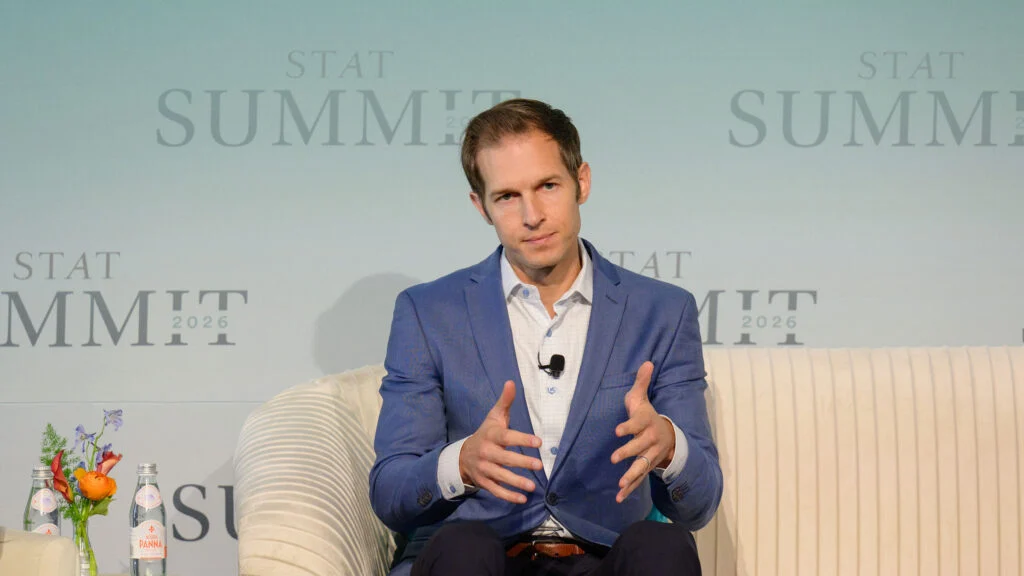
Speaking at the STAT Summit in Boston this past Thursday, the Massachusetts Democrat argued that America’s biomedical hegemony will not be saved by erecting trade barriers or engaging in defensive posturing. Instead, he proposed a strategy centered on speed, transparency, and a renewed commitment to curiosity-driven research.
The Strategic Shift: From Protectionism to Performance
The China Challenge
For years, the consensus in Washington has been that China’s biotech sector is a security threat requiring aggressive intervention. As Beijing pours billions into genomic research, mRNA technology, and AI-driven drug discovery, U.S. policymakers have sought to extend the "decoupling" policies used in the semiconductor industry to the biotech sphere.
Auchincloss views this defensive instinct as a miscalculation. "Washington needs to fix itself and worry less about what China is doing because China is going to be excellent," he told the audience at the STAT Summit. "But we can be even better."
His argument resonates with many industry stakeholders who fear that heavy-handed regulations will stifle the very innovation required to outpace international competitors. The core tenet of this perspective is simple: if the United States cannot prevent China from becoming a global biotech powerhouse, it must focus on accelerating the American pipeline so that it remains the world’s preferred destination for transformative medical breakthroughs.
Legislative Vision: The Australian Model
To bridge the gap between American research and commercialization, Auchincloss is preparing to introduce legislation that borrows heavily from Australia’s regulatory framework.
Streamlining Clinical Trials
The primary friction point in U.S. drug development is the timeline for clinical trials. While it may remain cost-prohibitive to match China’s lower labor and operational costs, Auchincloss argues that the U.S. can—and must—achieve parity in speed.
The Australian model allows early-phase trials to proceed with significantly reduced pre-approval evaluation from the national regulator. By adopting a similar "fast-track" approach for Phase I and II trials, Auchincloss believes the U.S. can reduce the "valley of death" that often kills promising startups before they reach pivotal trials.
Broader Reform Agenda
Beyond regulatory streamlining, the congressman’s legislative package targets the financial architecture of the healthcare system:
- Pharmacy Benefit Managers (PBMs): Auchincloss intends to push for aggressive oversight of PBM business practices, arguing that these middlemen extract undue value from the pharmaceutical supply chain.
- 340B Reform: He is eyeing modifications to the 340B hospital drug discount program, which has faced mounting scrutiny over whether its savings are reaching patients or padding hospital margins.
- Capital Access: The proposal includes provisions for small business grants, ensuring that the next generation of biotech founders has access to non-dilutive capital.
Defining the "Villain": A New Political Narrative
Perhaps the most provocative aspect of Auchincloss’s strategy is his advice on political communication. Acknowledging the inherent need for a target in populist politics, he urged his colleagues to shift their focus away from the drug industry—which he insists is a vital pillar of the Massachusetts economy—and toward insurance companies.
"Some advice from a six-year veteran of Washington, D.C.: You do need a villain, and the villain is the insurance company," he remarked during his conversation with STAT’s Chelsea Cirruzzo.
By positioning insurance companies as the primary obstructionists to patient access and care, Auchincloss hopes to insulate the R&D-focused biotech firms from the "pharma-bashing" that has become a staple of modern election cycles. This shift would allow lawmakers from life-science-heavy states like Massachusetts to support industry-friendly policies without facing the political backlash that typically accompanies "Big Pharma" support.
The Threat to Scientific Integrity
Auchincloss’s critique extends beyond policy and into the very culture of federal science administration. He identified a significant threat to American innovation in the form of the White House Office of Management and Budget (OMB) under Russ Vought.
The "Blue State Subsidy" Narrative
Auchincloss warned that the current OMB leadership views federally funded scientific research as a "blue state subsidy." This ideological framing has led to proposals that would allow the White House to override peer-reviewed grant recommendations and terminate research projects at will.
Such a move would represent a departure from the long-standing tradition of merit-based, objective science funding. "If Washington behaves that way, there’s nothing that we’re going to do about Beijing that’s going to save our biomedical leadership," Auchincloss cautioned.
The FDA Voucher Controversy
The Congressman also took aim at the FDA’s National Priority Voucher program, championed by former Commissioner Marty Makary. Critics have long argued that the program lacks transparency and is susceptible to political influence.
A prime example cited was the awarding of vouchers for psychedelics research following informal communications between public figures—such as podcaster Joe Rogan—and the President. Auchincloss argued that such instances undermine the credibility of the FDA. "What makes us great is high, clear, transparent standards paired with the world’s best talent getting funded to pursue curiosity-driven research," he stated.
Implications: A Crossroads for Biotech Policy
The implications of Auchincloss’s proposals are profound. If his legislative agenda gains traction, it would mark a major shift in the relationship between the federal government and the biotech sector.
1. Competitive Edge
By prioritizing speed in clinical trials and protecting the integrity of peer-reviewed grants, the U.S. could effectively insulate its innovation engine from the fluctuations of political winds. If the U.S. can reduce trial timelines, it compensates for the higher operational costs of American labor, keeping the "innovation premium" in the United States.
2. Political Realignment
Shifting the political "villain" from pharmaceutical manufacturers to insurers could change the dynamics of healthcare lobbying. Lawmakers who have historically been wary of supporting drug companies due to public outcry over pricing might find a safer path to supporting biotech growth by attacking insurance companies’ utilization management practices, such as prior authorization, which are widely unpopular with both patients and doctors.
3. The Risk of Politicized Science
The most significant hurdle remains the ongoing battle over the role of federal agencies. If the OMB succeeds in its push to exert more control over research funding, the U.S. risks losing the "clear, transparent standards" that attract the world’s top scientific talent. The tension between political oversight and scientific autonomy remains the defining conflict of the current era.
Conclusion: The Path Forward
Rep. Auchincloss’s vision is one of unapologetic, state-sponsored confidence. He rejects the notion that the United States is in a zero-sum race that it is destined to lose. Instead, he frames the competition with China as a catalyst for internal house-cleaning.
Whether Congress is prepared to abandon the comfort of protectionist rhetoric in favor of the difficult work of deregulation and systemic reform remains to be seen. However, the message from Boston is clear: to remain the world’s biotech leader, the United States must stop reacting to the shadow of its rivals and start investing in the light of its own scientific potential. The survival of American biomedical leadership, he argues, depends not on what we take away from Beijing, but on what we build in our own backyard.