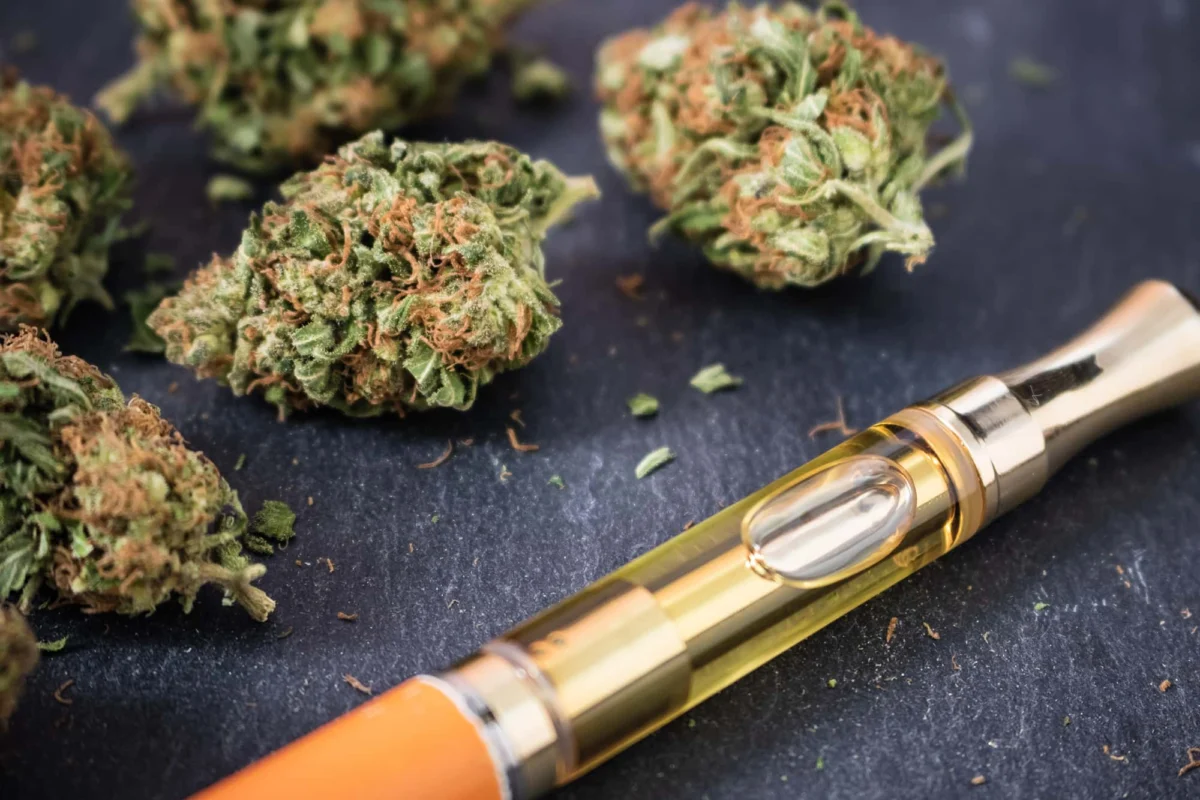
A comprehensive new study involving more than 175,000 California students has brought a concerning trend in public health to the forefront: adolescents increasingly view cannabis as a "safe" substance, consistently ranking it as less hazardous than nicotine products and alcohol. As the legal and social landscape surrounding cannabis continues to evolve, these findings suggest that the internal risk-calculus of the teenage brain is drifting further away from established medical consensus.
The study, published in the May 2026 issue of Drug and Alcohol Dependence, was led by Dr. Shu-Hong Zhu, a professor at the University of California San Diego (UC San Diego) Herbert Wertheim School of Public Health and Human Longevity Science. By analyzing massive datasets from statewide school surveys conducted in 2019–2020 and 2024, researchers have mapped a clear, persistent trajectory of how youth evaluate the dangers of substance use.
Main Facts: The Normalization of Cannabis
The core takeaway from the research is a stark discrepancy in risk perception. While decades of public health messaging have successfully cemented the dangers of cigarettes and, to a lesser extent, alcohol and vaping in the minds of youth, cannabis has largely escaped this stigma.
In the 2019–2020 survey, roughly two-thirds of the adolescent cohort identified regular cannabis use as "harmful." While this may seem like a high number, it was significantly lower than the proportion of students who categorized alcohol, nicotine vapes, and traditional cigarettes as harmful. The 2024 data confirmed that this trend is not merely a temporary anomaly but a durable social norm. Despite the increasing potency of modern cannabis products and the evolving regulatory environment, the perception of cannabis as a "low-risk" substance has remained largely static among California’s youth.
Chronology: A Longitudinal View of Risk Perception
To understand how these views have shifted, it is necessary to examine the timeline of the research.
- 2019–2020 Pre-Pandemic Baseline: The initial survey period captured a landscape where cannabis legalization in California was already well-established. Even then, researchers noted that adolescents were already beginning to decouple cannabis from the "harmful" label assigned to traditional tobacco products.
- 2020–2023 The "Gap" Years: During the intervening years, social media platforms and the proliferation of cannabis dispensaries created an environment of increased visibility for the drug. The research suggests that during this period, the normalization of cannabis accelerated.
- 2024 Data Collection: By the time the follow-up survey was conducted, the researchers found that the gap in perceived harm had not narrowed. Instead, the "cannabis-is-safe" narrative had become deeply embedded in the social fabric of middle and high schools across the state.
The most startling chronological discovery was the inverse relationship between age and risk perception. For tobacco and alcohol, the perceived danger often remains stable or increases as a student moves from middle school to high school. With cannabis, the opposite occurs: the older the student, the less likely they are to perceive the drug as a threat to their health or cognitive development.
Supporting Data: The Anatomy of the Perception Gap
The study utilized a sample size of 175,000 students, providing high statistical power to analyze the drivers of these perceptions. The data highlights three critical factors:
1. The Peer Effect
Peer influence is the single strongest predictor of substance perception. The study found that students whose social circles included regular cannabis users were statistically much more likely to rate the substance as low-risk. The correlation between "friendship groups" and "perceived safety" was stronger for cannabis than for any other substance studied, suggesting that cannabis use acts as a social bonding agent that reinforces its own perceived legitimacy.
2. The Experience Factor
Personal experimentation also plays a pivotal role. Teens who have tried cannabis are significantly less likely to believe it carries long-term risks. This creates a feedback loop: a teen tries the substance because they don’t perceive it as dangerous, and the act of using it further solidifies their belief that it is safe, effectively desensitizing them to potential harms.
3. The "Age-Grade" Decline
Perhaps the most worrying data point is the decline in risk perception as students age. As adolescents enter their late teens, the physiological reality of brain development—which continues into the mid-20s—is often ignored. The survey data indicates that by the 12th grade, a significant portion of the student body views the consumption of cannabis as a benign activity, regardless of its impact on executive function or mental health.
Official Responses and Public Health Implications
The research team at UC San Diego has emphasized that this perception gap is not just an academic curiosity; it is a public health challenge. Dr. Shu-Hong Zhu and his co-authors noted that lower perceived risk is a primary precursor to increased usage rates.
"We are seeing a cultural shift that is outstripping the pace of our educational outreach," said one representative associated with the study. "When a teenager thinks a substance is harmless, they lose the internal guardrails that prevent experimentation from turning into dependency."
Public health experts are now calling for a recalibration of prevention efforts. Traditional "Just Say No" campaigns are viewed as increasingly ineffective, particularly because they fail to address the nuance of modern cannabis products, which are often marketed with packaging and branding that mirror consumer-packaged goods.
Implications: The Future of Adolescent Wellness
The implications of this study are far-reaching, affecting school policy, parental guidance, and state-level healthcare strategies.
The Brain Development Crisis
Medical consensus remains firm: the adolescent brain is uniquely susceptible to the effects of THC. Regular use during these formative years has been linked to impaired memory, reduced motivation, and an increased risk of developing anxiety, depression, and, in some cases, psychotic disorders. Because teens perceive the drug as "natural" or "safe," they are less likely to seek help or heed warnings from medical professionals.
Addressing the Pro-Cannabis Narrative
The researchers suggest that the normalization of cannabis is being driven by a lack of balanced information. While the adult public debate focuses on taxation and personal liberty, the adolescent population is missing out on the critical medical conversation regarding the impact of high-potency concentrates and daily usage on developing neurons.
A Call for Targeted Education
Moving forward, health officials argue that education must move beyond the "scare tactics" of the past. Instead, the focus should be on:
- Transparency: Providing honest, evidence-based data on how cannabis affects the developing frontal cortex.
- Social Norming: Counteracting the "everyone is doing it" narrative by highlighting that a significant percentage of students do not use cannabis.
- Media Literacy: Helping students recognize how marketing and social media influencers contribute to the perceived safety of cannabis products.
Conclusion: A Critical Juncture
The UC San Diego study provides a wake-up call for stakeholders across California and beyond. As the gap between the perceived risk of cannabis and the medical reality of its effects continues to widen, the necessity for robust, science-backed communication strategies becomes paramount.
If public health initiatives cannot find a way to reach teenagers with a message that resonates—without relying on outdated prohibitionist rhetoric—the long-term societal costs related to adolescent cognitive and mental health could be substantial. The challenge is no longer just about controlling access to the substance; it is about reclaiming the narrative of health in an era where, for many young people, the "green light" of legalization has been misinterpreted as a "green light" for use.