










Colorectal cancer (CRC) has shifted from being viewed as a disease of the elderly to a pressing crisis for younger generations. Now the second leading cause of cancer-related death in the United States and the primary cause of cancer mortality among adults under 50, the disease demands a radical change in therapeutic strategy. While the oncology field has made monumental strides in recent decades, the promise of immunotherapy—once heralded as the "silver bullet" for cancer—has largely stalled when applied to the vast majority of colorectal cancer cases.
Karin Pelka, PhD, an investigator at The J. David Gladstone Institutes and recipient of the prestigious Cancer Research Institute (CRI) Technology Impact Award, is spearheading a mission to bridge this gap. By utilizing cutting-edge artificial intelligence and spatial transcriptomics, Dr. Pelka is effectively "eavesdropping" on the molecular conversations occurring within the tumor microenvironment, aiming to turn silent or resistant tumors into ones that the immune system can finally recognize and destroy.
The Immunotherapy Paradox: Why CRC Remains Resistant
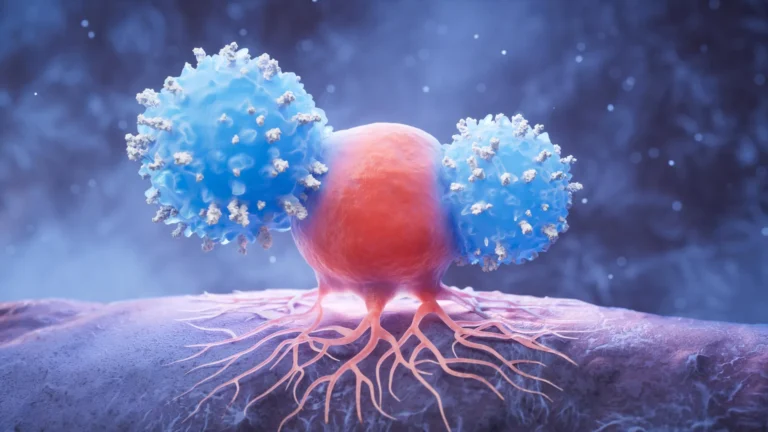
To understand the challenge, one must understand how immunotherapy functions. Modern checkpoint inhibitors are designed to "release the brakes" on the immune system, allowing T cells to identify and attack cancer cells. This process works most effectively in tumors that possess high mutation burdens—such as melanoma or lung cancer. Because these tumors are riddled with genetic errors, they appear distinctly "foreign" to the body’s defenses, triggering a robust, naturally occurring immune response that drugs can then amplify.
Most colorectal cancers, however, do not exhibit this high mutational profile. They are, in many ways, "immunologically invisible." As Dr. Pelka notes, "The vast majority of colon cancer falls into this relatively large area of tumors where we haven’t quite figured out yet how to use the immune system to fight them."
The dMMR Exception
The landscape is not entirely bleak. Approximately 5% to 10% of CRC patients possess tumors characterized by DNA mismatch repair (dMMR) defects. These tumors contain high levels of genetic instability, making them highly visible to the immune system. A landmark 2022 clinical trial illustrated the power of immunotherapy in this subgroup: patients with locally advanced rectal cancer who were treated with checkpoint inhibitors saw their tumors vanish entirely, bypassing the need for toxic chemotherapy, radiation, or disfiguring surgery. Dr. Pelka’s research aims to replicate this "extraordinary response" for the remaining 90% of patients who currently lack these specific genetic markers.
Chronology of Innovation: From Basic Science to AI-Driven Discovery
The trajectory of Dr. Pelka’s research reflects a shift in modern oncology toward high-dimensional data analysis.
- The Foundational Phase: Initial studies in the field focused on the genomic landscape of cancer cells, attempting to categorize tumors based on individual mutations.
- The Spatial Shift: Dr. Pelka’s lab pivoted toward the "neighborhoods" within tumors. By identifying "immune hubs"—structured clusters where killer T cells, cancer cells, and stromal (structural) tissue interact—the team discovered that the physical organization of cells is as important as their individual genetic code.
- The AI Integration: Recognizing the sheer scale of the data, the lab began applying Geneformer, a foundational AI model developed by Dr. Christina Theodoris. Much like Large Language Models (LLMs) parse human speech, Geneformer interprets the "language" of gene activity, allowing researchers to predict how immune cells will behave in specific tumor environments.
- The Current Horizon: With the support of the CRI Technology Impact Award, the Pelka Lab is now moving toward mapping these interactions at a single-cell resolution, identifying the "master switches" that could force resistant tumors to become vulnerable.
Supporting Data and the "Immune Hub" Hypothesis
The Pelka Lab’s discovery of immune hubs represents a significant milestone in tumor immunology. These hubs serve as the primary site of communication between the immune system and the tumor. The intensity and nature of the signaling within these hubs dictate the outcome of the cancer: whether the T cells successfully mount a lethal attack or whether the tumor’s suppressive signals effectively silence the immune response.
Crucially, the Pelka Lab found that these hubs are not unique to colorectal cancer. They appear to be conserved across multiple solid tumor types, including melanoma and lung cancer. When these hubs are in a specific "activated state," the patient is significantly more likely to respond to immunotherapy. The central question for current research is twofold: What molecular signals prevent these hubs from forming in the first place, and what biological "master switches" can be flipped to jump-start them in non-responsive patients?
The Role of Technology: Teaching AI to Read the Cell
The integration of artificial intelligence is not merely a tool for speed; it is an essential component for navigating the complexity of human biology. Biological systems are non-linear; thousands of genes interact simultaneously, and traditional analytical methods often miss the subtle, collective patterns that define an immune response.
By training the Geneformer model on tens of millions of human cell profiles, Dr. Pelka is able to identify "central regulators"—the proteins or molecular pathways that hold the most influence over a tumor’s visibility. Using spatial transcriptomics, the lab can then map these regulators onto the physical geography of the tumor. This allows the team to see not just which genes are active, but where they are active and which cells are talking to one another. This spatial context is vital; a killer T cell may be present in a tumor, but if it is physically sequestered away from the cancer cells by a dense, suppressive wall of structural tissue, it remains useless.
Official Perspectives: The Value of High-Risk, High-Reward Research
The Cancer Research Institute’s decision to fund this work through the Technology Impact Award highlights a growing realization in the philanthropic sector: the need for "patient capital" in science.
"The CRI Technology Impact Award is a perfect example of bringing together new technologies with the problem of getting cancer immunotherapy to work," says Dr. Pelka. She emphasizes that foundational, high-risk research—the kind that moves the needle but isn’t yet ready for commercial application—is notoriously difficult to fund through traditional government grants. By taking early "bets" on high-potential researchers, the CRI provides the necessary runway for discoveries that could eventually become the standard of care.
Implications for Patients and Public Health
The urgency of this work is underscored by the changing demographics of colorectal cancer. With younger adults facing rising incidence rates, the goal is not just to extend survival by months, but to achieve long-term, durable remissions.
Beyond Targeted Therapies
Targeted therapies, while precise, are often plagued by the inherent mutability of cancer cells. As soon as a drug begins to work, the tumor frequently evolves to bypass the blockade. Immunotherapy, by contrast, offers the possibility of a "living therapeutic." Because the immune system is dynamic, it can adapt to the cancer’s evolution, keeping it in check over months or years.
The Importance of Prevention
While Dr. Pelka and her peers push for new treatments, the medical community maintains that the most effective tool in the fight against colorectal cancer remains early detection. Because the transition from a benign polyp to an invasive tumor typically takes 10 to 15 years, regular colonoscopies starting at age 45 remain the gold standard for prevention.
Looking Forward: A Future Without "Invisible" Cancers
The work conducted by the Pelka Lab is a testament to the power of interdisciplinary science. By treating the tumor not as a static mass of cells, but as a complex, communicative ecosystem, researchers are finally beginning to understand why immunotherapy fails. If Dr. Pelka and her colleagues can successfully identify the master regulators that dictate immune hub formation, the next generation of immunotherapy could move beyond the "one-size-fits-all" approach.
For the millions of patients currently diagnosed with colorectal cancer, this research offers more than just a scientific breakthrough; it offers the possibility of a future where their immune systems are no longer bystanders, but active, lethal, and intelligent partners in their own recovery. The path ahead is rigorous, but as the data from the immune hubs suggest, the blueprint for success is already hidden within the tumor—we simply needed the right tools to read it.