











Spaceflight has always been defined by the triumph of engineering, but as humanity sets its sights on the crimson horizon of Mars, the greatest challenge may not be the rocket’s propulsion or the lander’s heat shield—it is the human heart itself. A landmark study published this week in the journal Circulation provides the most comprehensive look yet at how the human cardiovascular system adapts to the rigors of microgravity, offering a promising roadmap for the health of future deep-space explorers.
Led by Dr. Benjamin Levine, a pioneering cardiologist and director of the Institute for Exercise and Environmental Medicine at Texas Health Presbyterian Dallas, the international research team has confirmed that while the heart undergoes structural changes in space, a disciplined exercise regimen can effectively safeguard astronauts, ensuring they remain capable of performing in the partial gravity of Mars.
The Physiological Challenge of Weightlessness
For decades, the "spacefaring heart" has been a subject of intense scientific scrutiny. On Earth, gravity constantly pulls blood toward our feet, requiring the heart to work against this hydrostatic gradient to pump oxygenated blood to the brain. In the microgravity of orbit, this gradient disappears. Fluids shift toward the head and chest, and because the heart no longer needs to pump against the weight of a column of blood, the organ essentially "forgets" how to handle the stress of gravity.
Over time, this deconditioning leads to cardiac atrophy: the heart’s chamber walls can change shape, and the overall volume of the heart may shrink. When astronauts return to Earth, this "stiffening" often manifests as dizziness or fainting—a condition that echoes the symptoms of Postural Orthostatic Tachycardia Syndrome (POTS) seen in clinical patients on Earth.
The stakes for a mission to Mars are significantly higher than for a six-month stint on the International Space Station (ISS). A journey to the Red Planet involves two six-month transits in deep space, separated by an 18-month stay on the surface. If an astronaut lands on Mars with a weakened cardiovascular system, their ability to perform critical mission tasks—or survive a medical emergency—could be severely compromised.
Chronology of the Study: From Orbit to Landing
The study, which tracked 13 astronauts over the course of their six-month missions, represents a technological and logistical milestone. Rather than relying on indirect markers like blood pressure or heart rate, the researchers utilized onboard echocardiograms—ultrasound imaging that provides a real-time, high-definition look at the heart’s anatomy and function.
Phase 1: The Microgravity Adaptation
During the first weeks of the mission, researchers observed rapid, expected changes in the astronauts’ heart structure. As the body adjusted to the absence of weight, the heart’s left ventricle adapted to the shift in fluid dynamics. However, the study’s most critical finding was that these changes did not continue indefinitely; they reached a point of equilibrium. By the end of the six-month window, the heart’s structure had stabilized.
Phase 2: Testing the Martian Gradient
The most anticipated moment of the research occurred upon the astronauts’ return to Earth. The team exposed the crew to a simulated gravity gradient—three-eighths of Earth’s gravity, which is the specific gravitational pull they would experience upon stepping onto the Martian surface.
"The single most novel thing that we showed was that after six months in space, when you come back down to Earth and are exposed to three-eighths gravity, nobody—not a single astronaut—had a cardiovascular response that was more stressed than the upright posture on Earth before they went," Dr. Levine noted. This discovery provides the strongest evidence to date that with the right preparation, the human body is capable of transitioning from deep-space transit to planetary exploration.

Supporting Data and the Power of Exercise
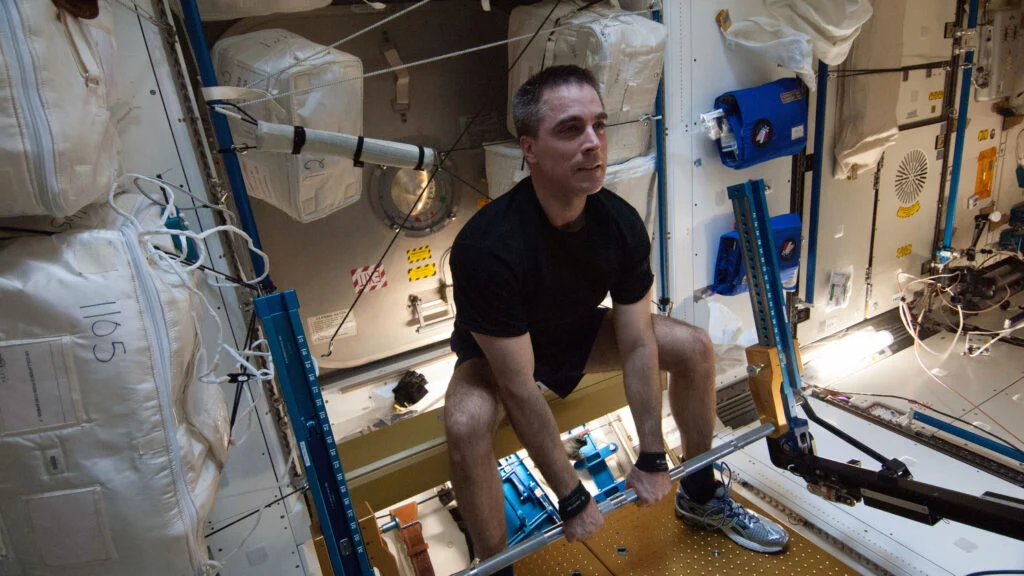
The success of these astronauts was not a matter of luck; it was the result of intense, evidence-based exercise interventions. Dr. Levine, who has consulted for NASA for years, has long championed the idea that exercise is the primary "countermeasure" against the debilitating effects of spaceflight.
The study confirms that the heart is remarkably plastic, with nearly 75% of the left ventricular muscle mass responding to physical activity levels. By employing rigorous exercise regimens—including resistance training and cardiovascular work—astronauts can force the heart to maintain its size and elasticity.
"We’ve done a lot of studies using bed rest as a ground-based model," Dr. Levine explained. "We’ve shown that if you eliminate the hydrostatic gradient, the heart shrinks and atrophies. But if you exercise while you’re in bed, that atrophy is completely eliminated."
The researchers taught the astronauts to perform their own echocardiograms, a process facilitated by remote guidance from sonographers on Earth. By providing real-time feedback via video and diagrams, the ground team could ensure the images were of clinical, research-grade quality, allowing for precise measurements of cardiac output and chamber function.
Official Perspectives and Medical Implications
While the study is a cause for celebration, Dr. Levine remains pragmatic about the risks. He points out that current research involves astronauts who are healthy and have access to significant medical support. He raises a critical "what-if" scenario: in a deep-space environment, if an astronaut were to suffer an injury that prevented them from exercising, their cardiovascular health could decline rapidly, leaving them vulnerable upon arrival at their destination.
Furthermore, the recent January 2024 medical evacuation of an astronaut—the first in NASA history—underscores the reality that even in a highly controlled environment, a cardiovascular event or other medical emergency is a persistent, if low-probability, threat. Because the astronaut corps is generally composed of middle-aged individuals, the risk of a "cardiovascular event" is a top-of-mind concern for flight surgeons.
"What captures the attention of the American public is the human in the loop," Dr. Levine said. "As we think about all these engineering challenges, what may be the single most important limitation is the health and safety and well-being of the astronauts."
Implications for Future Exploration
The findings published in Circulation move the needle from "theoretical concern" to "actionable science." For future missions to Mars, the implications are three-fold:
- Hardware Design: Engineers must integrate compact, high-efficiency exercise equipment into the design of Mars-bound vehicles. As space on the spacecraft is limited compared to the expansive ISS, finding a balance between mass, volume, and power for exercise devices is the next major engineering hurdle.
- Clinical Protocols: The success of the remote-guided echocardiogram opens the door for a new era of "tele-cardiology" in deep space. Astronauts can now act as their own medical technicians, allowing for real-time monitoring of their health without the need for an onboard medical doctor.
- Earth-Based Medicine: The study’s insights are not confined to space. By studying how the heart reacts to the loss of gravity, doctors are gaining a better understanding of how to treat patients with POTS and other autonomic disorders on Earth. The "gravity disease" that affects astronauts is, in many ways, the same as the condition affecting thousands of people living their daily lives on the ground.
As we look toward 2035 and the planned mission to Mars, the research led by Dr. Levine offers a comforting truth: the human heart is far more resilient than we once thought. Provided we give it the tools to work against the void, it is capable of carrying humanity to other worlds and, just as importantly, bringing us safely home.