In the disciplined world of the United States military, the transition from a decorated 15-year career to a state of complete psychological and professional collapse can happen with alarming speed. For one 42-year-old Air Force Reservist and Senior Non-Commissioned Officer (SNCO), the catalyst was not a battlefield injury or a lapse in character, but a request for cognitive support that spiraled into a nightmare of over-medication, misdiagnosis, and institutional neglect.
Her story, which nearly ended in suicide, highlights a growing crisis within the Department of Defense (DoD): the disconnect between modern mental health science and the rigid, often punitive, medical protocols of the armed forces. It raises urgent questions about the military’s reliance on antidepressants and the phenomenon of "medical gaslighting," where patient experiences are dismissed as excuses for poor performance.
Main Facts: A Career Derailed by Diagnostic Overshadowing
The veteran’s ordeal began with a proactive attempt to maintain her high standards of performance. At age 42, having decided to cross-train during her most recent enlistment, she found herself struggling with the cognitive demands of long, intensive lectures. Physically fit and with an impeccable 15-year service record, she suspected she might have undiagnosed ADHD—a condition she felt was manageable but required professional evaluation, especially since the military had recently updated its policies to allow ADHD medication for active and reserve members.
However, rather than receiving a specialized evaluation for ADHD, her concerns were filtered through a traditional psychiatric lens. Because she lacked a documented childhood diagnosis or a history of academic failure, her request was denied. Instead, her self-reported social anxiety and occasional negative self-talk—common traits among high-achievers—were reframed as symptoms of Major Depressive Disorder (MDD) and Generalized Anxiety Disorder (GAD).
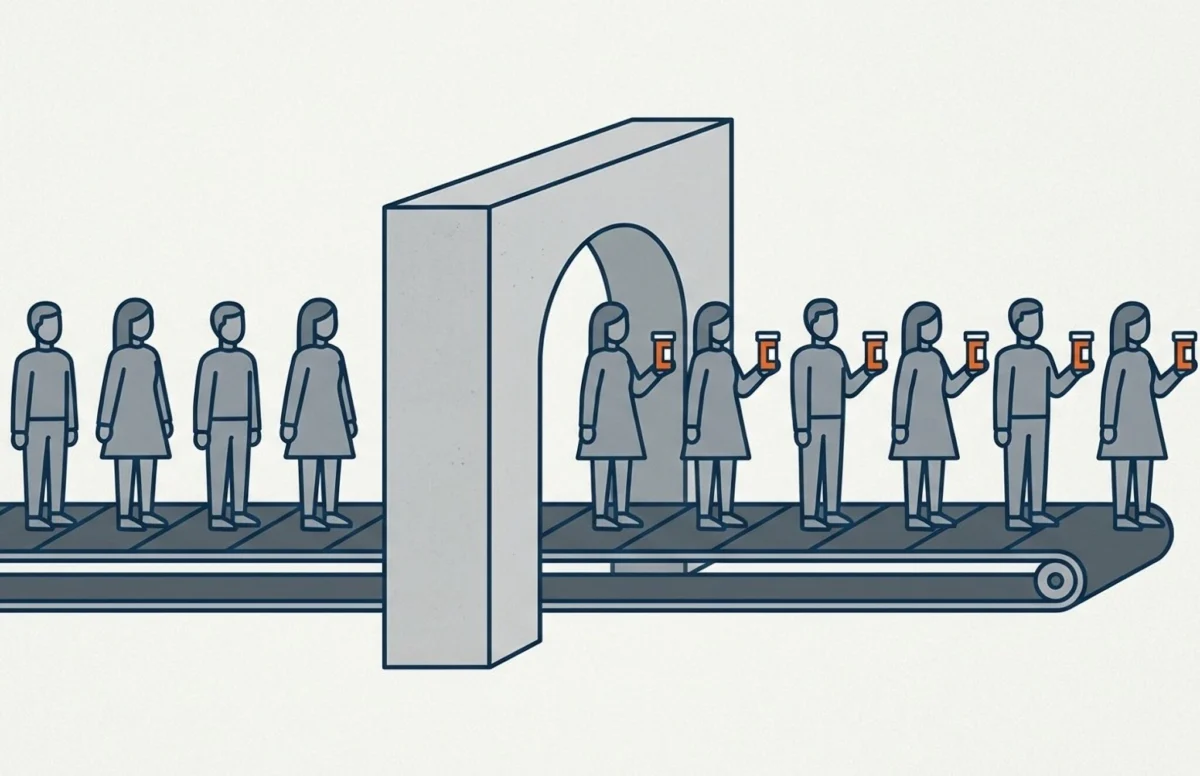
The result was a "medication-first" approach. Over the next two years, the SNCO was prescribed a series of Selective Serotonin Reuptake Inhibitors (SSRIs) and Serotonin-Norepinephrine Reuptake Inhibitors (SNRIs). Far from helping her focus, these drugs triggered a cascade of adverse reactions, including:
- Induced Panic Attacks: Experiencing her first-ever panic attacks during high-stakes exams.
- Physical Toxicity: Massive bruising, tremors, and a suspected case of mild serotonin syndrome.
- Cognitive Decline: Extreme fatigue, memory loss, and uncontrollable oversleeping.
- Institutional Fallout: Multiple AWOL (Absent Without Leave) markings due to medication-induced lethargy and eventual suicidal ideation.
Chronology: From SNCO to "Non-Dependable"
Phase I: The Misdiagnosis (The 42nd Year)
The veteran entered the medical system as a high-performing reservist. Despite her clear request for ADHD testing, providers convinced her that her inattentiveness was a byproduct of underlying depression. Trusting the "process," she agreed to an SSRI regimen. The reaction was immediate and severe. Despite genetic testing suggesting the drug was a "good fit," she suffered from massive bruising and intense suicidal thoughts. For the first time in her career, her grades suffered as she battled mid-exam panic attacks—a symptom she had never experienced prior to medication.
Phase II: The SNRI Spiral and Physiological Decline
Following the SSRI failure, she was switched to an SNRI. While initially stable, her health soon plummeted. She developed constant tremors and overwhelming fatigue. She began falling asleep uncontrollably, a condition that put her military standing at immediate risk. As a Senior NCO, her inability to stay awake led to her being marked AWOL during drills.

Instead of recognizing these as side effects, her medical team pursued a "stacking" strategy. They tested her for Lyme disease, sleep disorders, and even performed brain scans, all while maintaining her on the SNRI. When these tests came back negative, they added stimulants to her regimen to counteract the fatigue caused by the antidepressants.
Phase III: The Breaking Point and Psychotic Break
By the time she transferred to a new unit, the veteran was in "symptom hell." Her new supervisors, unfamiliar with her 15-year history of excellence, viewed her as a "problem airman." Her requests for a Medical Evaluation Board (MEB) or a transfer to the Inactive Ready Reserve (IRR) were denied or ignored.
The crisis peaked during a mandatory mission. While undergoing a physician-supervised taper of the SNRI—a process notorious for "discontinuation syndrome"—she was forced into a high-stress deployed environment. Just days after her final dose, she suffered an antidepressant withdrawal-induced psychotic break. The military response was not medical intervention, but disciplinary paperwork and further alienation.
Phase IV: The Suicide Attempt and Recovery
Believing she was "too misunderstood" and facing the total erasure of her professional identity, the veteran attempted to take her own life. She was disarmed by her husband and admitted to a VA hospital. It was there, among fellow veterans rather than clinicians, that she began to find the grounding necessary for recovery. Five months after her hospitalization, through lifestyle changes and the intervention of former commanders, she finally initiated a "Fit-for-Duty" evaluation to seek a medical discharge rather than a punitive one.
Supporting Data: The Risks of SSRI/SNRI Withdrawal
The veteran’s experience mirrors clinical data regarding "Antidepressant Discontinuation Syndrome" (ADS). Research published in journals like The Lancet Psychiatry suggests that withdrawal symptoms can be severe, especially with SNRIs like Venlafaxine (Effexor) or Duloxetine (Cymbalta), which have short half-lives.
- Incidence: Up to 56% of people stopping antidepressants experience withdrawal symptoms, with nearly half of those describing the symptoms as "severe."
- Psychosis Risk: While rare, "withdrawal-emergent psychosis" is a documented phenomenon, particularly when tapering is done too quickly for the individual’s unique neurochemistry.
- The "Black Box": The FDA maintains a "Black Box" warning on most antidepressants regarding the increased risk of suicidal thoughts and behaviors in young adults, but many advocates argue these risks persist well into middle age, especially during dosage changes.
Furthermore, the veteran’s suspected "serotonin syndrome" (tremors, fatigue, cognitive slowing) is a known risk when medications are stacked or when the body cannot properly metabolize the chemicals—a risk that genetic testing often fails to predict accurately.
Official Responses: A Culture of Accountability Over Care
While the specific unit involved has not issued a public statement, the veteran’s account highlights several systemic failures in Air Force medical and administrative policy:

- The "Childhood Diagnosis" Barrier: Military medical providers often refuse ADHD evaluations for adults unless there is a paper trail from childhood. This ignores modern understanding of "late-manifesting" ADHD or individuals who used high intelligence to mask symptoms until reaching a "complexity ceiling" in mid-life.
- Line of Duty (LOD) Denials: The veteran was told she was ineligible for an LOD because she didn’t report the illness until after in-processing at a new unit. This bureaucratic technicality stripped her of medical coverage and validation for VA claims, despite the injury being clearly linked to service-prescribed medication.
- The Ghosting Phenomenon: The psychological director at her base reportedly promised to investigate her case and then "ghosted" her. This lack of administrative follow-through is a common complaint among service members seeking mental health advocacy.
- Disciplinary vs. Medical: The military’s tendency to treat medication side effects (oversleeping, cognitive slowing) as "conduct issues" rather than "medical issues" remains a primary driver of veteran distress.
Implications: The High Cost of Medical Gaslighting
This case serves as a harrowing case study in medical gaslighting—a term used when healthcare providers dismiss a patient’s physical or mental symptoms as "all in their head" or as a character flaw. For this veteran, every physiological reaction to a drug was reframed as a symptom of her "original" depression or an attempt to avoid duty.
The Impact on Veteran Suicide
The veteran’s conclusion is stark: "This breakdown between patient experience and institutional response is why veterans commit suicide." When a service member who prides herself on being a "woman of her word" is told she is a liar and a failure because her body is reacting poorly to a prescribed chemical, the resulting "moral injury" can be more lethal than the drug itself.
The Need for Integrated Medicine
The veteran now advocates for an integrated approach to medicine that prioritizes lifestyle, nutrition, and environmental stress reduction over immediate pharmaceutical intervention. Her story suggests that for women in the military, emotional responses to high-stress environments are too often pathologized. "Some emotions are healthy. Some nervousness is human," she notes.
Conclusion: A Career Lost to a "Cure"
As she awaits a likely medical discharge, the Air Force loses a Senior NCO with 15 years of experience—not because she couldn’t do the job, but because the system couldn’t handle the side effects of its own treatment. Her journey from a fit, capable leader to a psychiatric patient in a VA ward stands as a warning: when the military treats mental health with a "one-size-fits-all" pill bottle, the cost is measured in more than just dollars—it is measured in lives and legacies.
If you or someone you know is in crisis, please call or text 988 to reach the Suicide & Crisis Lifeline in the U.S. and Canada, or call 111 in the UK. Veterans can press "1" after dialing 988 for specialized support.