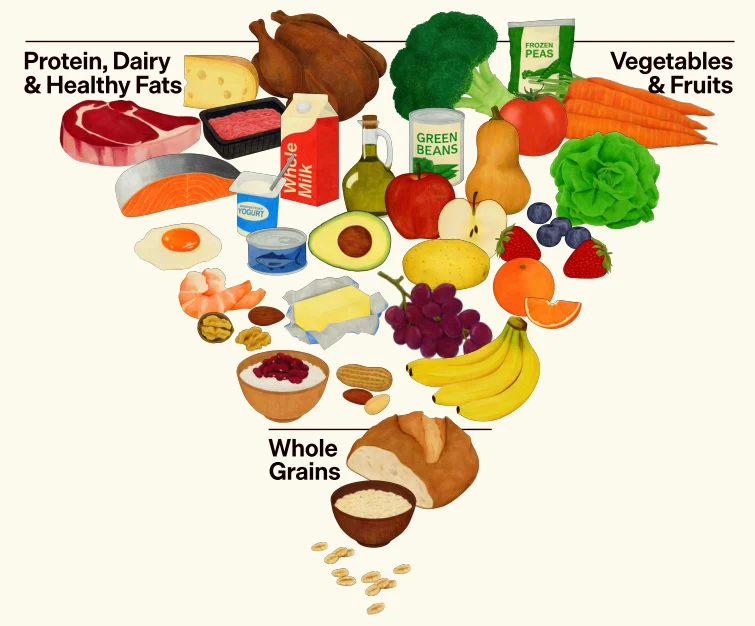












In an era where convenience often dictates our dietary habits, a growing body of scientific evidence suggests that the price of speed may be higher than we realize. A landmark study, recently published in the peer-reviewed journal Alzheimer’s & Dementia: Diagnosis, Assessment & Disease Monitoring, has unveiled a concerning correlation: the consumption of ultra-processed foods (UPFs) is significantly linked to declines in cognitive function, specifically in the domains of attention and mental processing speed.
The research, conducted by an international team of scientists from Monash University, the University of São Paulo, and Deakin University, provides a sobering look at how modern industrial food manufacturing may be silently eroding the brain health of middle-aged and older adults. Even more alarmingly, the study suggests that these detrimental effects occur independently of an individual’s overall dietary quality, challenging the long-held belief that a "generally healthy diet" provides a complete shield against the negative impacts of processed ingredients.
Main Facts: The Hidden Impact of Industrial Processing
The study focused on a cohort of more than 2,100 middle-aged and older Australians, all of whom were free of dementia at the onset of the research. By tracking dietary intake alongside rigorous cognitive testing, researchers identified a clear, dose-dependent relationship between the consumption of UPFs and a decline in executive mental performance.
At the heart of the findings is a quantifiable threshold: for every 10 percent increase in the proportion of ultra-processed food in an individual’s diet, there was a corresponding and measurable drop in their ability to focus. To put this into practical terms, the researchers noted that a 10 percent increase in UPF intake is roughly equivalent to consuming one standard packet of potato chips daily.
While the study stopped short of establishing a direct causal link to memory loss or the onset of dementia, it highlighted that attention is a fundamental cognitive pillar. As the researchers emphasize, focus is the "gatekeeper" of the mind; it is essential for learning, problem-solving, decision-making, and maintaining the complex mental tasks that define daily independence. Consequently, a degradation in attention span may act as a silent, early-warning sign of broader cognitive decline.
A Chronological Perspective: Tracing the Research Path
The origins of this investigation lie within the "Healthy Brain Project," an extensive longitudinal study designed to identify the risk factors associated with cognitive impairment and neurodegenerative disease.
The research team, led by Dr. Barbara Cardoso of Monash University’s Department of Nutrition, Dietetics and Food and the Victorian Heart Institute, sought to bridge the gap between nutritional science and neurology. By analyzing dietary and cognitive data from the project, the team aimed to determine if the specific degree of food processing—rather than just the nutritional profile (such as fat, sugar, or salt content)—was a primary driver of brain health outcomes.
The collaborative effort spanned several institutions and drew upon the expertise of researchers like Dr. Lisa Bransby, Hannah Cummins, Professor Yen Ying Lim, and Xinyi Yuan from Monash; Dr. Euridice Martinez Steele from the University of São Paulo; and Dr. Barbara Brayner and Dr. Priscila Machado from Deakin University. The project was meticulously funded by a network of prestigious health organizations, including the National Health and Medical Research Council (NHMRC) and the Alzheimer’s Association, underscoring the urgency and the perceived gravity of the study’s hypothesis.
Supporting Data: Understanding the UPF Landscape
To understand the scope of the issue, it is essential to define what constitutes an "ultra-processed" food. Unlike fresh produce, grains, or even minimally processed items like canned beans or pasteurized milk, UPFs undergo intense industrial manipulation. These products—which include soft drinks, mass-produced packaged snacks, reconstituted meat products, and "instant" ready-made meals—are formulated with substances rarely found in a home kitchen.
Key data points from the study include:
- Prevalence: The study participants obtained approximately 41 percent of their daily caloric intake from ultra-processed sources, a figure that mirrors the Australian national average of 42 percent. This indicates that the subjects were not outliers, but representative of a population deeply accustomed to modern industrial food habits.
- The "Additive" Hypothesis: The researchers observed that even participants who maintained a high-quality, Mediterranean-style diet—typically rich in vegetables, healthy fats, and lean proteins—still suffered from reduced attention spans if their UPF intake was high. This finding is critical: it suggests that adding "healthy" foods to a diet does not necessarily negate the harm caused by the "unhealthy" ones.
- Biological Risk Factors: The researchers documented an increase in systemic dementia risk factors among high-UPF consumers, most notably obesity and hypertension. Both conditions are well-documented precursors to vascular and cognitive health degradation, suggesting that UPFs impact the brain through both direct neurochemical pathways and systemic physiological damage.
Official Responses and Scientific Context
Dr. Barbara Cardoso, the lead author of the study, has been vocal about the implications of these findings. She emphasizes that the process of ultra-processing is inherently destructive to the nutritional architecture of food.
"Food ultra-processing often destroys the natural structure of food and introduces potentially harmful substances like artificial additives or processing chemicals," Dr. Cardoso stated. "These additives suggest the link between diet and cognitive function extends beyond just missing out on foods known as healthy, pointing to mechanisms linked to the degree of food processing itself."
The scientific community has largely received the study as a significant contribution to the "Food Matrix" theory. This theory posits that the physical structure of a food—the way nutrients are encased within cell walls and fiber—is just as important for metabolic health as the nutrients themselves. When industrial processing strips away these structures, the body’s metabolic response changes, often leading to rapid spikes in blood sugar and inflammatory responses that may negatively impact the brain.
Implications for Public Health and Daily Life
The implications of this research are profound, both for individual health choices and for public health policy. If the "degree of processing" is indeed a critical variable in cognitive health, then nutritional guidelines may need to shift focus from merely counting macronutrients to auditing the level of industrial manipulation in our food supply.
The Challenge of Modern Lifestyles
For many, ultra-processed foods are not merely a preference; they are a necessity driven by time constraints, economic accessibility, and the ubiquity of fast-food infrastructure. However, the study serves as a warning that the "hidden cost" of this convenience is the slow degradation of the very mental faculties required to navigate the complexities of modern life.
Clinical and Policy Recommendations
- Redefining "Healthy": Clinicians may need to adjust their dietary counseling. It is no longer enough to advise patients to "eat more greens." Patients must also be actively educated on how to identify and limit the intake of highly processed, shelf-stable products.
- Food Labeling: The study adds weight to the growing call for clearer front-of-package labeling that identifies the level of processing, rather than just the caloric or sugar content.
- Future Research: The researchers noted that while they have identified a clear link to attention span, further long-term studies are needed to determine if reducing UPF intake can halt or potentially reverse these cognitive declines.
A Call to Awareness
The findings published in Alzheimer’s & Dementia represent a significant step forward in understanding the neurobiological consequences of our modern food system. By highlighting that attention—the cornerstone of human cognition—is vulnerable to the chemical and structural degradation of ultra-processed food, the research team has provided a compelling reason for individuals to reconsider the contents of their pantry.
In conclusion, as we continue to grapple with the rising tide of cognitive health challenges globally, the path toward a healthier mind may begin with a simpler, less processed approach to the dinner plate. While the convenience of a ready-made meal is undeniable, the evidence suggests that the long-term cognitive toll is a price that few can truly afford to pay. Moving forward, the scientific focus will likely turn toward isolating the specific additives and processing techniques that trigger these cognitive deficits, potentially paving the way for better regulation and a much-needed shift in global dietary standards.