








As the mercury climbs toward a blistering 115 degrees in Phoenix, Arizona, the city faces a reality that is as undeniable as it is deadly. In the United States, extreme heat has quietly ascended to become the most lethal weather-related hazard, surpassing hurricanes, tornadoes, and floods in total annual fatalities. In Phoenix, the nation’s hottest major metropolitan area, the threat is so profound that heat now claims more lives annually than homicides.
In response to this escalating crisis, the Phoenix Fire Department has pioneered a low-tech, high-impact medical intervention: cold water immersion using simple, plastic bags of ice. As part of our ongoing series, Tipping Point, we explore how this life-saving protocol is fundamentally changing the way emergency responders manage heatstroke in an era defined by climate change.
The Invisible Killer: The Crisis in Numbers
The statistics surrounding heat-related mortality are stark. As climate change continues to drive more frequent, intense, and prolonged heat waves, the environment in cities like Phoenix has shifted dramatically. Records indicate that Phoenix now experiences approximately 39 more days of extreme heat annually than it did in 1970.
Climate Central, a non-profit organization dedicated to reporting on the impacts of climate change, has documented a concerning nationwide trend: the frequency of dangerous, multiday heat streaks is on the rise. For the human body, which is optimized to function within a narrow thermal window, these sustained temperatures are catastrophic. Heatstroke occurs when the body’s thermoregulatory system fails, causing the core temperature to spike—often above 104 degrees Fahrenheit. At this threshold, the body begins to essentially cook from the inside out, leading to rapid cellular degradation, organ failure, and irreversible brain damage.
Historically, emergency protocols for heatstroke were limited to surface cooling: applying ice packs to the neck, groin, and axillary regions, combined with the administration of chilled intravenous fluids. While these methods were standard, they were often insufficient to rapidly reverse the systemic damage occurring during a severe heatstroke event.
Chronology of a Crisis: A Day in the Life of a Phoenix First Responder
To understand the severity of the situation, one must ride along with the men and women on the front lines. Phoenix Firefighter Colin Kennedy describes the atmosphere in the city as a constant, low-level emergency. On a typical afternoon, when the pavement itself becomes a radiant heater, every dispatch call carries the potential for a life-or-death battle against hyperthermia.
"We’re going to a 50-year-old female found outside a Dollar Store," Kennedy explains while navigating the city streets. "It’s 106 degrees. The pavement is hot. We know the risks."
Upon arrival, the scene is grim. The patient is found unconscious, suffering from severe heatstroke. Under the department’s new standard operating procedure, the responders do not wait for the ride to the hospital to begin aggressive cooling. Instead, they deploy the "rapid cooling bag"—a specialized, waterproof container designed to hold the patient while being filled with water and ice.
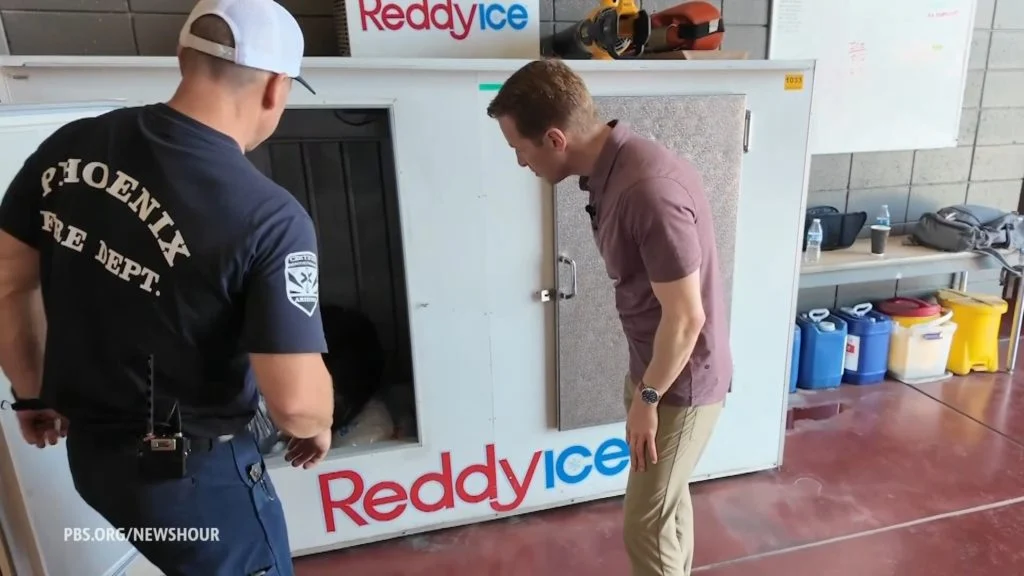
This procedure, which mimics military-grade field trauma techniques, involves placing the patient into the bag, which is then zipped up to the chest and filled with approximately 50 to 60 pounds of ice and water. It is a stark, low-tech solution to a high-stakes physiological emergency. Just this summer, the Phoenix Fire Department has deployed these rapid cooling bags more than 220 times, and they have expanded their reach by stockpiling ice at popular hiking trailheads to treat overheated visitors before they can even be loaded into an ambulance.
The Science of Thermal Conductivity
The efficacy of the cold water immersion technique lies in the fundamental laws of physics. Dr. Geoff Comp, an emergency medicine physician at Valleywise Health Medical Center in Phoenix, has spent years refining the protocol for his clinical team.
"Why is putting somebody in ice water more effective?" Dr. Comp asks rhetorically. "Because it’s fast. The thermal conductivity of water is so much faster than air."
When a patient is submerged in ice water, heat is stripped away from the body at a rate three to five times faster than traditional methods. This rapid reduction in core body temperature is the critical variable that separates survival from permanent neurological impairment.
"If we’re able to decrease the amount of time that the patient is impacted by that higher temperature, it’s going to be better," Dr. Comp explains. "By doing this, we’re decreasing mortality. We’re saving people’s lives."
Data from the field confirms this success. Firefighters report that patients who are suffering from core temperatures as high as 110 degrees are frequently cooled down to 100 or 101 degrees by the time they are transferred into the care of the hospital emergency department. This shift is, as Captain Dave Kirk of the Phoenix Fire Department describes it, "night and day."
Official Responses and Tactical Evolution
The Phoenix Fire Department’s transition to this protocol represents a significant shift in emergency management policy. Captain Dave Kirk notes that while the concept of cold water immersion is not new—having been utilized by military branches to treat combat-related heat illness—its application in a civilian, pre-hospital setting is revolutionary.
The integration of this protocol into daily operations required more than just buying ice. It required a complete overhaul of logistics. Every fire station in the Phoenix network now maintains a steady supply of ice, treating it with the same clinical importance as oxygen tanks or cardiac defibrillators.
"We have a bag and we have ice, and we’re saving lives with it," says Capt. Kirk. The simplicity of the approach is its greatest strength. By utilizing items readily available at local convenience stores, the department has created a scalable model that could be exported to other regions currently struggling with rising summer temperatures.
Implications for a Warming Future
The success of Phoenix’s "cold war on heat" holds profound implications for urban planning and public health worldwide. As global temperatures continue to trend upward, the "urban heat island" effect—where cities retain more heat than rural areas due to asphalt, concrete, and lack of vegetation—will only intensify the risks for urban populations.
The Phoenix model demonstrates that while infrastructure changes like planting trees and installing "cool roofs" are necessary long-term solutions, there is an immediate, urgent need for adaptive medical protocols. The ability to manage heat-related trauma at the site of the incident, rather than waiting for hospital arrival, is the new standard that cities across the Sun Belt and beyond will likely need to adopt.
However, medical intervention is only one side of the coin. The prevalence of heatstroke in the unhoused population, the elderly, and outdoor laborers suggests that extreme heat is a societal issue that exacerbates existing inequalities. The "Tipping Point" reached by cities like Phoenix is a warning: the environment has changed, and our emergency response systems must change with it.
As Ben Tracy reports for Climate Central, the rapid cooling bag is more than just a piece of equipment; it is a symbol of a new era of disaster preparedness. By embracing simple, scientifically sound interventions, Phoenix is providing a blueprint for survival in a future where the heat is no longer just a discomfort, but a persistent, lethal threat.
The fight against extreme heat is far from over. With each record-breaking summer, the pressure on emergency services will only increase. But for the people of Phoenix, the lesson is clear: when the world gets hotter, the most effective solutions may be the ones that rely on the most basic elements. In the battle to save lives, a bag of ice is proving to be one of the most powerful tools in modern medicine.