






By Investigative Desk
The intersection of high-stakes military strategy and sensitive domestic politics collided this week as President Donald Trump faced a wave of bipartisan condemnation following a series of social media posts and public remarks concerning the ongoing military conflict with the Islamic Republic of Iran. The controversy, centered on the President’s characterization of American combat deaths as a mere "skirmish," has ignited a fierce debate over the language of leadership, the morality of casualty comparisons, and the long-term trajectory of the escalating hostilities in the Middle East.
The Catalyst: A Controversial Comparison
The firestorm began on Tuesday, July 21, when President Trump took to his social media platform, Truth Social, to contrast the human cost of the current Iranian conflict with the two-decade-long war in Afghanistan. In a post that drew immediate scrutiny, Trump wrote: "Afghanistan War: 20 years, 2,000 DEAD… Iran Military Conflict: 4 months, 18 DEAD."
The post, intended by the President’s defenders to highlight the efficiency of his administration’s current military approach, was perceived by critics as a callous quantification of American lives. The backlash intensified on Wednesday, July 22, during the President’s remarks surrounding a dignified transfer ceremony at Dover Air Force Base. When discussing the military operations, Trump referred to the situation as a "skirmish," stating: "This skirmish we have going on. I call it a skirmish with the Islamic Republic of Iran."
This terminology—describing an engagement that has resulted in 18 confirmed American deaths and hundreds of injuries—was viewed by many political observers as a dangerous minimization of the realities of modern warfare.
Chronology of the Escalation
The current state of affairs is the result of months of mounting tensions that have pushed the region to the brink of a broader conflict.
- Early 2026: Tensions in the Strait of Hormuz spike as Iranian naval assets increase interdiction efforts against international shipping, prompting the U.S. to bolster its naval presence.
- March 2026: Following a series of drone strikes on U.S. positions, the administration authorizes retaliatory air campaigns, marking the beginning of the "four-month" window cited by the President.
- July 2026: A coordinated attack by Iranian-backed militants breaches defensive perimeters in Jordan, resulting in the deaths of four U.S. service members. This event forces a reevaluation of U.S. force protection and base security.
- July 22, 2026: President Trump attends the dignified transfer at Dover Air Force Base for the four fallen soldiers, followed by his public comments that trigger the ongoing political fallout.
Supporting Data: The Human and Economic Toll
The numbers behind the conflict reveal a grim reality that challenges the administration’s "skirmish" narrative. According to U.S. military records, 18 service members have been confirmed dead since the conflict began four months ago. Beyond the fatalities, the casualty count is significantly higher. A U.S. official confirmed to the Associated Press that more than 500 U.S. troops have sustained wounds, while the Department of War has reported that nearly 100 service members have suffered various injuries during the latest round of Iranian strikes.
The financial burden of the operation is equally staggering. Secretary of War Pete Hegseth recently testified before the Senate, revealing that the conflict has already consumed $37.5 billion. Hegseth has formally requested an additional $88 billion to sustain operations, a figure that has drawn skepticism from fiscal hawks and independent analysts who suggest the actual costs of sustaining a long-term maritime and aerial blockade are likely being under-reported.
Political Backlash and Administrative Defense
The political response to the President’s rhetoric has been swift and deeply divided.
From the Opposition and Former Allies
Senate Majority Leader Chuck Schumer (D-NY) led the charge, labeling the President’s social media post "beneath contempt." Sen. Chris Van Hollen (D-MD) echoed these sentiments, accusing the President of "downplaying" the loss of American lives to serve a political narrative. Perhaps most surprisingly, former Rep. Marjorie Taylor Greene (R-GA), typically a staunch ally of the President, criticized the post, suggesting that Trump was "bragging about killing 18 U.S. soldiers."
The Administration’s Stance
In defense of the administration, Deputy Chief of Staff Stephen Miller appeared on Fox News to frame the conflict through the lens of historical necessity. Miller argued that the regime in Tehran has "murdered Americans, tortured dissidents, funded terrorism, and operated with bloody impunity" for decades. He contended that the President’s rhetoric is a reflection of a firm, necessary stance against a regime that has historically lacked accountability.
Conservative commentator David J. Freeman also rallied to the President’s defense on social media, writing: "Strong leadership means winning FAST with minimal American blood. No endless wars. Period."
The Dignified Transfer: A Moment of Solemnity
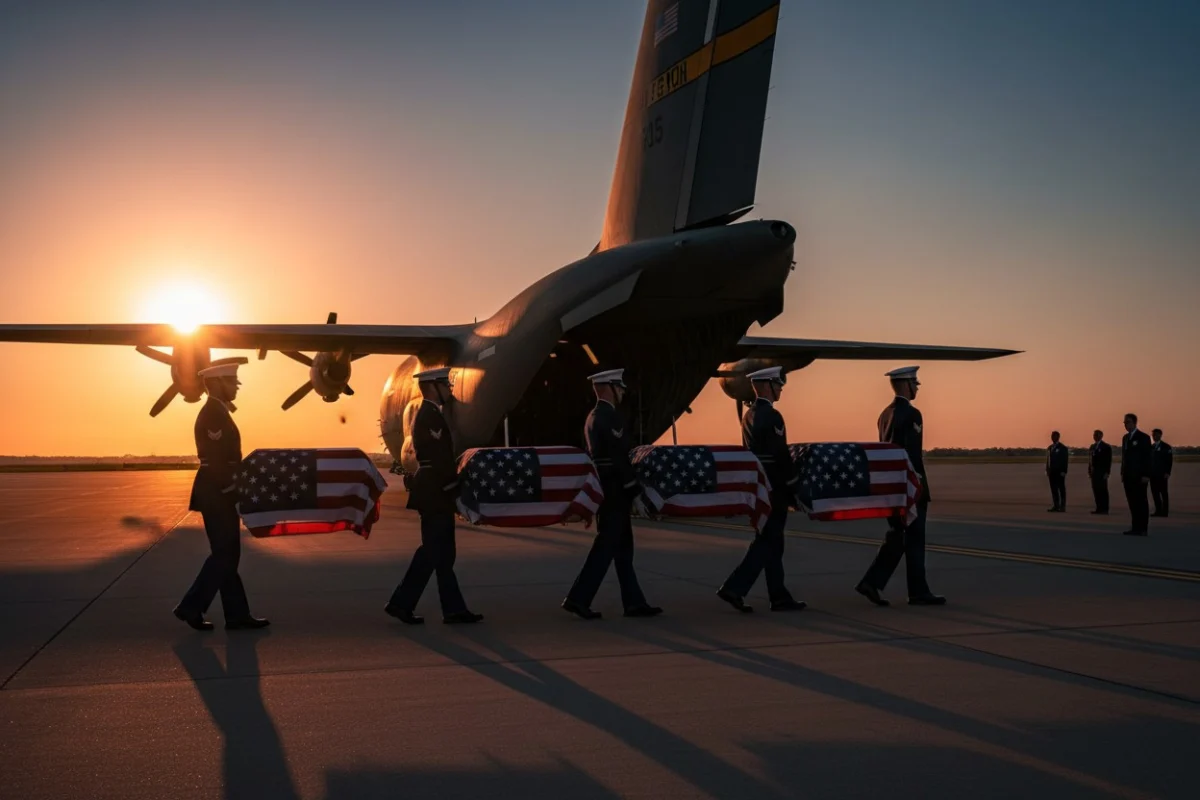
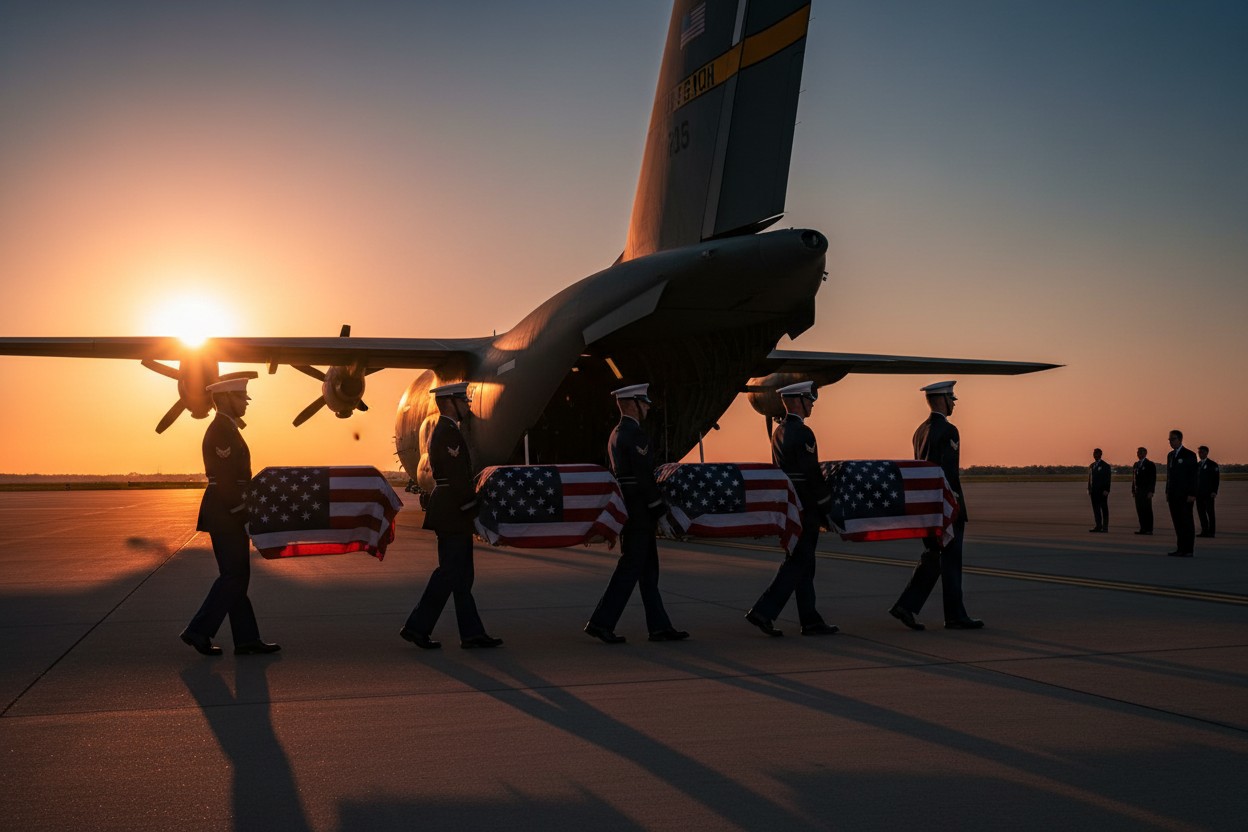
Amidst the political vitriol, the dignified transfer at Dover Air Force Base served as a stark reminder of the human cost of these policies. The ceremony saw the return of 1st Lt. Tyler J. Feehan, Sgt. Michael E. Swinton, Sgt. Angel S. Rampersad, and Pvt. Isabella Gonzales.
President Trump, accompanied by Secretary of War Pete Hegseth and Joint Chiefs of Staff Chair Gen. Dan Caine, stood at attention as the four flag-draped transfer cases were moved from a military aircraft. Following the ceremony, the White House confirmed that the President met privately with the families of the fallen. Speaking to the press, a visibly somber Trump remarked, "It’s very tough to watch, to be honest with you. I think it’s the toughest thing I do." He emphasized that his role in those moments is to offer his heart and reassure the families that their loved ones are loved and honored.
Implications for Global Stability
The implications of the conflict extend far beyond the domestic political sphere. Iranian Foreign Minister Abbas Araghchi has signaled a hardening of Iran’s position, stating on social media that the nation’s defense doctrine remains "eye for an eye." He warned that any strikes on Iranian infrastructure would compel a "powerful and decisive response," and explicitly stated that nations supporting U.S. actions would be viewed as "legitimate targets."
President Trump responded to these threats with a new, aggressive doctrine on Truth Social, promising that any future Iranian attack on a ship would result in the retaliatory destruction of critical infrastructure within Tehran, specifically naming bridges and power plants.
The situation is further complicated by the expansion of hostilities. Hezbollah has reportedly launched 100 rockets toward Israel, while Houthi rebels have targeted Saudi oil tankers in the Red Sea. Experts warn that if the Strait of Hormuz remains closed, the world faces a dual threat: a severe global energy crisis and the potential for widespread famine, as critical food supply chains are disrupted.
Conclusion: A Path Uncertain
As the administration investigates the security breach in Jordan and weighs the request for an additional $88 billion, the nation remains divided. The tension between the desire for a swift, decisive military victory and the reality of an evolving, multi-front conflict continues to grow.
While the administration maintains that its aggressive posture is the only way to effectively confront a long-standing adversary, the political cost of the President’s rhetoric suggests that the battle for public opinion may be just as contentious as the conflict in the Middle East itself. As casualties rise and the scope of the war widens, the "skirmish" that the President described is rapidly becoming one of the most significant foreign policy challenges of the decade.