





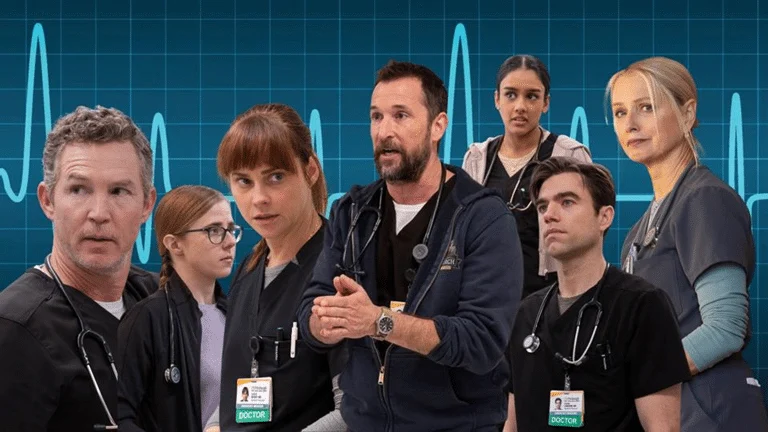
If you haven’t yet immersed yourself in the grit and chaos of HBO Max’s medical drama The Pitt, you are missing one of the most poignant cultural touchstones of the year. While the show has garnered acclaim for its visceral depiction of life in a high-pressure Pittsburgh emergency department—featuring everything from medically precise "clamshell" thoracic surgeries to the frantic, relentless pulse of a trauma bay—it offers something far more profound than mere entertainment.
The Pitt has become a mirror held up to the American healthcare system. For those of us dedicated to the field of aging research and health policy, the show is not just a drama; it is a documentary-style critique of how our systems are failing—or, at best, struggling to support—our nation’s older adults.
Spoiler Warning: The following analysis explores key plot points and character arcs from Seasons 1 and 2 of The Pitt.
Main Facts: A Window into the Fractured System
At its core, The Pitt succeeds because it refuses to sanitize the experience of the aging patient. It moves beyond the tropes of the "frail elderly" to highlight the complex, systemic barriers that define the modern healthcare experience.
The show’s strength lies in its refusal to treat its supporting characters as mere plot devices for the protagonist, Dr. Robby. When an elderly patient enters the trauma bay, they are not just a medical case; they are the nexus of a family’s financial collapse, a caregiver’s breaking point, and a societal failure of infrastructure. From the exhaustion of an adult daughter trying to juggle her own life while acting as a primary caregiver, to the crushing weight of medical debt, the show captures the "social determinants of health"—the non-medical factors that ultimately dictate whether a patient lives or dies.
Chronology of Care: A Shift in Perspective
To understand why The Pitt resonates, one must look at how it weaves these themes throughout its two-season arc.
The Caregiver’s Breaking Point (Season 1)
In a standout episode, the show introduces a mother-daughter duo whose struggle encapsulates the quiet crisis of the "Sandwich Generation." The daughter, driven to the brink of collapse by the increasing dependency of her aging mother, eventually goes missing for several hours. She is later found asleep in her car—not in a moment of neglect, but in a moment of pure, physiological surrender. This scene provided a visceral, unfiltered look at caregiver burnout, shifting the narrative from a clinical issue to a human one.
The Institutional Bias (Season 2)
By the second season, the show leans harder into the systemic issues of medical training and resource allocation. In a particularly biting exchange, a colleague suggests that Dr. Mohan pursue a geriatrics fellowship. The comment is delivered as a backhanded compliment, dripping with the industry-wide misconception that geriatrics is a "slower" or "easier" path. This moment highlights a dangerous cultural bias in medicine: that the elderly are less deserving of high-acuity, fast-paced care than younger patients.
The Cycle of Exhaustion and Readmission
The show’s internal timeline is marked by the perpetual state of the waiting room. Dr. Langdon’s admission of treating 16 patients in a single morning—and subsequently failing to recognize a patient he had seen just hours prior—serves as a brutal reminder of the "treadmill" effect. In this environment, the elderly are the most vulnerable. They require time, coordination, and advocacy, all of which are the first things to be sacrificed in an overwhelmed ER.
Supporting Data: The Reality Behind the Drama
The narratives presented in The Pitt are not hyperbolic creations of a writers’ room; they are grounded in harrowing statistical realities.
The Caregiving Epidemic
According to the Caregiver Action Network, more than 63 million U.S. adults are currently providing care for a spouse, elderly parent, or relative. Roughly 20% of these individuals are managing full-time employment simultaneously. The psychological and physical toll is immense, leading to higher rates of depression, anxiety, and the neglect of the caregiver’s own chronic health conditions.
The Geriatrician Desert
The disparity between patient need and provider availability is nothing short of a public health emergency.
- The Demographic Shift: By 2030, the entire Baby Boomer generation will be 65 or older, representing one in five Americans.
- The Provider Shortage: Despite this, the U.S. currently hosts only about 7,000 board-certified geriatricians. To provide context, there are over 60,000 pediatricians in the country.
- The Education Gap: The Department of Health and Human Services has projected a shortfall of nearly 27,000 geriatric providers—a deadline that, by most accounts, has already passed. Furthermore, only one in ten medical schools requires a dedicated geriatrics rotation, leaving the majority of physicians ill-equipped to handle the nuances of multi-morbid aging patients.
Transportation and Access
The scene where patient Vera is cleared for discharge only to realize she has no means of getting home is a frequent, underreported reality. The American Hospital Association has long identified transportation as a critical "social determinant." Research indicates that 3.6 million Americans report missing or delaying medical care due to a lack of transport. For an elderly patient, a lack of a ride isn’t just an inconvenience; it is a gateway to "boomeranging"—the cycle of being discharged and returning to the ER within days due to a lack of continuity in care.
Official Responses and Industry Implications
The medical community has begun to respond to the issues raised by shows like The Pitt, though systemic change remains slow.
Professional bodies, including the American Medical Association (AMA), have acknowledged that emergency medicine currently leads all specialties in physician burnout. The "burnout-to-care" pipeline is circular: when doctors are burned out, their ability to provide patient-centered, compassionate care for complex geriatric cases diminishes. This leads to longer ER stays, higher readmission rates, and worse health outcomes for older adults.
Policymakers are under increasing pressure to address the "geriatrics gap." Advocacy groups are calling for:
- Mandatory Geriatric Training: Integrating mandatory, specialized geriatric rotations into all medical school curricula.
- Financial Support for Caregivers: Expanding tax credits and respite care funding to alleviate the burden on the millions of Americans caring for aging family members.
- Reform in Medicaid/Medicare Reimbursement: Addressing the financial dread that forces patients to leave the hospital prematurely to avoid debt—a practice that, as seen in the show, inevitably leads to a more expensive, tragic return.
Implications: The Future of Aging
The Pitt succeeds because it forces the audience to confront a simple truth: we are all aging. The characters on screen are not "other"; they are our parents, our neighbors, and eventually, ourselves.
The financial desperation depicted in the show—the daughter forced to start a "Go Fund Me" for her father’s medical bills—is a damning indictment of a system where health is treated as a commodity rather than a right. When the show depicts doctors navigating "workarounds" to secure care for patients, it highlights the moral injury experienced by healthcare workers who are forced to prioritize budgets over human lives.
We are currently at a crossroads. The largest generation of older adults in American history is currently navigating a healthcare landscape that was designed for a different era. Whether we look at the shortage of geriatricians, the crushing weight of caregiver burnout, or the systemic failure to provide basic transportation for the elderly, the data aligns with the drama.
The Pitt is a fictional work, but the crises it portrays are not. They are the defining challenges of our generation. As we move forward, the decisions made in Congress, in medical schools, and in hospital boardrooms will determine the quality of life for millions. Let us hope that those decisions are as bold, as honest, and as human-centric as the best moments of the television that now reflects our reality back to us.
Katrin Werner-Perez is the Director of Health Programs at the Alliance for Aging Research. Her work focuses on systemic health policy, the advancement of geriatric care, and supporting the millions of Americans navigating the complexities of the aging process.