
For many adults, the "muffin top"—that stubborn ring of adipose tissue settling around the midsection—feels like an inevitable rite of passage. As the candles on the birthday cake multiply, hormonal shifts, a natural deceleration of metabolic rate, and the gradual loss of lean muscle mass (sarcopenia) often conspire to change the shape of our waistlines.
However, fitness experts argue that this physiological shift is not an unchangeable destiny. By pivoting away from outdated abdominal training and embracing a targeted, low-impact strategy, you can reclaim your waistline in less time than it takes to watch a sitcom episode.
We spoke with Jacob Siwicki, the founder of Siwicki Fitness and a highly decorated personal trainer, to dissect why traditional approaches fail after 60 and how a 12-minute daily ritual can yield better results than hours of gym time.
The Anatomy of the Muffin Top: Why Traditional Crunches Fail
For decades, the fitness industry touted the crunch as the "gold standard" for core definition. But according to Siwicki, whose credentials include NCSF and AFAA certifications and a tenure as a top 1% global instructor at Equinox, the crunch is arguably the least effective tool for the job.
The Misconception of Flexion
"Crunches focus almost exclusively on the rectus abdominis—the ‘six-pack’ muscle that runs vertically down the front of your stomach," Siwicki explains. "The muffin top, however, doesn’t live on the front of your abs. It sits on the obliques, the transverse abdominis, and the lower back. Crunches barely touch these areas."
More importantly, the mechanical nature of the crunch is problematic for the aging spine. A crunch is a "flexion" movement, meaning it forces the spine to curl forward. Most adults over 60 have spent decades hunched over steering wheels, office desks, and digital screens. "Adding more spinal flexion to a posture that is already compromised can actually exacerbate disc issues and push the belly outward," Siwicki warns.
The Shift Toward Stability and Tone
To sculpt a slimmer waistline, you must move beyond the surface muscles. The goal is to engage the "deep core"—the internal girdle of muscles that holds your organs in place and keeps your posture upright. By prioritizing glute strength and breath mechanics that encourage inward abdominal tension, you can reshape your midsection without the repetitive, damaging stress of traditional abdominal work.
The 12-Minute Protocol: Consistency Over Intensity
The most common mistake individuals over 60 make is attempting to "cram" fitness into a single, high-intensity weekly session. Siwicki emphasizes that for those looking to change their body composition, the "daily" aspect of the routine is non-negotiable.
"Consistency beats intensity every time," he says. "These moves are designed to be short, low-impact, and highly efficient. By performing them every morning for just 12 minutes, you keep your metabolism engaged and maintain constant tension in the deep core muscles, which is far more effective than an hour-long, once-a-week session that leaves you too sore to move."
The 5 Pillars of Midsection Reshaping
Siwicki has curated a five-exercise circuit that avoids heavy spinal flexion while targeting the specific stabilizers that pull the waistline inward.
1. Side Plank with Hip Lift
This move is the premier exercise for the quadratus lumborum—a deep abdominal muscle that stabilizes the lumbar spine—and the obliques.
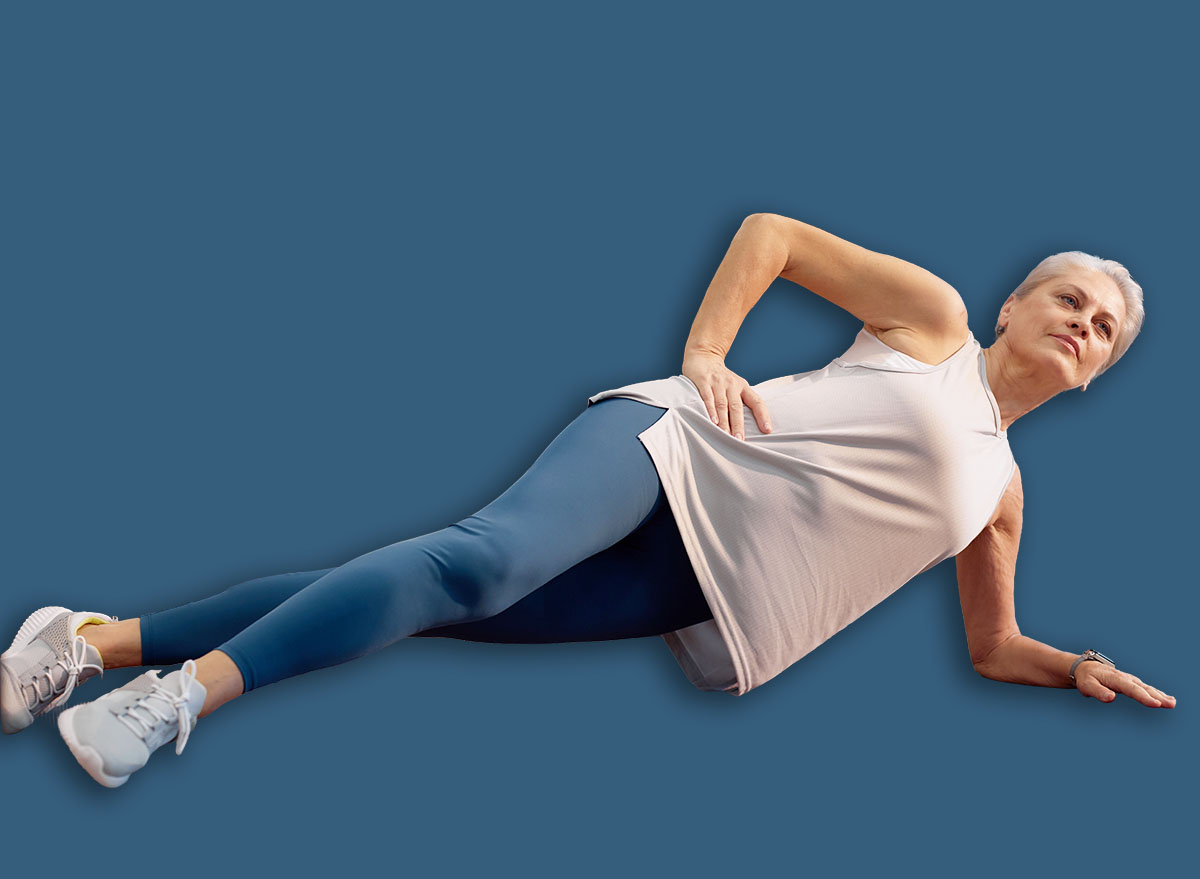
- The Benefit: It targets the lateral chain, which is essential for "tightening" the sides of the waist.
- Execution: Maintain a straight line from head to heels while resting on your forearm, then gently dip your hip toward the floor and press it back up.
2. Standing Oblique Crunch with a Single Dumbbell
Unlike a floor crunch, this move uses gravity to challenge the obliques while the user remains in an upright, neutral spine position.
- The Benefit: It builds lateral core strength without the risk of spinal compression.
- Execution: Hold a light weight in one hand, keep your posture tall, and perform a controlled side-bend, focusing on the contraction of the oblique muscle rather than just the weight itself.
3. The Bird Dog
A staple in physical therapy for a reason, the Bird Dog is an elite move for the multifidus muscles.
- The Benefit: These deep spinal stabilizers act like a corset for your spine. When they are strong, they naturally pull the abdominal wall inward.
- Execution: From a tabletop position, extend the opposite arm and opposite leg simultaneously while keeping the back flat and the core braced.
4. The Pallof Press
This is an anti-rotation exercise, meaning it teaches your body to resist movement—the ultimate test of a functional core.
- The Benefit: It forces the entire core to fire in order to maintain a stable, narrow waistline under tension.
- Execution: Using a resistance band anchored at chest height, push your hands away from your chest while resisting the band’s attempt to twist your torso.
5. Glute Bridge March
The glutes are the foundation of the pelvis. When the glutes are weak, the pelvis tilts forward, causing the belly to protrude.
- The Benefit: Engaging the glutes pulls the pelvis into a neutral position, creating the illusion of a narrower waist.
- Execution: In a bridge position, keep the hips elevated and alternate lifting one foot off the floor while maintaining a stable, non-rotating pelvis.
Implications: The Role of Lifestyle and Nutrition
While these 12-minute movements provide the structural support needed for a firm waistline, Siwicki is quick to note that exercise alone cannot overcome a poor diet. The "muffin top" is, at its core, stored energy. Reducing total body fat is the necessary companion to core strengthening.
The Metabolic Component
After 60, the body’s caloric needs change. Protein intake becomes vital to prevent the loss of lean muscle mass, which is a primary driver of a slower metabolism. A combination of the 12-minute daily circuit and a diet rich in high-quality protein creates a "metabolic trifecta" that encourages fat oxidation.
The Long-Term Outlook
For the aging adult, the benefits of this routine extend far beyond aesthetics. A strong, stable core is the primary defense against falls, back pain, and loss of mobility. By choosing exercises that respect the health of the spine rather than attacking it with outdated crunches, you are investing in a future of functional longevity.
Summary of Expert Recommendations
To achieve the best results, adhere to these guidelines:
- Prioritize Daily Movement: Do not skip the 12-minute morning window. Consistency is the primary trigger for physiological adaptation.
- Focus on Form, Not Fatigue: These moves should not be done to failure in the sense of shaking, but rather to "quality" fatigue where you maintain perfect posture.
- Incorporate Breathwork: Ensure you are exhaling during the "effort" portion of every move to activate the transverse abdominis.
- Listen to Your Body: If a movement causes sharp pain, regress to a simpler version.
The "muffin top" may have been a frustration in your 50s, but it does not have to be a permanent fixture in your 60s and beyond. By shifting your focus from the surface muscles to the deep stabilizers and committing to a sustainable, daily practice, you can redefine your shape and improve your quality of life simultaneously.
Disclaimer: Always consult with your primary care physician or a physical therapist before starting a new exercise regimen, especially if you have a history of disc herniations or chronic back pain.