By [Your Name/Editorial Staff]
Sleep medicine is currently standing at a crossroads. As consumer awareness skyrockets, driven by the proliferation of wearable technology, the rise of GLP-1 weight-loss medications, and an increasing emphasis on metabolic health, the field is transitioning from a niche specialty to a cornerstone of mainstream healthcare. Millions of new patients are poised to enter the system. However, as Dr. David E. McCarty, a prominent advocate for holistic sleep care, warns: if clinicians prioritize throughput over physiologic heterogeneity and the patient’s narrative, the result will not be a healthier population, but a more fragmented, depersonalized healthcare experience.
The Main Facts: The Paradox of Prevalence
The central crisis in sleep medicine is a paradox of scale. Obstructive sleep apnea (OSA) is arguably one of the most common chronic conditions in the modern world, with an estimated one billion adults affected globally. Of those, approximately 425 million suffer from moderate-to-severe disease that carries a high risk of cardiovascular complications, diabetes, cognitive decline, and mood disorders.
Despite this, the condition remains profoundly undertreated. For decades, the industry has focused on "reducing friction"—simplifying referral pathways, encouraging home sleep testing, and streamlining intake. While these initiatives have successfully brought more patients into the fold, they have inadvertently birthed a "reductionist" model of care. In this model, the complexity of a human life is distilled into a single metric: the Apnea-Hypopnea Index (AHI).
Chronology of a Shifting Paradigm
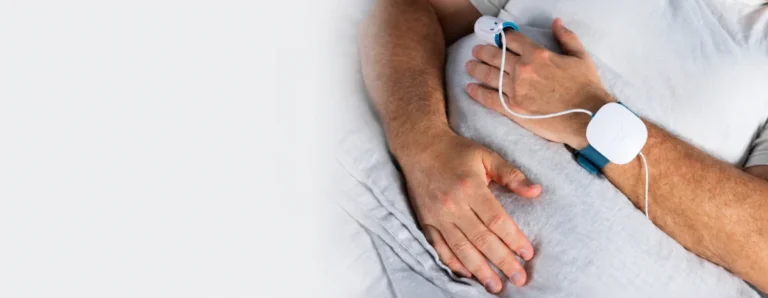
The history of sleep medicine has long been defined by the polysomnogram (PSG). In the early days, the focus was on identifying the presence of airway collapse. As technology evolved, the field shifted toward "low-friction" home sleep apnea testing (HSAT).
- The Era of Detection: Initial efforts were focused purely on increasing diagnostic volume. The goal was simple: find the undiagnosed patient.
- The Rise of the Wearable: With the advent of consumer-grade sleep trackers, patients began arriving at clinics with their own data. This shifted the power dynamic but also created a "data deluge" that many primary care systems are ill-equipped to handle.
- The Integration Movement: Recently, sleep medicine has begun to integrate into broader fields like cardiology, endocrinology, and obesity medicine. While this should theoretically bridge the gap between "siloed" specialties, it has often resulted in a "referral superhighway" where patients are passed from one diagnostic tool to the next without a cohesive plan for long-term healing.
Supporting Data: Why "Sleep Apnea" is Not One Thing
The fundamental flaw in modern clinical workflows is the assumption that sleep apnea is a singular, monolithic entity. Clinical research proves otherwise.
Physiologic Heterogeneity
Recent cluster analyses have identified distinct clinical phenotypes of OSA, including the "excessively sleepy," "disturbed sleep," and "minimally symptomatic" groups. Each of these phenotypes exhibits different cardiovascular risks and, more importantly, different responses to treatment. For instance, a patient whose OSA is primarily driven by anatomical obstruction will respond differently to CPAP than a patient whose airway collapse is exacerbated by fluid retention or circadian misalignment.
The AHI Fallacy
The AHI, while a useful diagnostic benchmark, is an insufficient metric for clinical decision-making. Research indicates that the AHI is highly sensitive to a variety of shifting variables:
- Age and Biology: A large meta-analysis found that AHI increases by approximately 1.2 events per hour for each decade of life, even in healthy, asymptomatic adults.
- Environmental Factors: Alcohol, medication, sleep position, and even the altitude of a patient’s home can drastically alter AHI readings on a night-to-night basis.
- Device Limitations: Studies show that auto-PAP (APAP) algorithms vary significantly by manufacturer and often struggle to account for unintentional air leaks, leading to inconsistent reports of therapeutic success.
Official Perspectives and the "Empowered Sleep" Movement
Dr. David E. McCarty, in partnership with experts like Dr. Ellen Stothard, has spearheaded the Empowered Sleep Apnea project to challenge the current status quo. Their position is clear: the clinician’s role is not merely to score respiratory events or manage a PAP machine. It is to help patients navigate their health through a framework that prioritizes "orientation" over "compliance."
According to the Rebis Health ecosystem, which Dr. McCarty leads, sleep medicine must adopt a "humility statement." This means acknowledging that sleep-disordered breathing is an intersectional issue involving biological, behavioral, emotional, and pharmacological systems. When a clinic functions merely as a high-volume testing and equipment-delivery station, it fails to address the "why" behind the patient’s condition.
The Implications: Preventing Fragmented Care
The implications of ignoring this complexity are significant. If the healthcare system continues to treat sleep medicine as a factory-style assembly line, we face three primary risks:
- Diagnostic Momentum: Patients may be labeled with a diagnosis based on a single night of testing that does not reflect their long-term health risk, leading to unnecessary, lifelong treatment.
- Patient Alienation: When patients are treated as a set of numbers on a report, they lose the incentive to engage in their own recovery. Compliance is not the same as healing; patients who do not understand the "narrative" of their disease are far more likely to abandon treatment when it becomes inconvenient.
- The "Superhighway" to Nowhere: As sleep medicine integrates into other specialties, there is a risk that cardiologists will treat the heart, endocrinologists will treat the metabolism, and sleep physicians will treat the airway—all while ignoring the fact that they are treating the same person. This is the definition of fragmented care.
A Call for Precision and Narrative
The path forward is not to abandon the advancements in access and technology. Instead, the field must evolve into a "bridge discipline." This requires a shift in how clinicians approach the patient encounter:
- From Categorization to Co-Discovery: Clinicians must move away from premature diagnostic closure. This means acknowledging that two patients with the same AHI may require entirely different therapeutic trajectories.
- Restoring Agency: Patients need more than a "faster" test. They need language to help them contextualize their sleep health within the broader context of their lives. They need to understand how their sleep interacts with their weight, their stress, and their anatomy.
- Embracing Complexity: The most effective clinical practices are those that resist the pressure to maximize throughput at the expense of time. By creating space for a "narrative" approach, clinicians can foster the trust necessary for patients to adhere to complex, multi-modal treatment plans.
Conclusion: The Defining Challenge
As we move further into the era of the wearable and the integrated clinic, the success of sleep medicine will not be measured by the number of CPAP machines distributed or the volume of sleep tests performed. It will be measured by the ability of the medical community to treat the patient as a whole human being rather than a data point.
The question for the next decade is not, "How do we get more people into sleep medicine?" It is, "What kind of sleep medicine are we inviting them into?" If the industry can rise to the challenge of handling complexity without sacrificing the human element, it has the potential to become one of the most effective, integrative fields in modern medicine. If it fails, it risks becoming just another cog in an increasingly fragmented, algorithmic machine. The choice, ultimately, lies with those who lead the field today.