By Jackie Keating, LCSW
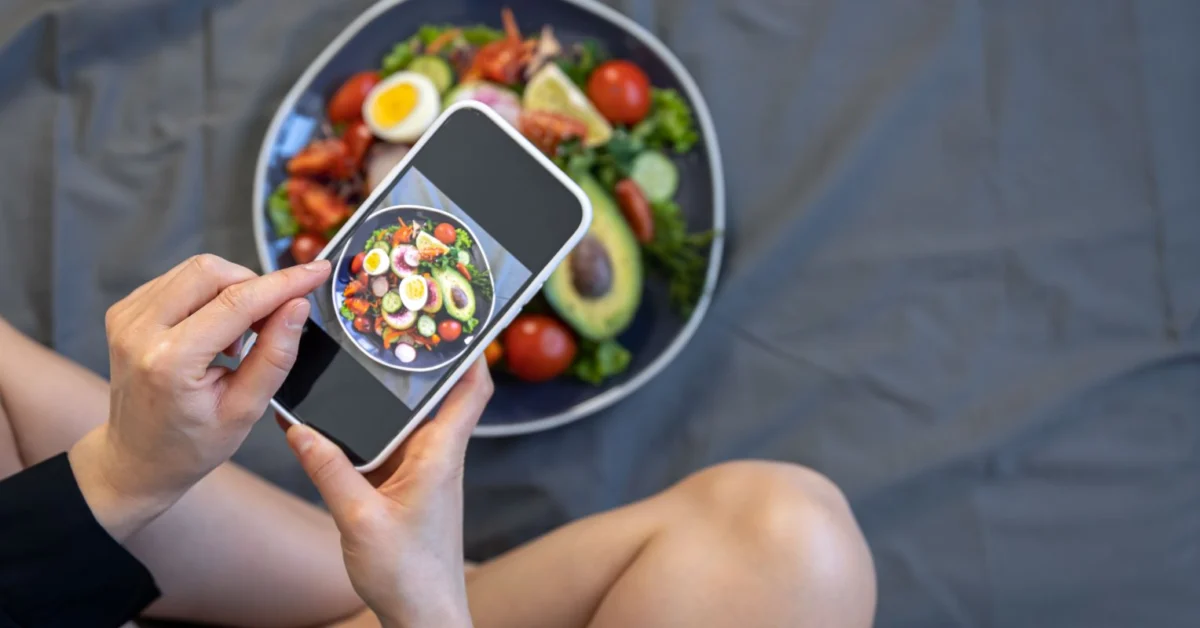
It is a familiar Sunday night ritual: you are lying in bed, the glow of your smartphone illuminating the dark room as you scroll through an endless feed of curated lives. You are looking for a brief moment of distraction, but instead, you are met with a barrage of "what I eat in a day" videos. These influencers present meals that are meticulously styled—devoid of carbohydrates, stripped of calories, and framed as the key to a "better" life.
Elsewhere on your feed, the narrative shifts but the pressure remains. A lifestyle influencer jokes about their weekend binge drinking, while a parenting account uses "wine mom" culture to normalize the daily stressors of life. These snippets are interspersed with aggressive advertisements for fitness programs promising to "fix your life in three simple steps." By the time Monday morning rolls around, the cultural drumbeat has intensified: a coworker is discussing a new restrictive diet, a friend is texting about "getting summer-ready," and high-profile celebrities are endorsing the latest plant-based or "bio-hacking" regimens.
The messages are everywhere, and they are coalescing into a digital environment that is fundamentally reshaping our relationship with our bodies, our food, and our mental health.
The Mechanics of Modern Diet Culture
Social media, while touted as a tool for connection, has become a primary vector for diet culture—a system of beliefs that equates thinness and "clean" eating with moral virtue and health. This environment exploits human insecurities, turning low self-esteem into a multi-billion dollar profit machine.
The wellness industry has evolved into a juggernaut. According to data from 2024, the market was valued at over $160 billion, with projections estimating it will reach $360 billion by 2034 (Finklea, 2025). This massive financial interest incentivizes digital creators to peddle products, supplements, and restrictive habits under the guise of "self-care."
The psychological toll of this constant exposure is profound. Influencers often demonize specific food groups or shame those who fail to adhere to their rigid plans. The underlying message is seductive yet deceptive: if you look like me, you will be happy like me. However, the reality behind these polished images is often far darker, involving extreme restriction, chronic anxiety, and hidden struggles with disordered eating. Recent findings from the REACH Institute (2025) indicate that 46% of teens aged 13–17 report feeling worse about their own bodies after engaging with social media, and those spending more than three hours a day on these platforms are twice as likely to develop eating disorders.
A Chronology of Normalization
The trajectory of diet culture has accelerated alongside the rise of short-form video platforms.
- The Early 2010s: The rise of "Thinspiration" on platforms like Tumblr and early Instagram focused on aesthetic ideals.
- The Mid-2010s: The shift toward "Clean Eating" and "Wellness." Influencers began to frame restrictive eating not as a diet, but as a "lifestyle" or "journey to health," making it more socially acceptable and harder to identify as disordered.
- The Pandemic Era (2020–2022): Increased screen time and isolation led to a surge in algorithmically driven content. During this time, the overlap between "fitness influencers" and "substance use normalization" became more pronounced, with alcohol consumption often rebranded as a necessary "reset" after intense fitness regimens.
- The Present Day (2023–2025): We are witnessing the mainstreaming of weight-loss pharmaceuticals and extreme bio-hacking trends. The boundary between clinical intervention and "lifestyle optimization" has blurred, creating a dangerous landscape for vulnerable users.
The Intersection of Eating Disorders and Substance Use
While eating disorders (EDs) and substance use disorders (SUDs) may present differently to the casual observer, they are two sides of the same coin. Both function as maladaptive coping mechanisms used to navigate emotional distress, trauma, and the crushing weight of societal expectations.
The National Eating Disorders Association (NEDA, 2023) estimates that roughly 50% of individuals struggling with an eating disorder also misuse alcohol or drugs. This isn’t a coincidence; research confirms an interdependent relationship between the two. Each disorder exacerbates the other, creating a feedback loop of physiological and psychological degradation (Xi & Galaj, 2025).
Social media plays a pivotal role in this intersection by glamorizing both behaviors. Platforms like TikTok and Instagram often present extreme caloric restriction and substance use as "relatable" ways to manage the pressures of daily life. By normalizing these behaviors, social media lowers the barrier to entry, making it easier for individuals to slide into a cycle of dual-disorder dependency without ever recognizing that they have crossed into a medical crisis.
Supporting Data: The Cost of the Algorithm
The data surrounding these co-occurring disorders is sobering. When EDs and SUDs co-occur, the mortality risk is not merely additive—it is multiplicative.
Research published in The American Journal of Psychiatry indicates that the presence of alcohol or hard drug use nearly quadruples the mortality risk for someone already suffering from an eating disorder (Mellentin et al., 2022). Furthermore, individuals with these conditions exhibit significantly higher rates of suicide attempts, co-occurring psychiatric diagnoses, and severe mood disorders (SAMHSA, 2025).
The "digital mirror" provided by social media is not just a source of self-doubt; it is a clinical risk factor. The constant comparison against unattainable, digitally altered, or selectively curated bodies triggers a stress response that, for many, is managed through the very substances and restrictive behaviors that define the disorders.
Official Perspectives and Clinical Implications
Despite the clear biological and psychological overlap between eating disorders and substance use, our current healthcare infrastructure is largely fragmented.
"Recovery can feel like a game of whack-a-mole," says clinical experts in the field. A patient may receive treatment for an eating disorder, only to find that their substance use remains unaddressed, or vice versa. This "siloed" approach leaves the underlying root causes—such as trauma, societal pressure, and emotional dysregulation—untreated.
Clinical leaders, including those at SAMHSA and various research institutes, are calling for an urgent shift toward "integrative care models." These models would treat the individual holistically, acknowledging that an eating disorder is often a manifestation of deeper psychological needs that may also be expressed through substance use.
Key Recommendations for Clinical Reform:
- Unified Treatment Pathways: Breaking down the administrative barriers between ED and SUD treatment facilities.
- Cultural Literacy in Care: Therapists and medical providers must be trained to recognize the impact of digital media and diet culture on their patients’ self-perception.
- Preventative Education: Addressing the "digital literacy" gap, teaching younger generations how to deconstruct the harmful messages they consume online.
Moving Toward a New Paradigm
The path forward requires us to move beyond simply "limiting screen time." It requires a cultural shift in how we define health. Health is not a static aesthetic achieved through the exclusion of food groups or the use of substances; it is a complex, individual state of being that requires self-compassion and, often, professional support.
As we look toward the future, the challenge lies in empowering individuals to reclaim their agency in a world that profits from their insecurity. By demanding better from our digital platforms and creating more cohesive, integrative treatment systems, we can begin to dismantle the harmful forces of diet culture.
It is time to look away from the digital mirror and start seeing ourselves—and our health—with a clearer, more compassionate lens.
References
- Dane, A., & Bhatia, K. (2023). The social media diet: A scoping review to investigate the association between social media, body image and eating disorders amongst young people. PLOS Global Public Health.
- Finklea, K. (2025). The wrong influence: The link between diet culture and eating disorder. HopeHealth.
- Mellentin, A. I., et al. (2022). The impact of alcohol and other substance use disorders on mortality in patients with eating disorders. The American Journal of Psychiatry.
- National Eating Disorders Association. (2023). Substance use and eating disorders.
- Pierce, S., Joy, J. M., & David, A. W. (2025). Abstinence-based treatment of comorbid eating disorders and ultra-processed food addiction. Frontiers in Psychiatry.
- Substance Abuse and Mental Health Services Administration (SAMHSA). (2025). Breaking the silence: What everyone should know about eating disorders.
- The REACH Institute. (2025). How social media is impacting teens.
- Xi, Z.-X., & Galaj, E. (2025). Novel potential pharmacological approaches in treating eating disorders comorbid with substance use disorders. Biomedicine & Pharmacotherapy.