











For most of human history, our ancestors navigated the complexities of health and physical performance through the raw, unvarnished feedback of their own senses. They relied on internal signals—the heaviness of the limbs after a long hunt, the restorative quality of a night’s rest, and the subtle cues of hunger and satiety—to determine their state of well-being. Today, however, that internal compass is increasingly being replaced by the glowing screens of wearables.
Whether it is a ring, a watch, or a chest strap, we now live in an era where we can quantify our heart rate, sleep architecture, recovery scores, and caloric burn with the tap of a finger. While these tools offer a bridge between subjective experience and objective reality, they have also introduced a new dilemma: at what point does the pursuit of data-driven precision begin to erode our connection to the very bodies we are trying to optimize?
The Evolution of Self-Assessment: From Intuition to Algorithm
The transition from purely sensory-based health management to data-reliant tracking represents a fundamental shift in how we perceive ourselves. In the best scenarios, technology acts as an essential calibration tool. It allows us to hold a mirror to our behaviors, stripping away the biases that often cloud our self-perception.
Consider the "barbecue sauce phenomenon." A colleague once believed he was adhering to a strict, low-calorie regimen, only to discover through meticulous digital tracking that he was unknowingly consuming an extra 500 calories a day in hidden sugars found in his favorite condiments. In this instance, technology served as a necessary corrective, bridging the gap between his subjective belief and his objective reality.
Yet, this level of precision is not universal. While outliers like the legendary Canadian sprinter Ben Johnson were once reported to have the uncanny ability to call out their 100-meter dash times within a tenth of a second, most of us lack that degree of internal calibration. We are prone to human error, which is precisely why wearable tech has become a multi-billion dollar industry. But as we outsource our self-assessment to gadgets, we must ask: how good are we at interpreting this data, and more importantly, how do we prevent the "data-fication" of our lives from becoming a source of cognitive overload?
The Accuracy Paradox: When Data Becomes Noise
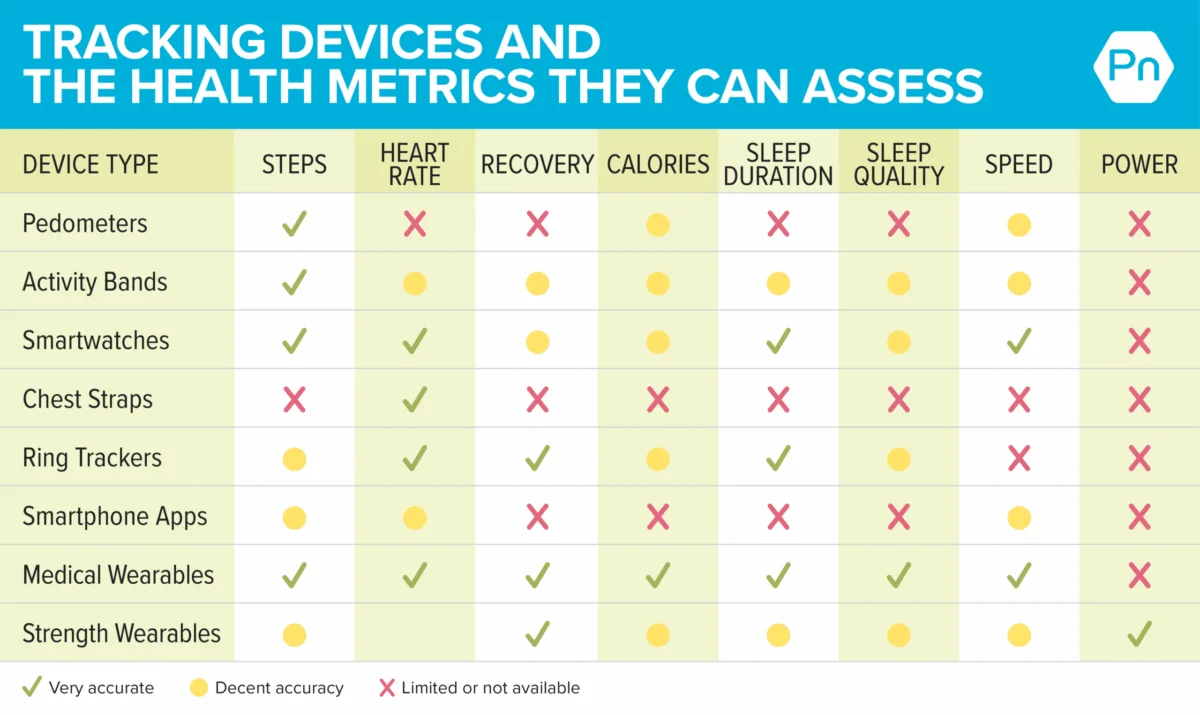
The primary challenge with modern fitness trackers is that not all data is created equal. While heart rate monitoring and step counting have reached a high degree of technical reliability, other metrics—such as calorie expenditure estimates and movement velocity—often carry substantial margins of error.

Computer scientist Samantha Kleinberg, an expert in decision-making, notes that even small amounts of surplus information can have a disproportionately negative effect on our ability to make sound choices. This is the "paradox of tracking." When we have too little information, we are left guessing; when we have too much, we experience "analysis paralysis."
Think of the stress involved in choosing a restaurant when you are bombarded with hundreds of conflicting, hyper-specific reviews. Now, apply that same paralysis to your health. If you are obsessing over a sleep score that is off by a few percentage points, or stressing over a "recovery" metric that fails to account for a high-stress day at work, you are no longer using data to inform your health—you are using it to induce anxiety. The "sweet spot" of information is narrow, and finding it requires an artistic touch, not just a technical one.
Chronology of a Data-Driven Crisis: The "Great MyFitnessPal Blackout"
To understand the risks of over-reliance, one need only look back to January 2019. For 200 million users of the popular app MyFitnessPal, a single day of system downtime caused widespread frustration and, for many, a genuine sense of panic.
For the dedicated tracker, the loss of the app meant the loss of their "authority." Without the digital readout to tell them exactly how much they were allowed to eat, they felt adrift. This event served as a stark, if unintentional, experiment in behavioral psychology: it highlighted how quickly we can lose touch with our internal hunger and satiety cues when we delegate those signals to an application. The lesson was clear: when the tech fails, the user should still be able to function. If you feel "lost" without your device, it is a sign that your relationship with technology has transitioned from supportive to dependent.
Supporting Data: Validating the Method
Despite the potential for over-reliance, data can be a powerful catalyst for change when used correctly. The utility of a tracker usually falls into one of three categories:
- Validation of Method: For high-performers who struggle to trust the process, data provides the "receipts." If a runner is training in Zone 2—a pace that feels suspiciously slow—seeing their resting heart rate drop over several weeks confirms that the low-intensity work is yielding physiological results. The data removes the doubt, allowing the athlete to stay the course.
- The "Prompt" for Change: Motivation often fails because we lack the right information at the right time. For example, a person may believe their nightly glass of wine aids sleep. A sleep tracker that consistently shows fragmented REM cycles following alcohol consumption acts as a "hard prompt." Once the connection is visualized, the behavior is much easier to modify.
- Understanding Potential: Many people chronically underestimate their own capacity. Data can show someone that they are capable of pushing harder during a HIIT session, or conversely, that they are accumulating "junk volume" that is leading to burnout rather than fitness.
Official Perspectives: When to Discard the Tracker
Health experts and coaches are increasingly warning against "data-blindness." The signs that tracking has become counterproductive are often subtle but distinct:

- Stress Induction: If a tracker provides poor scores for factors beyond your control—such as a new parent tracking the sleep quality of a newborn—it is time to stop. The data is not helping; it is merely documenting a struggle you already know exists.
- Performance Decay: If a cyclist or runner stops focusing on the rhythm of their movement and begins focusing solely on the "records" or metrics, they risk losing the joy of the activity. When the data takes precedence over the experience, the risk of burnout increases exponentially.
- Sensory Disconnection: The most dangerous sign is the inability to gauge one’s own fatigue or hunger without checking an app. If you have to look at your watch to know if you are tired, you have lost a vital skill of human existence.
Implications: The Future of Mindful Tracking
If we are to maintain a healthy relationship with technology, we must shift our strategy. We should view trackers not as the masters of our health, but as advisors.
The most effective way to use these tools is to check in with yourself before you check the data. When you wake up, ask yourself: How do I feel? Do you feel energized, groggy, or stressed? Once you have formed your own assessment, check your device. If your internal assessment aligns with the data, you are becoming more self-aware. If they differ, you have an opportunity to investigate why.
Furthermore, we should treat our own senses as the primary "wearable." We possess an incredibly complex sensory network—proprioception (the sense of body position), interoception (the sense of internal state), and basic mechanical feedback—that no sensor can fully replicate.
Ultimately, the goal of fitness technology should be to make itself obsolete. By using trackers to calibrate our internal senses, we eventually reach a point where we don’t need the gadget to tell us we’ve had a hard workout or that we need more recovery. We just know.
In a world obsessed with optimizing every second, the most radical act of health is learning to listen to the body, using technology only as a temporary training wheel. Whether you are a professional athlete or someone just trying to lead a healthier life, remember that the most sophisticated piece of equipment you will ever own is the one you were born with. Use the tech to learn about your body, but never let the tech take the place of your own lived experience.