









By Olivia Wilkinson and Katherine Marshall
June 12, 2026
Ebola is frequently described as a "disease of compassion." This is not a poetic flourish, but a grim epidemiological reality. The virus thrives on the most fundamental human instincts: the desire to comfort the suffering, the duty to care for the dying, and the sacred obligation to honor the dead. In the Democratic Republic of the Congo (DRC) and Uganda, where outbreaks are currently accelerating, these acts of love are serving as primary vectors for transmission.
As researchers who have spent decades examining the nexus of faith and global health, we have witnessed how the failure to account for the social and spiritual fabric of a community can turn a medical crisis into a humanitarian catastrophe. When public health interventions ignore the sanctity of traditional burial rites, they do not just fail—they ignite resistance. To curb the current spread of Ebola, international health authorities must stop viewing religious leadership as a hurdle to overcome and start treating them as an indispensable partner in the fight for survival.
The Anatomy of an Outbreak: Why Burial Matters
The mechanics of Ebola transmission are particularly cruel because they target the intersection of biology and belief. During the final stages of the disease, the viral load in a patient’s body is at its peak. When that person dies, their body remains highly infectious.
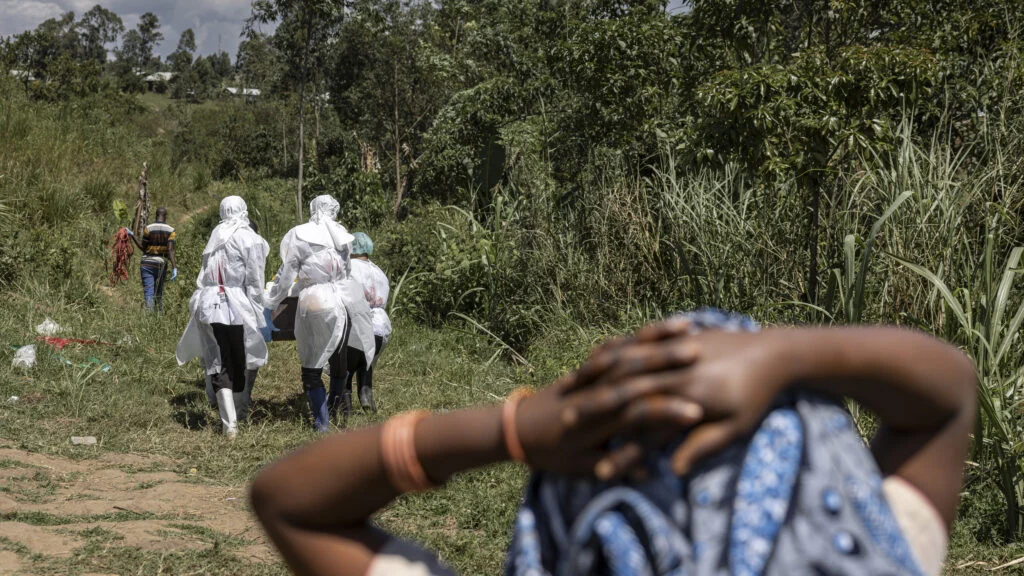
In many cultures across Central and East Africa, the period surrounding death is the most sensitive time for a family. Traditional rites often involve washing the body, dressing the deceased, and holding large, communal funeral gatherings. Each of these acts—which are essential for the spiritual transition of the deceased and the closure of the bereaved—involves physical contact with bodily fluids.
Research indicates that for every unsafely performed burial, an average of 2.58 further infections occur. These are not mere statistics; they represent a compounding chain of transmission. When health authorities intervene to enforce "safe and dignified burials" (SDBs) without consulting local customs, they are often perceived not as saviors, but as desecrators. As the sentiment has echoed in previous outbreaks: for many, risking infection is preferable to the existential dread of displeasing ancestors or disobeying God.
Chronology of Crisis: A History of Missed Opportunities
The current urgency in the DRC and Uganda is framed by the lessons learned—and often forgotten—from decades of Ebola response.
- 2014, West Africa: The deadliest Ebola epidemic in history began with a failure to integrate local customs. Initial World Health Organization (WHO) guidance strictly prioritized infection control, advising that religious practices be disregarded. The result was a catastrophic surge in cases. In one tragic instance, a well-regarded traditional healer in Sierra Leone died of Ebola; her funeral alone was linked to over 300 subsequent infections.
- 2015, The Turning Point: Recognizing the failure of a purely biomedical approach, the WHO pivoted. They collaborated with faith leaders to develop protocols that allowed for "safe and dignified" burials, effectively bridging the gap between clinical safety and religious requirement.
- 2018–2020, The DRC Outbreak: Reports from Ituri, DRC, highlighted the ongoing friction. Communities, feeling their traditions were being trampled by international agencies, took to attacking health facilities. In a poignant example of this tension, a mob recently attacked a clinic, not to loot supplies, but to demand the release of a religious leader’s body for a traditional burial.
- 2026, Present Day: As the virus re-emerges, we see a recurrence of the same fundamental mistake: a top-down approach that fails to account for the local religious landscape, leading to community mistrust and the obstruction of life-saving care.
Supporting Data: The Power of Religious Influence
The evidence supporting the inclusion of religious actors is not merely anecdotal; it is data-driven. When the WHO and NGOs finally embraced the role of religious leaders in the 2014-2016 West African crisis, the trajectory of the outbreak shifted.
A study conducted in Sierra Leone found that when religious leaders were empowered to deliver public health messaging, there was a nearly twofold increase in the public’s willingness to accept safe alternatives to traditional burials. Furthermore, the intention to wait at least two days for authorized burial teams—a critical window for preventing the spread of the virus—rose significantly.
A United Nations staff member stationed in Sierra Leone during the height of the crisis summarized the shift perfectly: "Because people trust them, when [religious leaders] started participating in the revised burial practices, people knew they could trust it and resistance ended. The participation of religious leaders was a game-changer."
Official Responses and the Need for a Paradigm Shift
The international community is currently struggling to balance the need for rapid containment with the necessity of cultural sensitivity. While faith-based organizations (FBOs) and local religious institutions—such as the Centre Médical Évangélique in the DRC—are already on the front lines, they often lack the formal integration into the higher-level decision-making processes of international health authorities.
Current WHO guidance does, in theory, call for religious representatives to act as mediators between the "biomedical and religious worlds." However, in practice, these partnerships are often reactive rather than proactive. NGOs frequently scramble to engage faith leaders only after violence breaks out at a treatment center or when vaccination rates plummet, rather than building those partnerships during periods of relative stability.
Implications: The Path Forward
The path to controlling the current Ebola outbreak requires two immediate, systemic shifts in strategy:
1. Rapid Religious-Dynamics Analysis
Health authorities must conduct an immediate, systematic assessment of the local religious landscape in affected regions. This is not about cataloging beliefs, but about identifying the "who" and the "how." Who are the gatekeepers of burial traditions? How do local theological interpretations view the sick and the dying?
Tools developed during the COVID-19 pandemic, such as the religious-dynamics analysis matrix, are highly adaptable to Ebola. NGOs must understand that in these communities, the religious leader is often the first point of contact for a sick individual—long before a doctor or a government health worker.
2. Deepening Institutional Partnerships
Partnerships with religious actors must be treated as permanent, not crisis-driven. We advocate for a long-term integration of faith-based health care systems into national disease surveillance and response mechanisms.
This includes:
- Capacity Building: Providing religious leaders with the resources they need to discuss Ebola prevention from within the context of their own sacred texts. Resources like “Faith in the Time of Ebola” (and its French translation, “La Foi en temps d’Ebola”) provide templates for Bible studies that normalize safe practices without stripping them of their spiritual meaning.
- Decision-Making Inclusion: Religious leaders should be present at the table when policy is drafted, not just asked to rubber-stamp it after the fact. By involving them in the planning stages, we ensure that protocols are culturally viable from day one.
- Systems Strengthening: We must move beyond seeing religious actors as "community influencers" and begin treating them as structural pillars of the health system. Their clinics, their networks, and their moral authority are assets that current global health infrastructure is failing to fully leverage.
Conclusion: Trust as a Medical Asset
In the fight against Ebola, mistrust is as lethal as the virus itself. When a community feels that its spiritual life is under attack by modern medicine, they will retreat into the shadows, hiding the sick and burying the dead in secret.
To break this cycle, the international health community must humble itself. It must acknowledge that science provides the tools for survival, but faith provides the framework for life—and death. By bridging the gap between the clinic and the congregation, we can transform the "disease of compassion" from a death sentence into an opportunity for collective, faith-informed healing. The crisis is urgent, and the time for meaningful, respectful engagement with the religious community is not tomorrow—it is now.