









Barcelona, Spain — September 6, 2026
For decades, Chronic Obstructive Pulmonary Disease (COPD) has been categorized primarily as a "smoker’s disease," a late-life consequence of tobacco use that manifests in the twilight years. However, a landmark study presented this week at the European Respiratory Society (ERS) Congress in Barcelona is forcing the medical community to rethink the timeline of this debilitating condition. New research suggests that the foundations of COPD are not merely built in adulthood, but are instead forged in the cradle, emerging from a critical interplay between genetic predisposition and the quality of the air a child breathes.
The Main Facts: A Paradigm Shift in Respiratory Medicine
The research, led by Dr. Carla da Silva Sena of the University Children’s Hospital Basel (UKBB) and the University of Basel, suggests that the "trajectories" of lung health are established long before an individual ever picks up a cigarette. By analyzing data from the long-running Basel-Bern Infant Lung Development (BILD) study, researchers discovered that children born with a high genetic risk for COPD experienced stunted lung function growth between birth and age six—but only if they were raised in environments with elevated levels of air pollution.
This discovery moves the needle on how we understand chronic lung disease. It indicates that COPD may be a developmental disorder that begins in infancy. When a child’s lungs fail to reach their full biological potential during the critical years of early growth, they may enter adulthood with a "lung deficit," leaving them significantly more vulnerable to respiratory failure as they age.
Chronology: Following the Breath from Infancy
To understand the long-term impact of early life, the researchers utilized data from the BILD study, a prestigious Swiss birth cohort that has been tracking children born between 1999 and 2020.
Birth: The Baseline
The study began by assessing the lung function of infants within their first month of life. Researchers employed the "infant tidal breathing test," a non-invasive procedure that records a newborn’s natural, rhythmic breathing while they sleep. This provided a crucial baseline for how the lungs functioned at the very dawn of life.
The First Six Years: Exposure and Development
As the children grew, the research team meticulously mapped their environmental exposures. By tracking residential history, the study estimated the levels of fine particulate matter (PM2.5) and nitrogen dioxide (NO2) to which each child was exposed daily from birth until their sixth birthday.
Age Six: The Spirometry Milestone
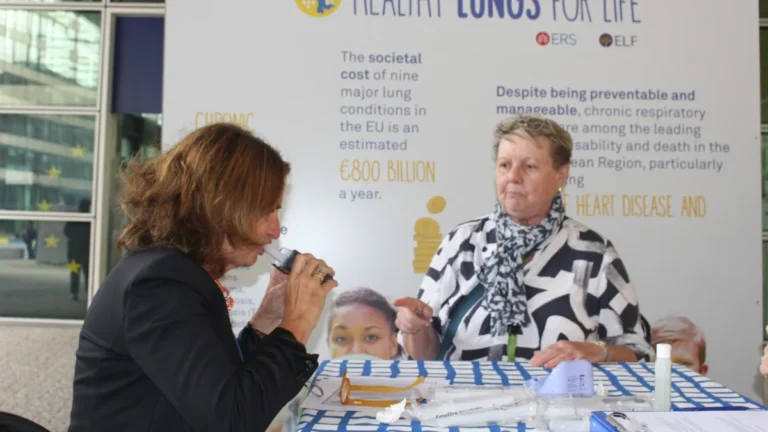
At age six, the cohort underwent spirometry, the gold standard for measuring lung capacity. Children were asked to take a deep breath and exhale as forcefully and completely as possible. By comparing the results of the infant tidal breathing tests with these childhood spirometry readings, the team could calculate the "growth trajectory" of each child’s respiratory system.
Genetic Integration: The Polygenic Risk Score
Finally, the team analyzed blood samples to determine each child’s "polygenic risk score." Because COPD is not the result of a single "bad" gene, researchers used a cumulative measure of small genetic variations known to be associated with adult COPD. The goal was to see if this "adult" risk score had any bearing on the health of a healthy six-year-old.
Supporting Data: The Synergy of Genes and Pollution
The results of the study were striking. The researchers found that the genetic risk score was a strong predictor of stunted lung growth—but only in a specific, high-risk context.
- The Pollution Threshold: Children who lived in areas with higher levels of PM2.5 (averaging 15.3 μg/m³) showed a marked correlation between their genetic risk and lower lung function growth.
- The Nitrogen Dioxide Factor: A similar trend was observed regarding nitrogen dioxide (NO2) exposure (averaging 28.3 μg/m³).
- The "Clean Air" Buffer: Conversely, in children living in areas with lower air pollution, the genetic risk had a negligible impact on their lung function growth.
This data provides a compelling "double-hit" hypothesis: A child may have the genetic blueprint that makes their lungs sensitive to COPD, but the disease process only begins to manifest physically when that genetic vulnerability is triggered by an external environmental toxin.
Official Responses: A Call to Policy Action
The implications of this study extend far beyond the laboratory, sparking a conversation about the necessity of clean air as a public health imperative.
Dr. Carla da Silva Sena emphasized the long-term significance of the findings during her presentation. "We believe that COPD can result from lung function trajectories established early in life," she explained. "Studying these trajectories from the earliest stages is key to understanding how COPD develops. Our findings suggest that some babies are born with a higher genetic risk, and this risk shows up as differences in lung function growth in early childhood—but only in those growing up in areas with higher air pollution."
Professor Barbara Hoffmann, Chair of the European Respiratory Society’s Advocacy Council at the University of Düsseldorf, praised the study for its ability to bridge the gap between genetics and environmental science.
"This study reveals a genetic risk pathway for COPD that only became apparent when researchers looked at the effects of air pollution in seemingly healthy children," Professor Hoffmann stated. "It reinforces that air pollution, unlike genetic risk, is something that can be addressed through the right policy and regulation. If we want to prevent COPD, we must look at the air quality in our cities, schools, and playgrounds."
Implications: A New Era of Prevention
The BILD study findings align with the 2022 Lancet Commission report, which argued that COPD is a lifelong condition shaped by cumulative exposures rather than a sudden onset event in older age. This shift in perspective has profound implications for public health:
1. Reassessing "Healthy" Children
Currently, clinical focus on respiratory issues is often reactive—doctors intervene once a child begins wheezing or showing signs of asthma. This research suggests that we should be taking a proactive, preventative approach to monitor lung growth in all children, particularly those with a known family history of COPD.
2. The Case for Stricter Air Quality Regulations
If early-life exposure to PM2.5 and NO2 can alter the biological trajectory of a child’s lungs, then existing air quality standards may be insufficient to protect the most vulnerable. Policymakers are being urged to consider these findings as they draft future environmental regulations, as the "cost" of poor air quality is now being measured in the lifetime health of children.
3. Understanding Non-Smoker COPD
A lingering mystery in respiratory medicine has been the prevalence of COPD in non-smokers. By establishing that the "foundations" of the disease are laid in childhood, this study provides a missing piece of the puzzle. It suggests that for many, the damage was done years before they reached adulthood, through a combination of their genetic makeup and the environment they were born into.
4. Future Longitudinal Research
The research team is not stopping at age six. Plans are already underway to continue following this cohort into adolescence and early adulthood. The goal is to determine whether the "growth deficit" seen in these children remains static, or whether it compounds over time, eventually leading to the clinical diagnosis of COPD in their 40s or 50s.
Limitations and Future Directions
While the findings are groundbreaking, the researchers were quick to acknowledge certain limitations. First, the study required statistical modeling to compare infant breathing tests with childhood spirometry, as the two tests are fundamentally different. Second, the polygenic risk scores used were derived from populations of European ancestry, meaning the findings might not be immediately generalizable to global populations with different genetic backgrounds.
Despite these caveats, the message from Barcelona is clear: the air we breathe today is building the lungs of tomorrow. As the medical community continues to peel back the layers of COPD, it is becoming increasingly evident that the battle against this incurable disease must be fought not just in the doctor’s office, but in the halls of government and in the air we choose to clean.